“The Dutch people didn’t know a lot about Suriname but when you lived in Suriname you knew everything about Holland.”
-Bodil de la Parra, WAN PIPEL commentary-
“First of all, I don’t like racism!”
-Sylvia Kristel live on UK television, proudly carrying on Pim de la Parra’s influence 25 years after he discovered her-
“After making this film, I finally know who I am.”
-Pim de la Parra-
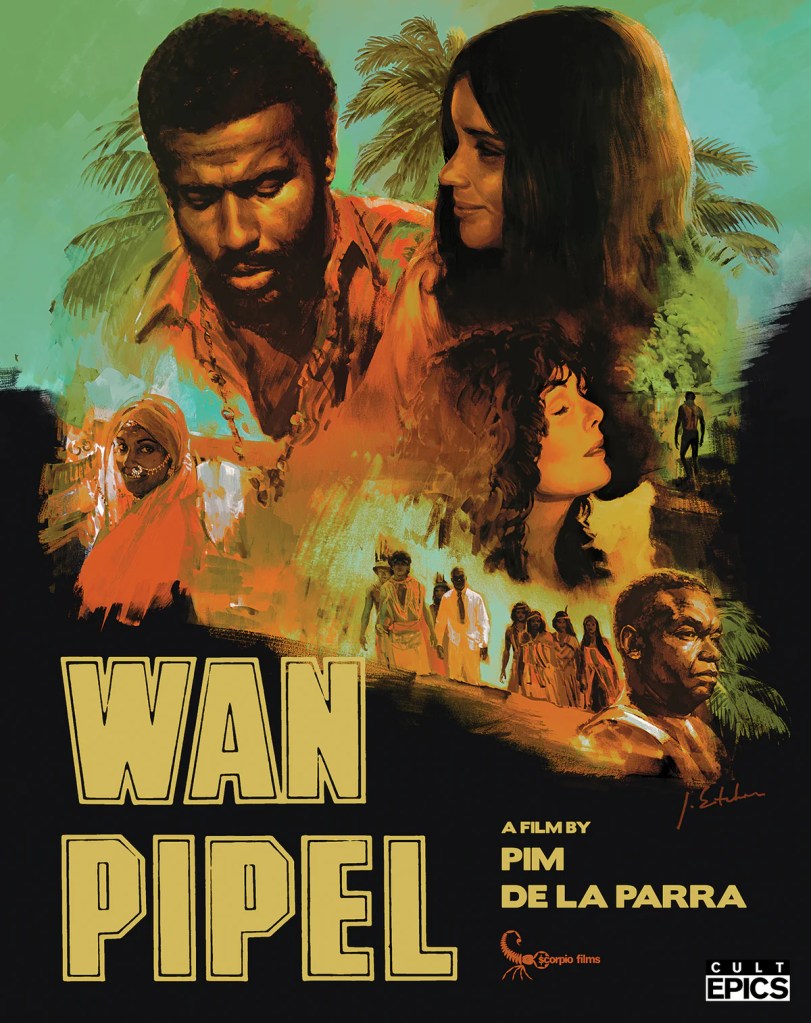
Just before Christmas of 1987, Pim de la Parra was ready for vengeance. At least that’s how Dutch newspapers at the time were addressing his return to the film-world with the low-budget Odyssée d’amour such as Amigoe which noted, “With this new feature film, de la Parra wants to take revenge for the debacle of WAN PIPEL.” Nearing fifty and a decade removed from his most important achievement, Pim de la Parra remained as driven and defiant as ever with his courageous dream of ONE PEOPLE never far from his spirit and mind.
Two decades before an embattled de la Parra was attempting to regain his footing in the film community; he was on top of the Dutch film industry thanks to his landmark $corpio Productions and smash hits like OBSESSIONS (1969). It was in this period that the young punkish in spirit de la Parra took the first steps towards his dream project, a filmed tribute to his beloved native Suriname and its people.
The idea for WAN PIPEL originally came to de la Parra when he was a young film student in the mid-sixties, making its journey from conception to birth a long fifteen year gestation period. Five years after the initial idea, de la Parra made the first step towards his magnum opus with a short half-hour documentary for Dutch television. WAN PIPEL did indeed begin its filmed life as a thirty minute documentary de la Parra filmed in 1970 for Dutch television. Het vrije Volk described the program in a late September edition with
“The NCRV television premieres tonight the color film “Wan Pipel ‘ (‘One People’) by Pim de la Parra Jr .; an impression of Paramaribo. De la Parra was born in Suriname, came to the Netherlands when he was twenty, where he studied political and social sciences in Amsterdam until 1962. ‘In that year he exchanged the university for the film academy and founded the film magazine ‘Skoop’ together with Wim Verstappen.Three years later, the film production house “Scorpio Films” was founded by the same pair…This year — ten years after his departure to the Netherlands — Plm de la Parra returned to his native country. With his regular cameraman Frans Bromet I (“Obsession”, “Joop”, “Rubia’s jungle”) he recorded for five days in Paramaribo for this television film, which takes its title from a poem by the Surinamese poet-politician R. Dobru – (pseudonym for Robert Ravales)”
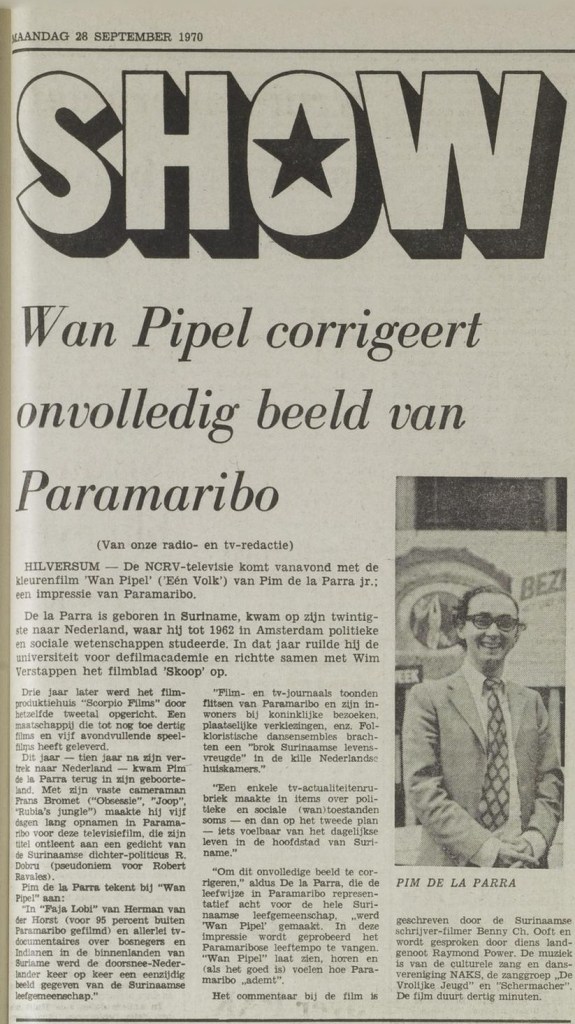
Discussing previous works about Suriname, de la Parra noted, “, the average Dutchman was again and again given a one-sided picture of the Surinamese community” and to correct this incomplete picture WAN PIPEL looked to provide a more accurate and sympathetic portrait. The program received mostly positive to mixed notices with Algemeen Handelsblad calling it a “useful addition to the normal package of Suriname information” although they noted that de la Parra should have “penetrated” even deeper into the Suriname culture.
In fact, de la Parra was already planning to do that very thing.
The early seventies were the most exciting in de la Parra’s career with major works like RUBIA’S JUNGLE (1970) and FRANK AND EVA (1972) appearing. Despite all of the success, de la Parra never forgot his home and his passion to create a feature-length film about it grew. It was in this period that he began to write the script for WAN PIPEL. His daughter Bodil recalls on the commentary for the new Cult Epics release that Pim and his writing partner spent every waking moment working on the screenplay and this went on for two years between other $corpio projects. After the release of his fantastic MY NIGHTS WITH SUSAN, SANDRA, OLGA & JULIE (1975), de la Parra was ready to make his dream project and the feature-length WAN PIPEL was announced in the Dutch press in April of 1975. Initial plans noted that de la Parra was planning on shooting WAN PIPEL on location in Suriname and the Netherlands in the fall of 1975 for a projected early 1976 release. It was to be $corpio’s most ambitious and important film and the news nearly coincided with Pim’s partner Wim Verstappen announcing his own ultra-serious epic PASTORALE 1943.
Located in northern South America, Suriname is the smallest country in the region and was held under Dutch control for centuries resulting in more than half the population speaking Dutch. By the early seventies, the National Party of Suriname began petitioning the Dutch government for their own independence, which was ultimately granted in November in 1975, just as Pim de la Parra was filming WAN PIPEL.
Armed with a screenplay cowritten by Rudi F. Kross, de la Parra gathered an impressive cast, of mostly amateurs, and a more experienced crew for his film. Frequent $corpio cinematographer and future Verhoeven collaborator Marc Felperlaan was hired on for both WAN PIPEL and PASTORALE 1943 as well as genius editor Jutta Brandstaedter, who also supplied their considerable cutting skills to both films. The remarkable score for the film, which sounds like nothing else in cinema, features a local Surinamese choir discovered by de la Parra that adds a supernatural power to the film’s soundtrack.
Even more important was the cast de la Parra gathered, mostly made up of Suriname natives including star Borger Breeveld, who delivers a fine and moving lead performance as the young student pulled in three cultural and romantic directions. In fact popular Dutch actress Willeke van Ammelrooy stands in as one of the only figures most Dutch audiences at the time might have known. Bravely filling the film with nearly all Suriname actors gives the film an added dimension that helps it in every way as a work of art but the lack of recognizable performers from the Netherlands badly hurt the film’s chances back in Holland.
The talented Suriname cast of WAN PIPEL adds a total documentary feel making it one of the most authentic portraits of a colonized society ever presented on film. Tragically despite their fine efforts, the cast was also effected negatively by the film’s failed release with some heartbreaking details available on the commentary track I won’t go into here. I was especially pleased to discover that WAN PIPEL’s incredible star, Borger Breeveld continues to act to this day thankfully. His work in WAN PIPEL will continue to haunt me. It is a kind and gentle performance lacking any sort of distracting macho energy. I greatly admired Breevald’s work in WAN PIPEL.
The WAN PIPEL shoot was a challenge in several ways. As usual, de la Parra’s crew was small but his ideas were ambitious, never more so than here. Filming in a relatively undeveloped country compared to Holland also proved difficult, as did handling such a large ensemble cast, many whom had never acted before. Ammelrooy makes the shooting sound downright torturous in her interview found on the new Blu-ray’s supplements. This was especially true during the section of the film deep in the Suriname country as the cast and crew were stuck out there filming without any substantial shelter or provisions.
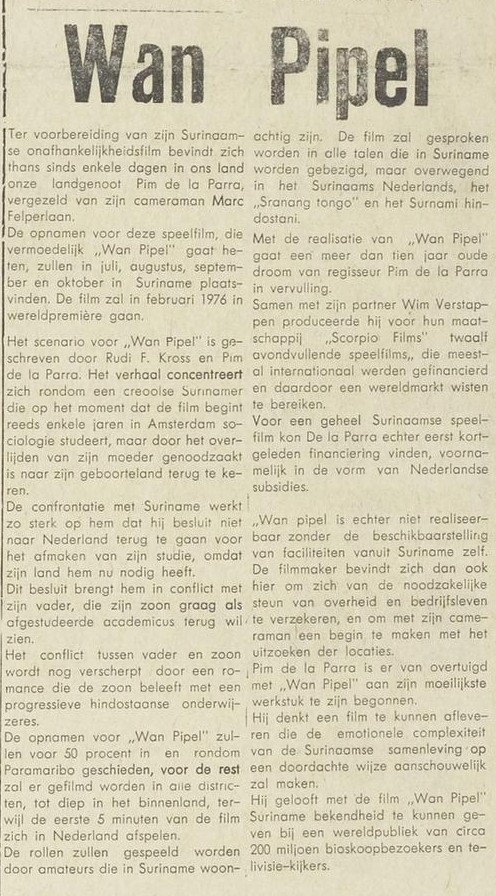
Both the Dutch and Suriname press covered the making of the film with this piece from the June 5th 1975 issue of Vrije Stem particularly enlightening as far as the production went:
“In preparation for his Surinamese independence film, our fellow countryman Pim de la Parra, accompanied by his cameraman Mare Felperlaan, has now been in our country for a few days. The recordings for this feature film will take place in July, August, September and October in Suriname. The film will have its world premiere in February 1976. The scenario for WAN PIPEL is written by Rudi F. Kross and Pim de la Parra. The story focuses on a creole Surinamese who has been studying sociology in Amsterdam for several years when the film starts, but is forced to return to his native country due to the death of his mother. The effect is so strong on him that he decides not to go back to the Netherlands to finish his studies, because his country needs him now. This decision puts him in conflict with his father, who would like to see his son as a graduate academic again. ‘ The conflict between father and son is exacerbated by a romance that the son experiences with a progressive Hindustani student. The filming for WAN PIPEL will be 50 percent in and around 1 Paramaribo, otherwise it will be filmed in all districts, deep in the interior, while the first 5 minutes of the film will take place in the Netherlands. The roles will be played by amateurs who live in Suriname. The film will be spoken in all languages used in Suriname, but predominantly in Surinamese Dutch, the „Sranang tongo “and the Surnami hin — dostani. With the realization of WAN PIPEL a more than ten-year-old dream of director Pim de la Parra comes true…De la Parra was recently able to find financing for an entirely Surinamese feature film, mainly in the form of Dutch subsidies. WAN PIPEL is not feasible without the provision of facilities from Suriname itself. The filmmaker is therefore here to ensure the necessary support from government and business and to start selecting locations with his cameraman. Pim de la Parra is convinced will be his most difficult piece of work to film but he thinks he can deliver a film that will illustrate the emotional complexity of Surinamese society in a thoughtful way and he hopes the film will reach an audience of 200 million.”
None of the difficulties surrounding the making of ONE PEOPLE was all that surprising considering it was the first feature-length film ever made in the small country. What production wouldn’t have had issues under these conditions but de la Parra and his small, dedicated team persevered all with the knowledge they were doing something completely unique and important. Also, none of technical issues had any bearing on the joyous spiritual aspect of the production that the audio commentary points out was a family affair in every way.
In the midst of shooting conditions that most filmmakers would have run from, de la Parra seemed in great spirits upon being interviewed by De waarheid in July of 1975. He’d exclaim to the paper that he’d stopped drinking and his diet consisted of a vitamin tonic and “ three Surinamese oranges a day and one cup of yogurt” before using “a warm bath at bedtime and then sleeping with specially prepared cotton balls on his eyes.” Pim had big plans after the film as well:
“After that he has one more Dutch film on his program: either Dirty Picture or Women of Today, and two more trips with his daughter of twelve and his son of 9 to the only spot in Europe where they have not yet been for winter sports. And then if not one of our best one of our controversial filmmakers will take off to California and then to South America and that may be very soon.”
Elsewhere in the interview, Pim noted something that eventually proved an obstacle to the release of WAN PIPEL, or honestly $corpio moving forward.
“The Netherlands has been a hard school. You are in a country where there is the least interest in films and the least cinemas per inhabitant. To compete with that you have to do a lot. That is why we also have those shocking things in our films. You have to attract attention if you want to get out of the costs. To get your movie funded you have to work up a sweat.”
Pim also took a moment to celebrate Willeke van Ammelrooy to the reporter, not knowing that their partnership was coming to an end with WAN PIPEL:
“Willeke is a great girl…and is also a movie crazy, just like us. Her contract states that she can go anywhere, on location, on set. She is always there. She wants to experience everything from the beginning to the end. Yes, she was also at the marathon, from start to finish. And at home she has a film room with projector. That’s Willeke, movie crazy.”
WAN PIPEL is a cultural study but it is also a romance centered on a man’s love for three women and two countries. It’s a powerfully humane and poetic work…warm, sincere and dedicated to the humanity of all people. It is a moral piece in the absolute best sense of the word not at all condescending or preachy. A social justice masterpiece, if the film has a purpose it is to celebrate the Surinamese people and culture, if it has an overarching point it is a simple but profound one…treat people with kindness and respect no matter the color of the skin of place of their birth.
We live in a world that badly needs reminding of these very basic things.
WAN PIPEL should have been a triumph for Pim de la Parra but it was a major financial failure upon release, crushing the trailblazing filmmaker personally and professionally for many years. Personal self-financed masterpieces often lead to heartbreak in the world of cinema but WAN PIPEL was particularly painful. In the ten years that followed the release of the film, de la Parra only managed to get one additional film made, DIRTY MOVIE (1980) before his return in the mid-eighties when he rightfully declared his plans for redemption and vengeance.
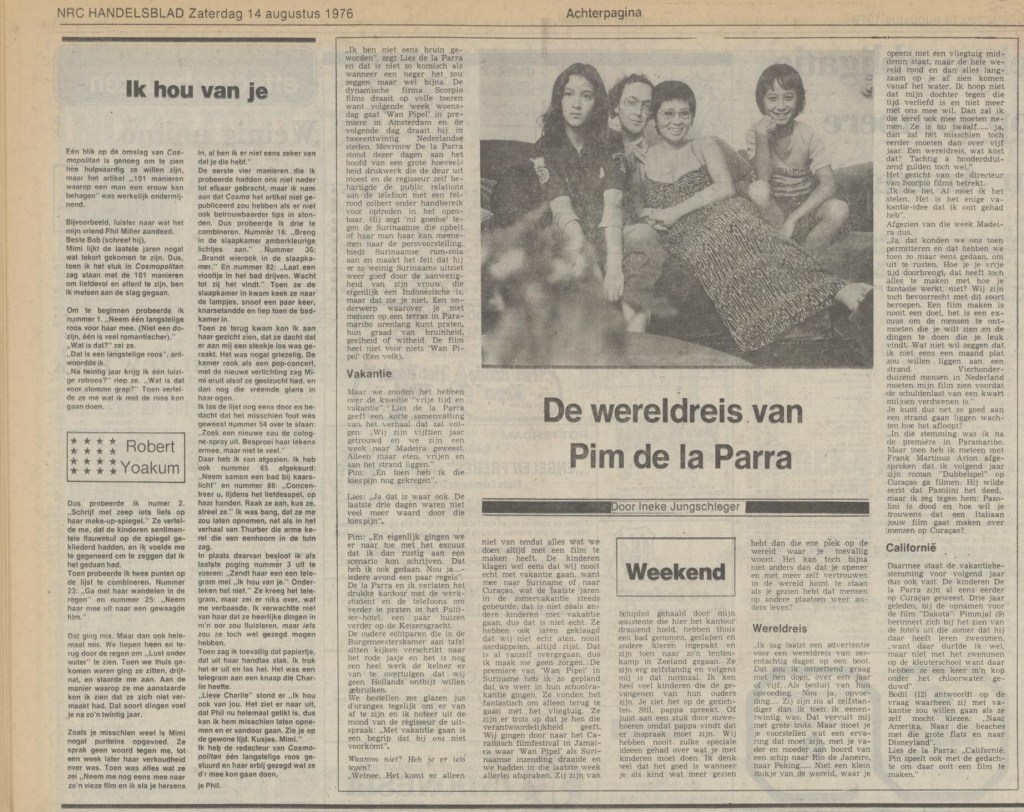
In hindsight, WAN PIPEL was perhaps destined to fail for a wide variety of reasons. One of the major ones being that up to 1975, $corpio films was widely known and celebrated for the raw sexuality they presented on screen. In fact, a piece that mentioned the upcoming WAN PIPEL (scan below) had an entire feature about this aspect of Pim and Wim’s productions. Considering that WAN PIPEL could honestly be granted a PG rating, de la Parra was trading in his production company’s most notorious attention grabbing feature for his lofty and serious ideals.

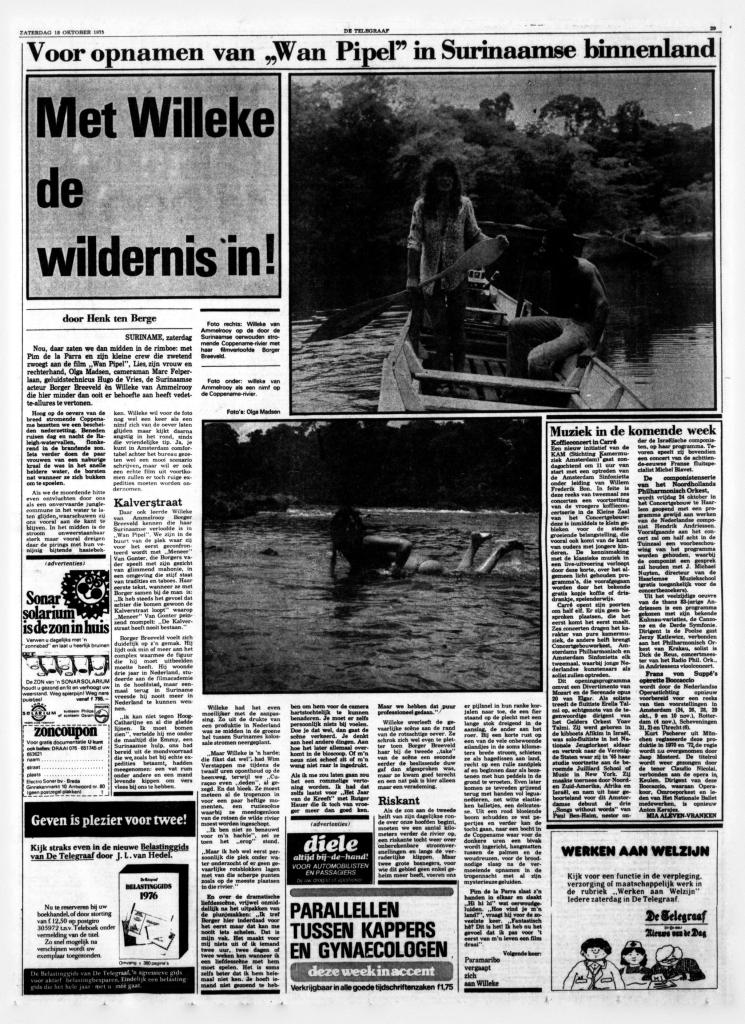
Even the notoriously sensationalistic Telegraph had difficulty selling the film in their coverage without the skin that $corpio was usually known for. This actually forced them to treat the film respectfully in their coverage but it certainly didn’t help the film’s financial hopes:
“In Suriname, filmmaker Pim de la Parra started WAN PIPEL, the realization of a dream cherished for years: a film that in the year of the independence of this land so richly conceived by nature, wants to express in a loving way the bond that has been there over the centuries has grown between Dutch and Surinamese.”

Perhaps recognizing their earlier more nuanced take wasn’t going to help move tickets or their papers, Telegraph later in 1975 switched their coverage of WAN PIPEL to focus more on Wilke van Ammelrooy, although ultimately this wouldn’t help the film’s initial release either.
Perhaps WAN PIPEL’S fortunes might have been different had it been released during any other year but increasingly the Dutch film industry was struggling with even the first Ever Dutch Film Awards not helping matters. Footage from WAN PIPEL actually premiered that evening (as detailed below) but whatever help the event might have given the film vanished quickly.

While the public stayed away critical reaction was more divided. As I have learned more and more researching these films, I have discovered the Dutch press spent a lot more time covering their film’s pre-releases before basically allowing them to die on the vine upon premiere. WAN PIPEL was no different with press coverage quickly drying up after it failed to initially capture the Dutch public’s interest. Had the press championed an obvious landmark production more there is no telling how it and de la Parra’s fortunes might have changed.

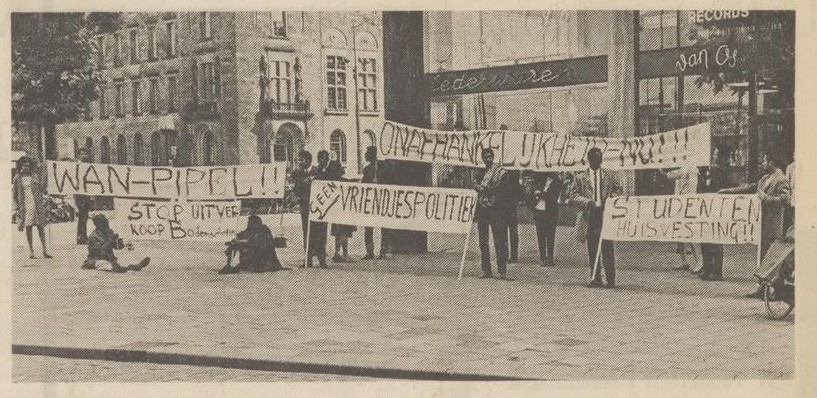
While WAN PIPEL was returning most disappointing box-office receipts in Holland, in Suriname the film initially had different fortunes, as Dutch film historian Lex Veerkamp points out that local audiences came out more for screenings, no doubt inspired by the film’s regional premiere that the press covered in detail. Bodil points out on the same commentary that despite that initial wave of Suriname success, box-office eventually died as well with many audiences finally only discovering the film via television showings throughout the eighties a decade later. There is a wonderful moment on the commentary where Bodil learns that WAN PIPEL eventually was seen by nearly five million Dutch residents thanks to these eventual television showings.
Frustratingly enough, WAN PIPEL nearly made waves at the Cannes Film Festival but poor handling and promotion killed its chances at finding the kind of international distributor it deserved. Nieuwsblad van het Noorden reported in May of 1976 about a its sole out of competition showing:
“Mr Henck Arron, Prime Minister of the New Independent Republic of Suriname, invites you to a special presentation of the first feature film from the Republic of Suriname: Wan Pipel”. With these swirling words that Mr. Henck Arron himself was unaware of, an attempt was made to lure the film press collected in Cannes into a cinema for the viewing of Pim de la Parra’s new film. During the performance, only the Dutch colony appeared to have followed up on the invitation.”
Despite its initial ruinous release, Pim de la Parra refused to let WAN PIPEL die and he spent the rest of his life discussing the film and travelling to show it whenever possible. His dedication to the vision he knew was on the right side of history was remarkably persistent and as the years went by so did the admiration and acclaim for WAN PIPEL. For the people it resonated with, it remains one of the great transcendent films in all of cinema.

Cult Epics continues their run as the ultimate destination of classic Dutch films on home video here in the States and we should all be grateful. These are remarkable additions to film history that many of us have never been privy too, and none of us have ever seen these stunning HD restorations that the EYE in Amsterdam has been so lovingly working on. Just as ONE PEOPLE was a dream for Pim de la Parra, bringing the film to HD has long been a goal of Cult Epics’ Nico B and this is absolutely one of his finest releases and most important.
Save for the omission of the sadly most likely lost 1970 short documentary of the same name detailed earlier, Cult Epics Blu-ray is a perfect and comprehensive release. The beautifully restored 2K print maintains its powerfully cinematic look with beautiful colors and detail. The audio commentary is an essential listen, both personal and historically pleasing. Just terrific. A fascinating 30 minute behind the scenes documentary is also on hand. Originating from a Dutch news report, this program allows us the great opportunity to see de la Parra at work! Amazing and interviews with de la Parra and some of the cast are included as well in this vintage piece. A comprehensive photo gallery is on hand as well as a lengthy new career spanning interview with legendary Willeke van Ammelrooy. A moving introduction by Pim, filmed at his home in Suriname in 2020 details on important the film remained to the great man and artist is also included.
Perhaps the real jewel in the crown goes as far as the supplemental material goes is the inclusion of a gorgeous HD print of the early $corpio film Aah… Tamara (1965). I have already reviewed this incredible short over at Letterboxd but am including it at the end of this piece here as well for any interested.
Finally a generous $corpio trailer reel is included with the WAN PIPEL promo including what appears to be some alternate footage not found in the film. A trailer for Win Verstappen’s DAKOTA is also on hand, making me hopeful that Cult Epics might release that as well eventually.
Asked by De waarheid about what he hoped to accomplish with WAN PIPEL in the lengthy pre-release interview he granted them, Pim de la Parra stated:
“That will be my first real movie…a story showing that Suriname is an independent country and In my view, the most beautiful country there is! I make it in the context of the declaration of independence. It is spoken in the five languages spoken in Suriname. In the same ratio. Everything is subtitled. There are also recordings of the interior of Suriname, the places that the Surinamese population does not know either. What I want to achieve is the effect of surprise. With the Surinamese themselves, who will see their own country in the way they have not yet seen it. Blessing that this is their country, say that there are no racial contradictions, that it is about building the land. That is why it is simultaneously a documentary, made by a Surinamese. Because that’s me. I have lived there for twenty years, and I have discovered that I do not know my own country, and my own relationship with that country. And I want to break through that, also for others. What I hope is that the Surinamese after seeing the film they’ll say: ‘Boy, look at what a beautiful country’; that the Surinamese who are in the Netherlands cry for what they miss and want to go back together to build businesses and that the Dutch can take a look in the soul of a Surinamese, and also come and look at that country as a tourist. I know that will be the most difficult task in my career. But I feel I’m ready. That I can handle it.”

I was deeply moved by WAN PIPEL and am glad I held off on watching it until Nico could get this release out. I only wish Pim de la Parra was still alive so I could get a message to him telling him how important and magical his greatest achievement is. Bodil de la Parra discusses how disillusioned her father was after the failure of WAN PIPEL and his personal devastation at realizing many Dutch audiences of the period simply wouldn’t accept a film made up nearly entirely with people of color. Financially devastating as well, the failure of ONE PEOPLE changed Pim de la Parra but I wish I could send a message to him as a film lover and progressive…it was all worth it!
Pim, your message got through and your vision of One People will live on.
Your message of love and unity remains even more vital now than ever.
Wan Pipel, forever…One People, NOW!
AAH…TAMARA (1965)
The earliest chapter in the Netherlands’ $corpio Film’s landmark story, Pim de la Parra’s ‘Aah… Tamara’ (1965) is a charming and gorgeous French New Wave inspired short now finally available in HD via Cult Epics’ tremendous new special edition of de la Parra’s WAN PIPLE (1975). Starring the acclaimed Dutch actress Kitty Courbois, in one of her earliest screen appearances, ‘Aah… Tamara’ is a real breath of fresh cinematic air seen all these decades later via the Amsterdam Eye’s stunning HD transfer. Heavily indebted especially to Godard and Varda, ‘Aah… Tamara’ gives modern viewers a remarkable snapshot back to Amsterdam in the mid-sixties and helped kickstart one of the most important companies and careers in all modern film.
Pim de la Parra turned 25 at the beginning of 1965. By the end of the year he had two short films, including ‘Aah… Tamara’, and the company he founded with fellow filmmaker Wim Verstappen was poised for cinematic revolution. Pim himself appears in ‘Aah… Tamara’ along with two other famed directors connected to the Dutch New Wave with established veteran Fons Rademakers and rebellious newcomer Frans Weisz also playing small roles. These are the same men who directed Sylvia Kristel 7 years later in her first three films.
‘Aah… Tamara’ is a wonderfully youthful work made by an artist drunk on the cinema and engulfed by its history. Already showing signs of genius behind the camera, de la Parra directs ‘Aah… Tamara’ with a roving and at times chaotic eye as though he’s excited to film everything he can. His obvious dedication especially to Godard has a warm romantic quality but ‘Aah… Tamara’ isn’t a cheap copy and has more than enough of its own original qualities to distinguish it from its French New Wave counterparts.
Shot in both breathtaking black and white and dazzling color by the prolific and future award-winning cinematographer Gérard Vandenberg and produced by Verstappen, ‘Aah… Tamara’ is a film made by dreamers. None more so than de la Parra who makes the most of his debut here in every way possible. ‘Aah… Tamara’ is a terrific time capsule and even better film.
-Jeremy Richey, May 2025-
 Nostalgia Kinky
Leave a comment