
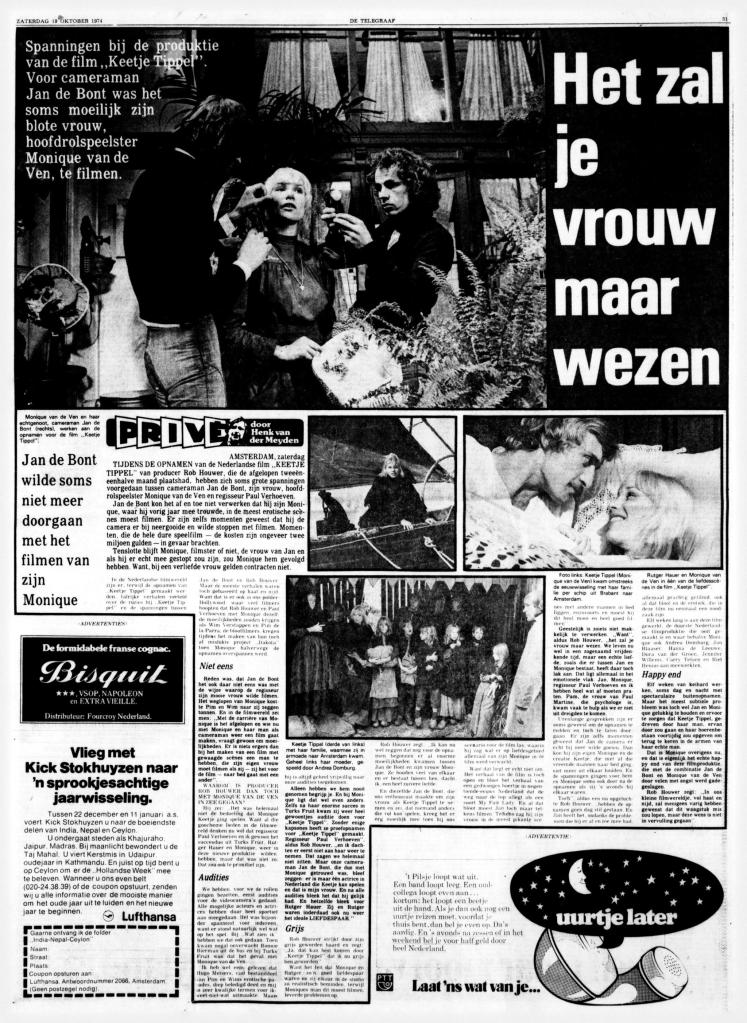
It ended as it began…with a curse. Not just any curse, but a cinematic curse that left many dreams in its wake. Something witchy was in the air Holland. A frustrated Paul Verhoeven felt it and was nearing his wits end in the spring of 1974, as his ambitious period piece Keetje Tippel (1975) was on the verge of falling apart. Both Verhoeven and producer Rob Houwer were struggling with star Monique van de Ven and her lover, cinematographer Jan de Bont, with the press reporting that De Bont was reluctant to film the film’s sensual scenes. De Telegraaf even reported that De Bont had thrown his camera down in a fit of rage. Despite the success they’d all had on Turks Fruit (1972) Verhoeven and Houwer were on egg-shells in fear that they’d lose both their cinematographer and star before filming wrapped.
They were right to be worried.
After all, history has a way of repeating.

Neither Verhoeven or Houwer were surprised by their struggles on Keetje Tippel. An exhausted and resigned Houwer admitted to De Telegraaf, “In our little film world, full of hatred and envy, many people will have fervently wished that this venture would go wrong.” See Rob Houwer, like Paul Verhoeven, was very aware of that ‘curse’ I mentioned. This cinematic omen was making life on the set in 1974 a much more difficult one than previously experienced for Verhoeven and everyone involved on what eventually miraculously became a masterful production. The curse was rumored to have started two years previously. It was 1972 and Turks Fruit was well on its way to becoming the biggest Dutch film of the year, shattering previous records held by the Wim Verstappen’s Blue Movie (1971). Perhaps a bit salty by the competition, Verstappen dismissed Turks Fruit, specifically Verhoeven in the press. Verstappen’s comments reportedly enraged Verhoeven enough that he literally placed a curse on Verstappen’s next production out of revenge. Now, I don’t believe in any of what Lou Reed called ‘mystic shit’ but buddy, I love a good story…I love a great myth and this one flies.
With Verhoeven’s whispered ‘curse’ in the air, Verstappen began preparing his next film which he’d ironically hired his two favorite members of the Turks Fruit team. We’ll leave ‘the curse’ here for now but know that clouds were appearing. Whether or not the whispered ‘curse’ was indeed factual, the making of Wim Verstappen’s Dakota (1974) was a real horror show, a traumatic time that destroyed friendships, nearly wrecked careers and damaged what might have been one of the great masterpieces of the seventies. Despite all of the issues Verstappen and his Producer Pim de la Parra faced on Dakota, the film miraculously still turned out great. It’s a flawed work, one that obviously had to be altered mid-flight, but one that is quite astonishing nonetheless. Dakota is a great loner film, made by cinematic outcasts about a dreamer nearly out of time.
A flight enthusiast, Verstappen had long dreamed of making Dakota and planned for it to be Pim and Wim’s production company Scorpio Film’s greatest work. The film was initially announced in November of 1972, when once again Het Parool reported that it was to be Scorpio Films’ next picture, that it was to star legendary Kees Brusse and, most excitedly, Pim was gifting Wim an actual plane for the production, with Pim joking that if he bought a Lockheed Constellation they’d have to crash it at the end of the production. The joke turned out to be weirdly omnipresent.

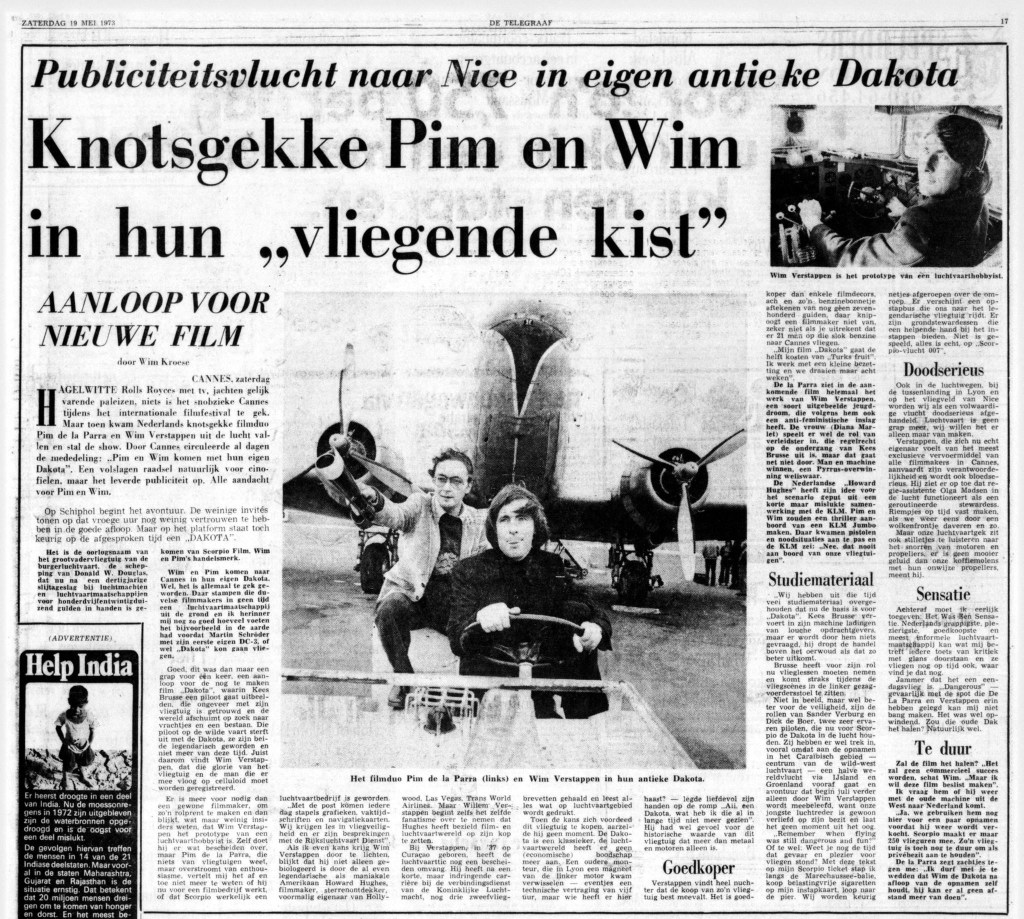

Within a few months, de la Parra had indeed found and purchased a used plane for Dakota’s production. Never one to do things halfway, the Scorpio Films team ensured the press were on hand to see the plane’s premiere. De Tijd detailed the dizzying first trip in early 1973:
“Pim and Wim landed at Nice airport on Wednesday with their own Dakota which will be used in July for Wim’s new film. Due to a minuscule but time-consuming defect, the journey in Lyon had to be interrupted. That had left Schiphol at half past nine in the morning, only slipped down at half past seven in the evening at the airport of the Cóte d’Azur. The company of friends and journalists who experienced the exciting trip on the DC-3 had hardly any time to rest for the return trip after a trip to Cannes’ well-known food and drink establishments. Several passengers therefore decided to hang around the festival palace for only a few days to at least experience something of this wonderful circus. Among other things, a VPRO television team remained behind to make a report for Het Gat van Nederland“.

The initial engine troubles perhaps should have warmed Pim and Wim that a turbulent time was ahead but the two were too excited and hopeful to pay any mind. After securing both the plane and Brusse, Pim and Wim began gathering together the rest of the cast and crew for Dakota. For the most part, a number of Scorpio Films most valuable players were on hand, including screen writer Charles Gormley and composer Antoine Duhamel. Talented strong women were always on hand as well. For Dakota, these included frequent editor Jutta Brandstaedter and assistant director Olga Madsen behind the scenes.
Joining Brusse in the relatively small main cast were three of Holland’s most exciting young actresses, including $corpio regular Willeke van Ammelrooy and the enormously talented Diana Dobbelman. Perhaps most excitedly, as far as potential box-office went, the young actress that had set the world on fire in Turks Fruit was cast as the main female lead. Never mind that she was the girlfriend of the cinematographer that had been hired, also from Turks Fruit. What could possibly go wrong?
Monique van de Ven deservedly became an overnight star with Turks Fruit and one of the most exciting young actresses of the seventies. It is one of the great debuts in all of modern film and it set in motion what has turned into a remarkable career in front of and behind the camera and on stage. In 1974, 20 year old van de Ven was incredibly talented but still immature and Dakota was just the second film of her career. Plus she was dealing with being thrust into stardom. It was a lot. On the other hand, Jan de Bont was 11 years van de Ven’s senior and had been working in the Dutch film industry since the mid-sixties. The two were in the early stages of an affair, that eventually became a marriage, on the set of Dakota.
What could possibly go wrong?
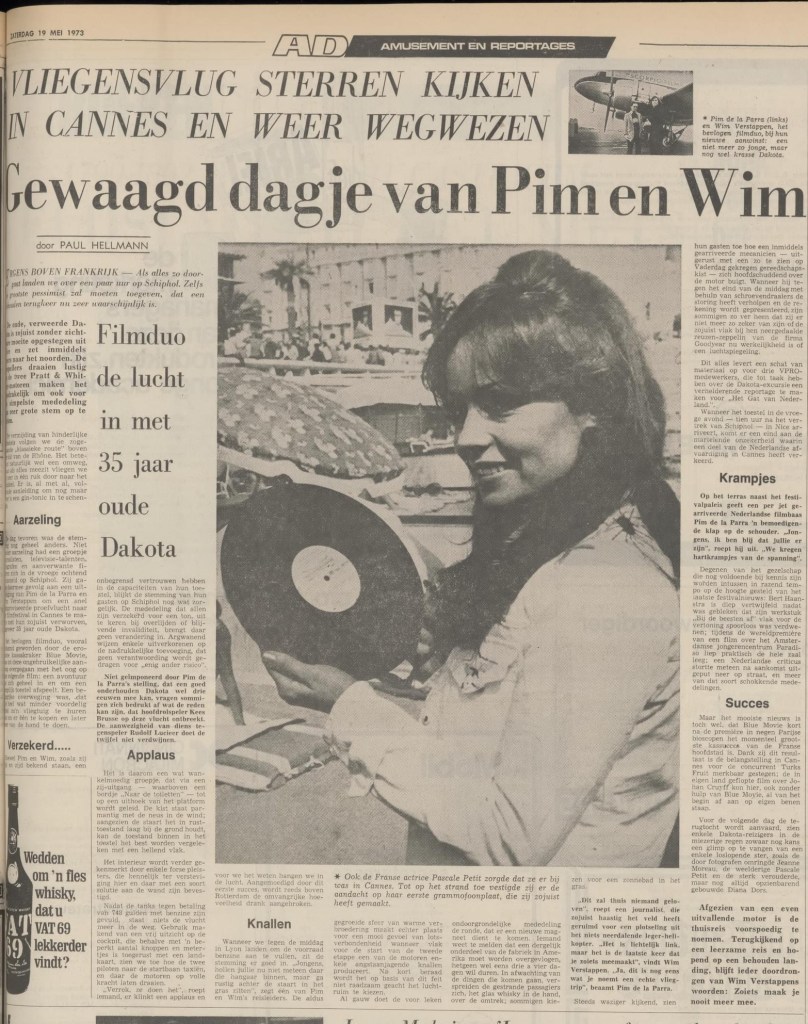
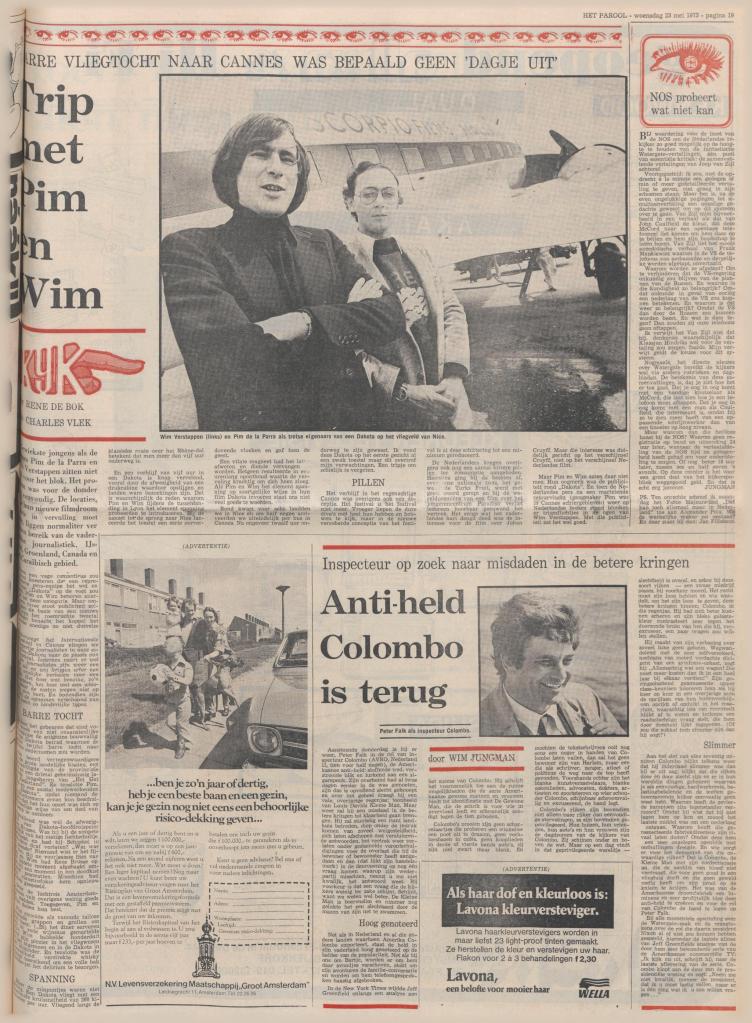
Although van de Ven and de Bont eventually became the biggest headache of Verstappen’s career an unexpected dark cloud arrived over the set of Dakota before filming even began when de la Parra weirdly told Verstappen that he didn’t like the script to the film. It was a shattering moment that caused a wedge between the two, leading to the eventual end of Scorpio Films and their partnership a few years down the road. A depressed Verstappen tried to maintain focus telling De Telegraaf, “Dakota will cost half of Turks Fruit. I work with a small line-up and we only work for eight weeks.”

With Dakota still in its early stages, the press continued to cover the film and began to discuss $corpio’s place more and more (as seen in the above scan). Unaware of the schism that had formed between Pim and Wim the cast and crew of Dakota prepared for their flight. Brusse especially dove into the role, taking flying lessons that eventually caused him to become a pilot with his own personal plane. The press, for their part, probably guessed the next time Dakota was going to mentioned was in preparation for its premiere. After all, what could go wrong?
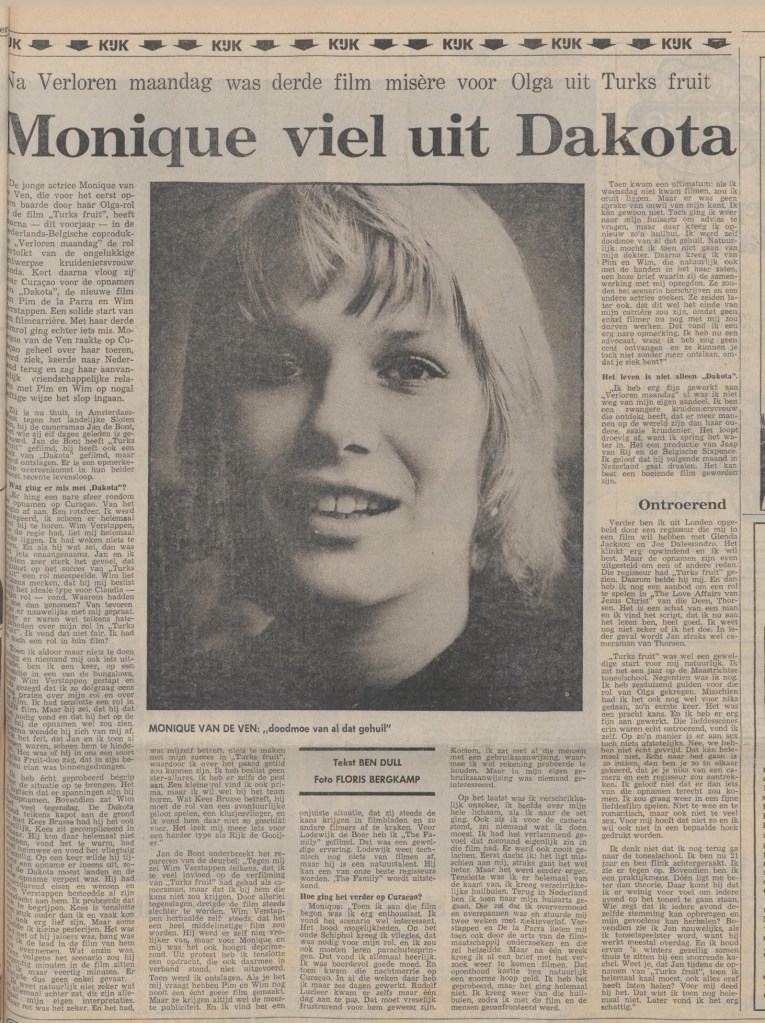
In his excellent commentary track on Cult Epics’ new special edition of Dakota, author and Dutch film expert Peter Verstraten goes into detail about what exactly happened on the set of Dakota. Much of the information here comes from Peter’s excellent commentary, as well as my own research with these articles I’ve found. Problems began early on apparently, after a delay caused the cast and crew some unexpected spare time before filming began. It was a relative minor issue but apparently van de Ven especially took it personally and she bitterly complained to the press that she felt ‘ignored’ by everyone on the film’s set, except her boyfriend. Jan de Bont then reportedly took nearly an entire day’s shoot to film what was supposed to be a simple shot of van de Ven water skiing, which caused the film’s budget to extend early on. This enraged both Verstappen and de la Parra and, after some additional issues with de Bont struggling to film van de Ven in even a minor romantic scene, the wildly talented young cinematographer was fired.
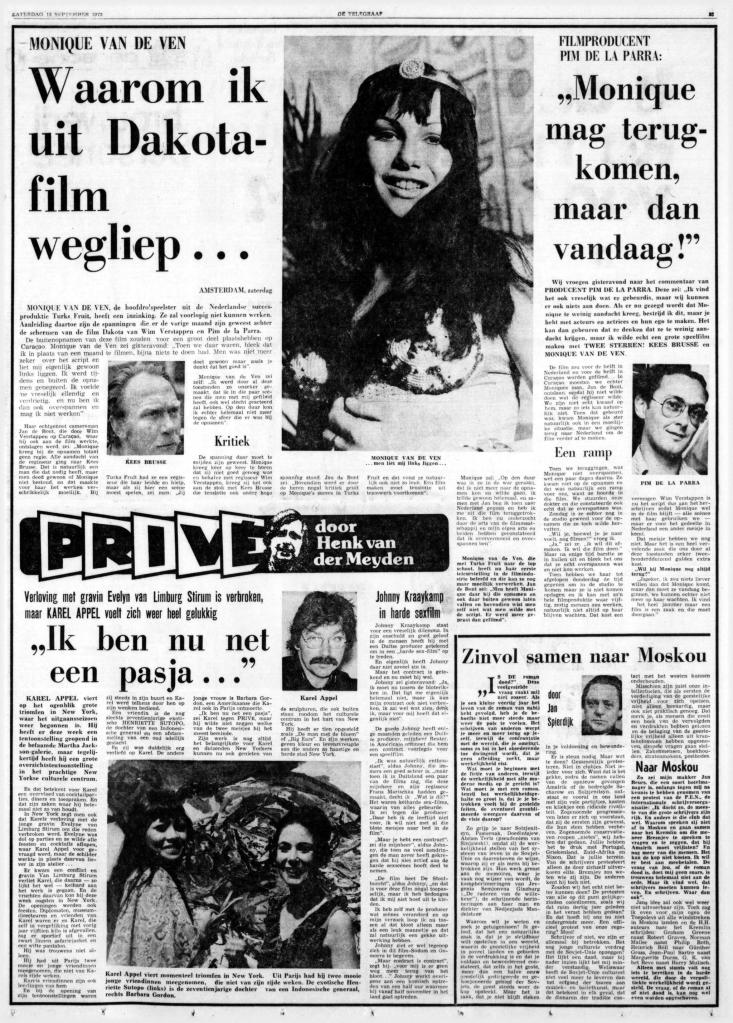
It was a lot to handle for 20 year van de Ven, who admitted to the press, “I felt terribly miserable and sad, and now I am overwrought.” More and more insecure, van de Ven told the press that everything was affecting her performance:
“All these situations made me so insecure. I also have acted poorly in those few scenes that were filmed with me. In the long run, I could no longer cope with the atmosphere.”
And so Monique van de Ven, the female star of the Dakota and one of its biggest draws promptly quit the production before her key scenes had been filmed. But she’d filmed enough as to where complete reshoots with a new actress were impossible, as the cost and time couldn’t be spared.
It was a fucked-up scene.
Verstappen was probably close to a nervous breakdown at this point. After all he’d wanted both van de Ven and De Bont for his film badly and he even considered De Bont as the only Dutch cinematographer who could shoot the flight scenes he wanted. In a lovely gesture, Diana Dobbelman stepped in to do as much standing in for van de Ven as possible and her own role was extended. Dakota had to be rewritten mid-production and completely retooled.
Van de Ven facing much heat and questions from the press agreed to some interviews, including some with De Bont. She’d admit:
“In the long run I was so confused that I couldn’t and didn’t want to go to the recordings anymore. I just shook completely, and together with Jan I went to the Netherlands and withdrew from that film. I have now been examined by the film company doctor, and my own doctor, and both have found that I am overtired and overwrought.”.
De Bont said he thought “they simply dropped Monique there during those recordings and beyond and, moreover, they did not know what they wanted with the script. There was more talk than filming”.
Tensions were obviously high and, at this point, what we have here is an actual beef.
The ‘curse’ regardless of its validity was working.
Scorpio Films had to respond. Despite his initial doubts about the film, Pim de la Parra wasn’t about to just stand by and he gave the press their side:
“I hate what’s going on, but we can’t help it either. If it is now said that Monique received too little attention, I dispute this, but you are dealing with actors and actresses and their ego. It may happen that they think they don’t get enough attention, but I really wanted to make a big feature film with TWO STARS! KEES BRUSSE and MONIQUE VAN DE VEN. The film would be filmed half in the Netherlands and half in Curacao. However, in Curacao we had Monique’s man Jan de Bont fired because he didn’t want to film what the director wanted. We’re not really mad at him, but of course something like that is not possible. If that had happened, Monique as a star would of course also be in a difficult situation. Then we went back to the Netherlands to continue finishing the film.
When we went back, Monique wasn’t overstressed, but she was a few days later. She didn’t appear on the recordings and that was of course a disaster for us…We sent our doctor and he really noticed that she was overwrought. However, she was still in the studio on Sunday for the recordings she wanted to resume.I asked ‘although you feel bad, do you still want to film?”. ‘Yes. I want to finish this. I want to do this movie.” But after some time she broke down crying and it turned out to us that she was really overwrought and couldn’t work.
Then we gave her until last Thursday to get to the studio, but she didn’t show up and I can’t do that to the production. Sixty people are working on it, and of course not always waiting for her. That costs a fortune. Wim Verstappen is now rewriting the script so that Monique’s scenes stay in the film. All scenes we shot with her we’ll use, but another girl comes in for the part in the Netherlands.
We don’t have that girl yet. But it is a very annoying thing that it costs us at least two hundred thousand guilders extra due to all these situations…I would like nothing more than for Monique to come back, but she has to start today. We can’t wait for her anymore. I think it’s a shame, but the film matters and it has to continue.”


The beef continued, like an early hip-hop feud of epic proportions with each trading jabs. Van de Ven, hyper sensitive to the press’ claims of diva-like behavior, told Het Parool in perhaps her most fiery interview, “I certainly don’t have a star allure, I even hate them. I also think a small role is fine. I do want to be part of the team.” Asked about her leading man, Monique admitted:
“As for Kees Brusse,he has to play the role of an adventurous pilot, a kite flyer, and I didn’t think he was very suitable for that. It seemed more like something for a harder type like Rijk de Gooijer to me.”
Monique’s light criticism of Brusse was nothing compared to de Bont’s take on Verstappen and the film in the same interview:
“Verstappen knew that I had influence on the film adaptation of Turks Fruit as a cameraman, but that I would not get that chance with him. Due to all kinds of setbacks, the film was in danger of getting worse. Wim Verstappen kept repeating that it would be a very mediocre film. It didn’t make him any happier, but for Monique and me it was also highly depressing. Finally, in protest, I did not carry out an assignment that was also related to this. Then I was fired. If you ask me, Pim and Wim have never made a really good film. But they always get the most publicity. And I think it is an incorrect situation that they always have the opportunity to criticize other filmmakers in film magazines and so on…When I started that movie I was very excited. I thought the screenplay was interesting. It offered possibilities. At old Schiphol I received flying lessons, which was necessary for my role, and I should also learn to skydive. I loved all that. I was packed with good courage. And then came that nightmare on Curagao. In all those weeks there I only worked six days. Rudolf Lucieer was only involved for one day. That must have been terribly frustrating for him. In short, I was sitting with all those people just waiting…”
Van de ven jumps in:
“Then I received an angry letter from Pim and Wim, who had their hands in their hair, when they canceled their collaboration with me. They would rewrite the screenplay and find another actress. They also later said that this would be the end of my career, because no filmmaker would dare to work with me anymore. I thought that was a very nasty comment. I have a lawyer now, because I haven’t received a cent yet and they can’t fire you out of hand because you’re sick, can they? Life is not just Dakota.”
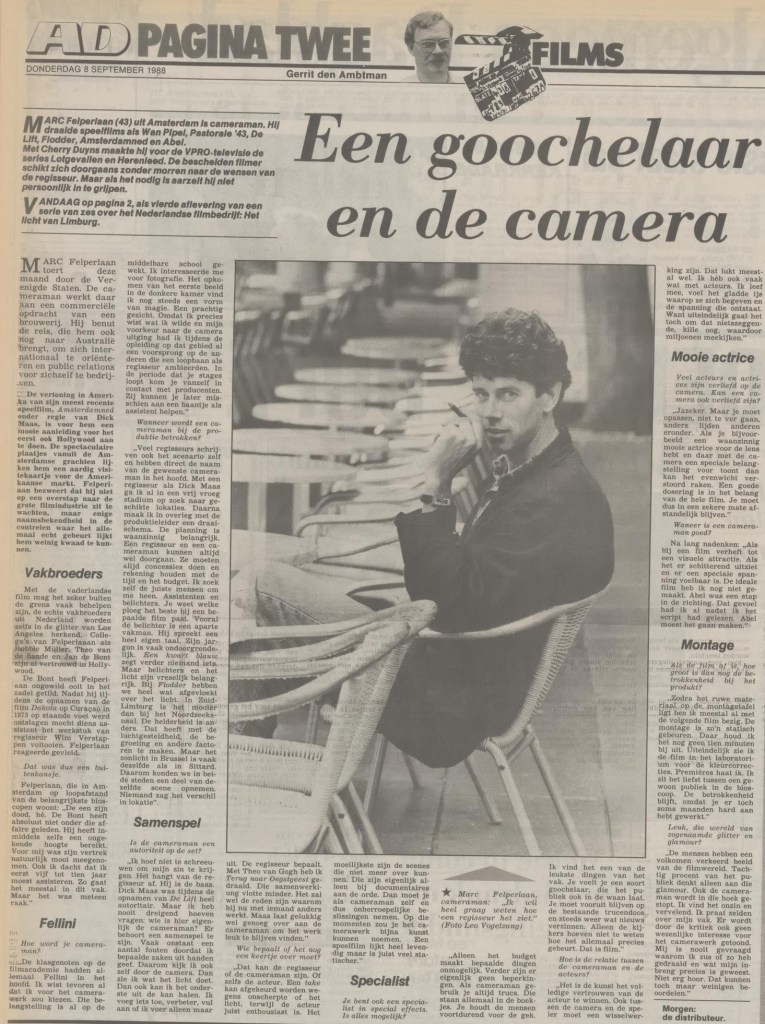
Of course for filmmakers with their livelihood and company’s future on the line, Dakota was everything and Verstappen hired the excellent Theo van de Sande (along with an uncredited Marc Felperlaan) to take the place of De Bont. Both were exceptional choices and have had incredibly distinguished careers, as has De Bont still a couple of decades away from his incredible directorial credits on films like Speed (1994) and Twister (1996)
With a new cinematographer in place and the script rewritten, work continued on Dakota but the Van de Ven incident cast a dark shadow over the production. De Tijd noted in an article published in late 1973:
“There has been a strange anti-Pim and Wim virus in recent weeks. Long-lived little frustrations, jealousies, discord and problems of all kinds suddenly erupt and here and there take the form of a smear campaign that goes beyond all boundaries…The opportunity has been taken by some to launch a disproportionate attack on the Pim and Wlm phenomenon.”
Despite the ominous vibes, De Tijd noted one particularly positive thing that Verstappen mentioned and that was, despite Monique’s departure, the new script was still very much about “a man and his plane.” In fact, by removing the romantic storyline between Kees and Monique, Verstappen was able to focus more on a uniquely solitary man and the one thing that truly makes him happy. And Dakota is at its most remarkable in the many moments where the film is near dialogue free as Brusse finds solace in the aloneness of his plane. Dakota, at points, is almost like Coppola’s The Conversation (1972) in the air and it is these long stretches of relative silence that finds Verstappen at his most brilliant.
Verstappen, for his part, was depressed but defiant. He’d tell Scoop that “I am convinced that there are hardly any people in the world today who can film properly, and that Pim and I are indeed in a kind of top class…there may be about ten.” Asked by Het Parool about van de Ven, Verstappen coldly replied, “I did my utmost to be nice to Monique. But when she hears my name now, she should get nervous.”
The curse was to reappear…

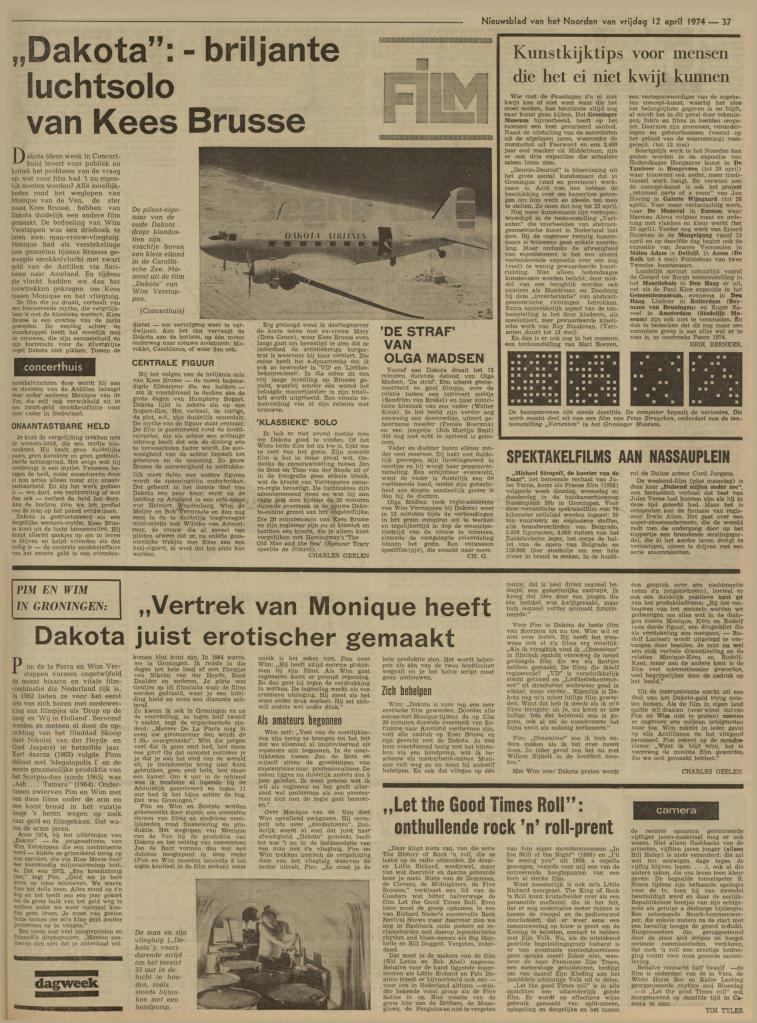
By April of 1974, the nightmare that had been Dakota’s production was over and the film was ready for its premiere at Amsterdam’s Het Rembrandttheater. After the premiere, Dakota was set for 13 theaters over Easter weekend.
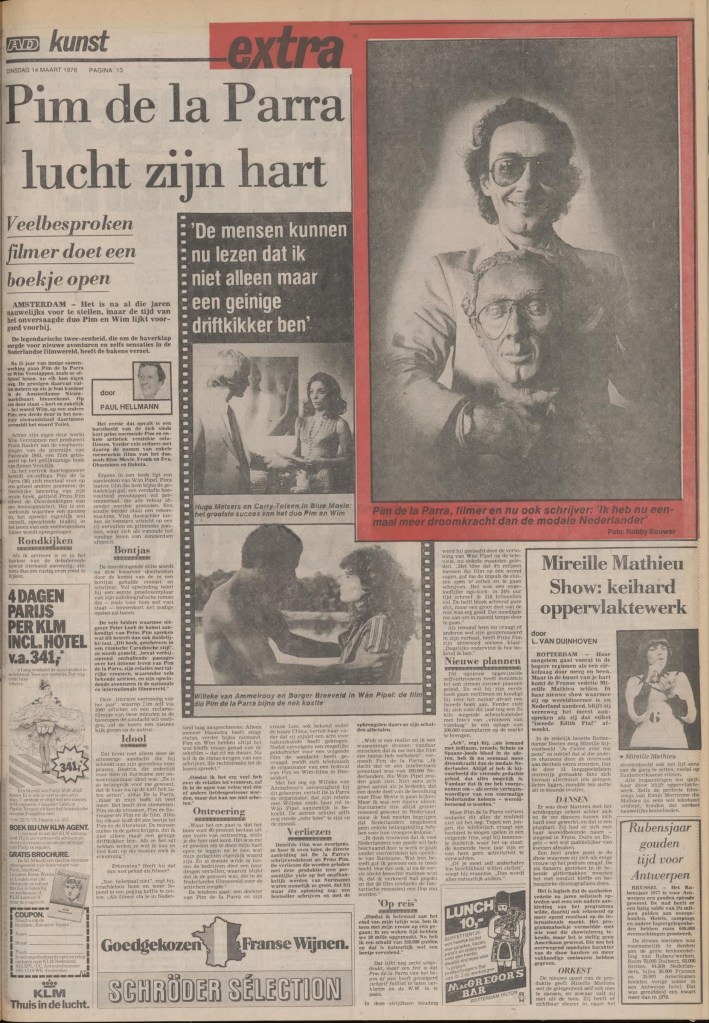
Critical reaction was divided. Het vrije volk praised Verstappen’s direction, the photography and Brusse but noted the film had obviously been restructured. Co-star Willeke van Ammelrooy praised the film in the same paper and her mother was even quoted saying how proud she was of her talented daughter.


While reviews began coming in for Dakota, De Telegraaf detailed the film’s wrap-party and mentioned for the first time in the press the rumored curse Verstappen had put on Verhoeven’s upcoming film as payback noting, “This is Hollywood in Holland.”
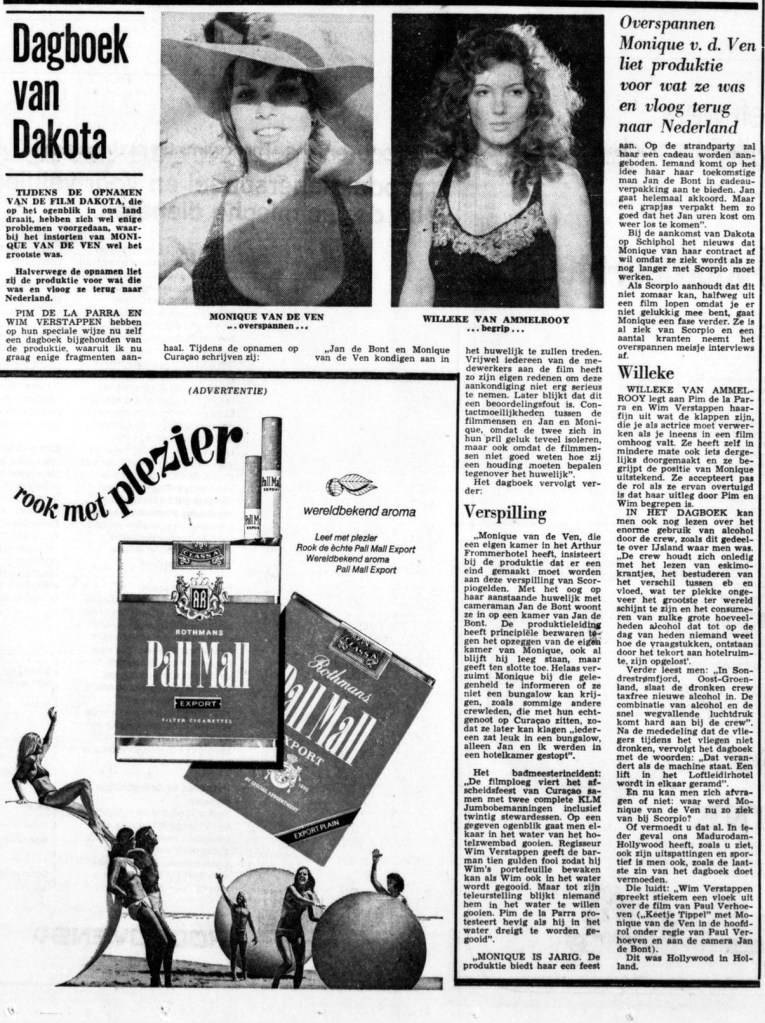

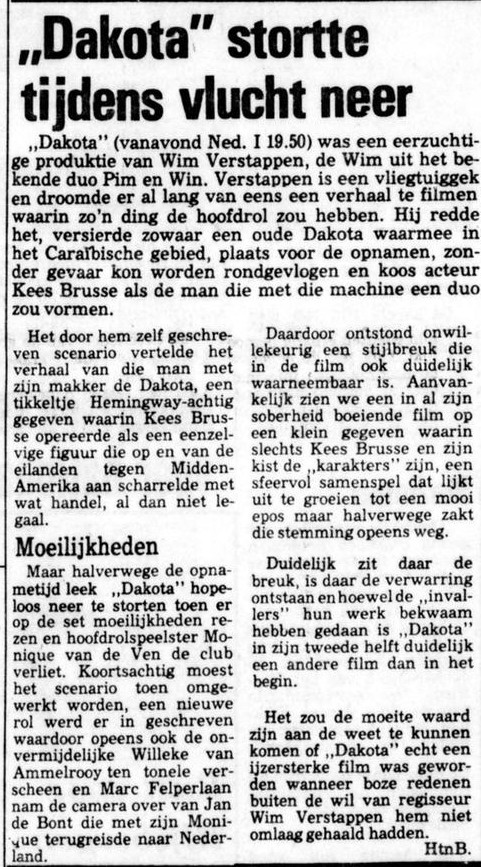
NRC Handelblad trashed the film calling it clumsy and noted it hadn’t recovered from it’s on-set problems. Volkskrant was kinder and praised Brusse particularly and De Telegraaf was fairly over the moon for the film calling it the “best of Pim and Wim”. De Tijd was more measured but had many positive things to say about the film, particularly praising the long stretches of silence Verstappen captured so poetically. Even the harshest critics found some things to admire about the film, with most agreeing on Brusse and Verstappen’s contributions. For Verstappen at the time, the release was a bittersweet experience to say the least. He’d tell Skoop in the spring of ’74, “It’s absolutely not the movie I started all the misery for.”
Both Pim and Wim continued promoting the film throughout the summer of ’74 (see the many vintage clippings here) and they compared their refusal to quit filming Dakota with Brusse’s own struggles in the film. Wim, now a bit cooler, also waxed poetic about how both him and Pim had been amateurs when they began making films and they’d held on to that spirit, something that perhaps De Bont couldn’t relate to. Both were also enthusiastic about co-director and longtime $corpio regular Olga Madsen’s acclaimed short film Straf (1974), which played before Dakota upon its initial release. Madsen’s film eventually won a Silver Bear at the Berlin Film Festival.

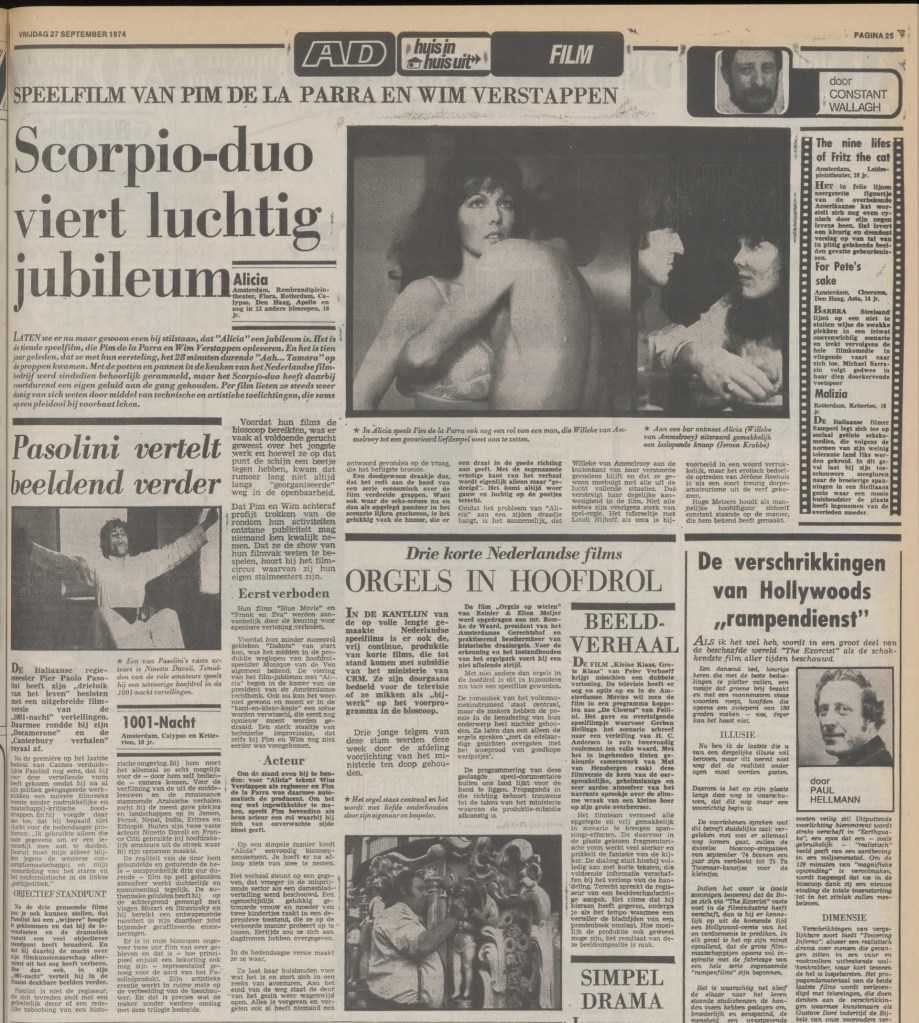

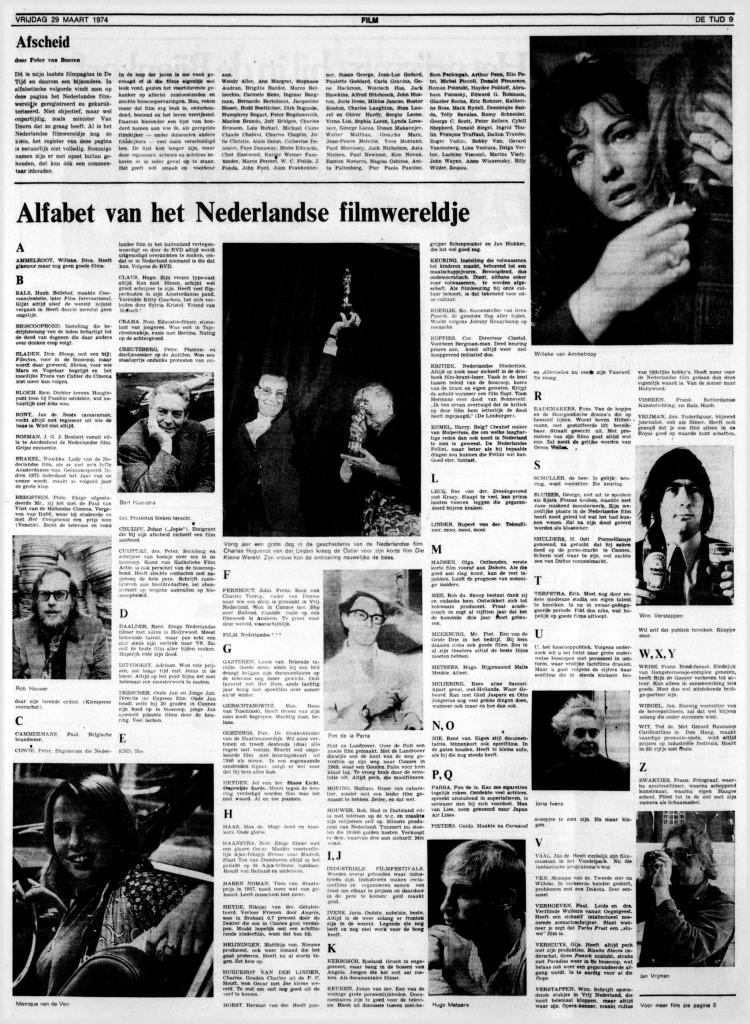


Oh and I haven’t forgotten about ‘the curse’ and neither had the press when they asked Paul Verhoeven about it shortly after Dakota’s release. He’d deny ever placing the curse explaining to Het Parool:
“I took no revenge. I felt no malice in me, I explained that Dakota it is not a bad film, but a failed film, and that is why it happened: due to the disappearance of Monique, who became overwrought after Jan was fired. That film was glued with a lot of love, but it was too late. At the end of my piece I wrote that Wim had asked me to talk to Monique to play a lesbian scene with Willeke van Ammelrooy in his upcoming film Alicia (1974). In the meantime, I actually called Monique about that and she asked if I had gone completely crazy. She is now very opposed to those guys because of the Dakota affair, but of course you have to see such a matter from both sides. It also bothers me, now that I’m going to play Keetje Tippel with Monique and Jan. If you make a film together with a close-knit team, which means you already have enough tensions, and a couple in love walks through the middle, it can be very disturbing. It can psychologically mess things up and that’s apparently what happened with Dakota. In such a situation I might have told Jan to quit.”
Despite some extremely positive critical reaction as well as the film’s stars, Dakota lost quite a bit of money for Scorpio Films upon release. For Pim and Wim it was a tough landing after all the struggle. Verstappen frustratingly exclaimed on the program Studio, “We are leaving the Netherlands. The average Dutch person goes to the cinema twice a year.” It’s not trial and error here, it’s just trial here. Even when the movie is running, you still suffer a loss. The only ones making money from film here are the cinema operators.”
He’d express similar feelings that fall in the press saying that he felt like there was no future for him in Dutch film unless he managed to make enough money to be self-sufficient. For all of its great qualities, Dakota was disastrous for Scorpio Films as a company and Pim and Wim as professional partners and mates. Interviewed more than a decade later in 1985 by NRC Handelsblad, de la Parra recalled that Dakota marked the real beginning of all the issues that eventually grounded Scorpio Films for good. Pim and Wim continued working together sporadically but it was never the same after the literally cursed Dakota.

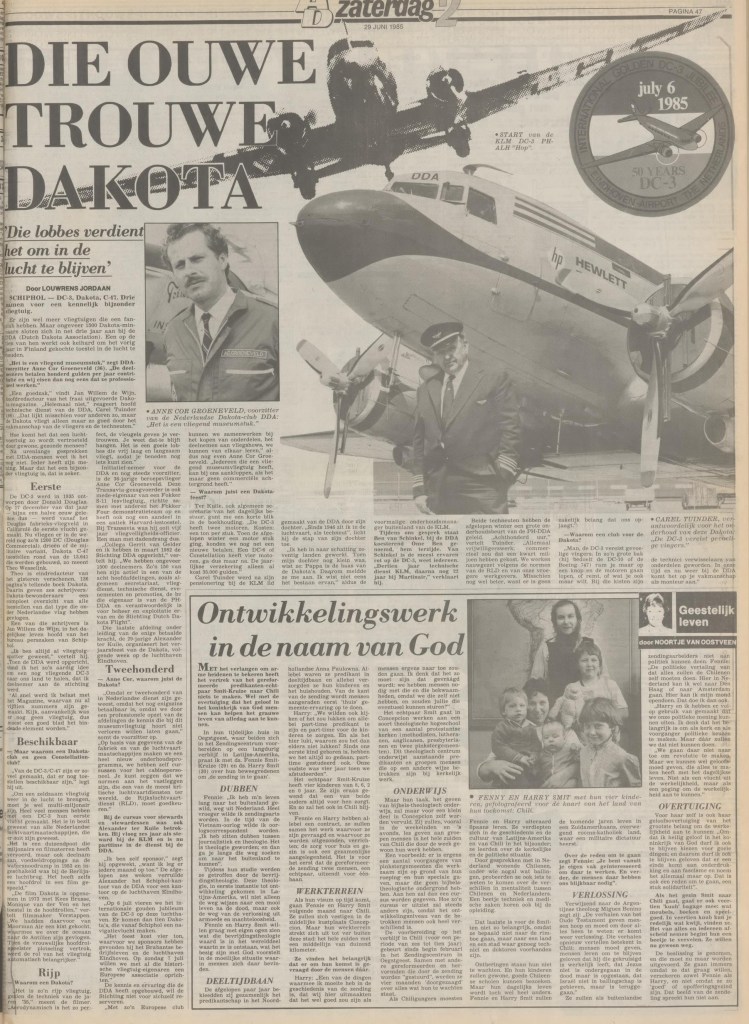
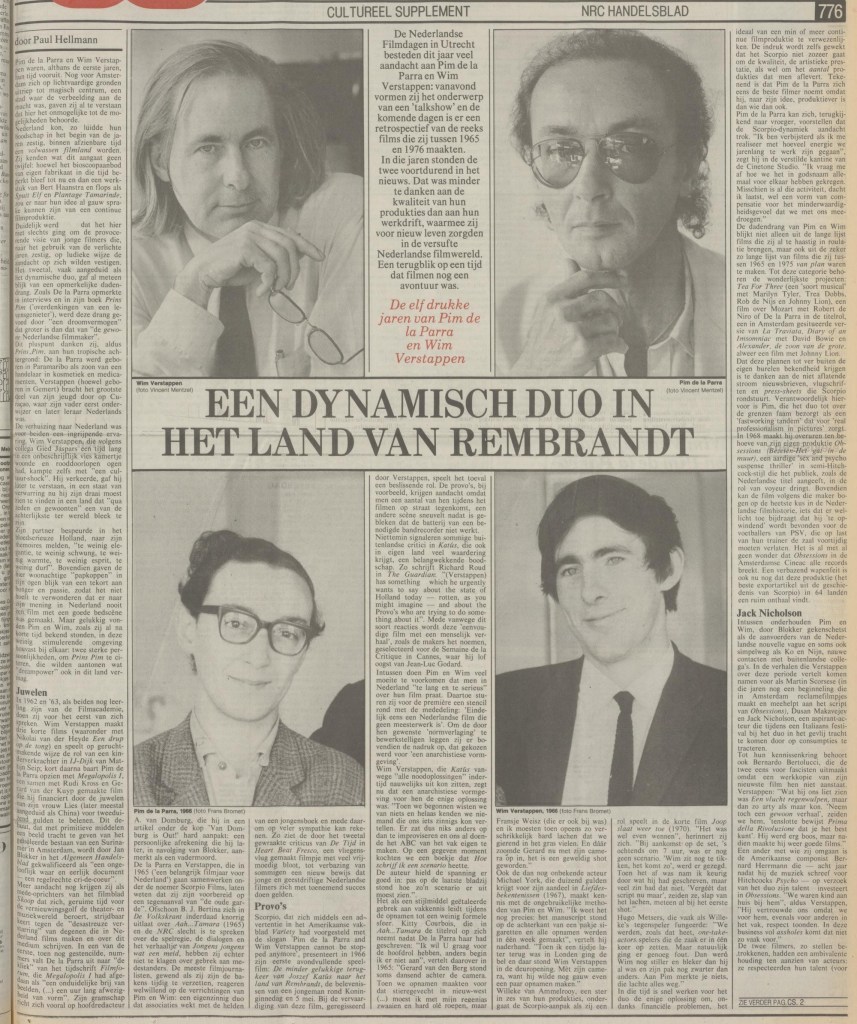

Despite the heartache and loss experienced by all involved with Dakota, the film never went away and seemed to gain newfound respect with each passing decade. Both Brusse and cameraman Halperin were marked positively by their involvement on the film, with the former becoming a pilot and the latter literally owing his career to the chance Verstappen gave him. For Verstappen, Dakota finally became his own personal favorite of all of his films…perhaps a haunted reminder of the dream of youth at its most daring.

Cult Epics continues their important line of HD Scorpio Films releases with a new Blu-ray special edition of Dakota, an exhaustive package that includes the home video debut of Eye’s celebrated restoration taken from a 2K scan. And Dakota does indeed look phenomenal via Cult Epics’ release with all of the various cinematographer’s works being served incredibly well. This is a terrific looking release that shows off Verstappen’s deliberate framing and finely-tuned directorial skills to great degree. The original mono Dutch audio track is also particularly intimate, with the the long stretches where the only sound we hear being the low roar of Dakota’s engine sounding especially vivid. The stirring and quite lovely score by French composer Duhamel sounds hauntingly alive and crisp throughout.
Cult Epics have lined up another set of impressive vintage and new supplements for this newest $corpio disc. A new commentary by Dutch film expert Peter Verstraten is on hand and is especially informative and engaging. Peter goes into much more detail on a number of the issues I have gone into above and I’m thankful for all of his knowledge and work. A deceptively simple but striking new poster design by Juan Esteban R. is also included. I’d actually frame a print of this one and I’m not even into planes (they terrify me honestly). A photo and trailer gallery is also on hand.
Best of all are two jaw-dropping vintage promotional reels that honestly defy description. First up is the lengthy “Dakota Press Flight” in which we watch the $corpio crew take flight (including an especially animated de la Parra…My Man!) A lot happens and I’m fairly certain all were in danger but the best thing about the reel is how much fun everyone seems to be having. It’s kind of hysterical, as are the random adult inserts randomly placed throughout. This is exactly the kind of promotional film you’d imagine Scorpio Films would drop. It’s awesome. I so want to go back in time to this period and place.
Finally, we have a shorter but still substantial 1978 Cannes report where Verstappen and van de Ven nearly come into contact with each other and…let’s just say, there’s still beef. Perhaps the most astonishing thing about the clip is that Monique just figured all was cool but five years wasn’t enough time for Verstappen, as both make clear in this wild little curio. A few familiar faces pop up in this short and Pastorale 1943 (1978) is mentioned, as Verstappen is justifably angry that the Dutch film industry had been basically shut out of that year’s festival.
Dakota is another knock out of the park classic Dutch HD release from Nico B and Cult Epics. The extras on this one are particularly eye-opening, with only Olga Madsen’s Silver Bear winning short, De Straf (1974) missing in action. I hope the film has survived and might reappear someday.
Dakota is now available directly from Cult Epics as well as other online retailers and in some stores.
A flawed work?
Perhaps but like the best dreams,
Dakota is majestic, powerful and quite unforgettable.

-Jeremy Richey, August 2025-
***The above translations I’ve included are as accurate as I could get using Delpher’s transcriptions with a number of different programs. There might be some grammatical inconsistencies but the meaning is there. They are included for historical purpose, to go along with the original scans. Attributes are found in each when you save. Enjoy.***

 Nostalgia Kinky
Leave a comment