
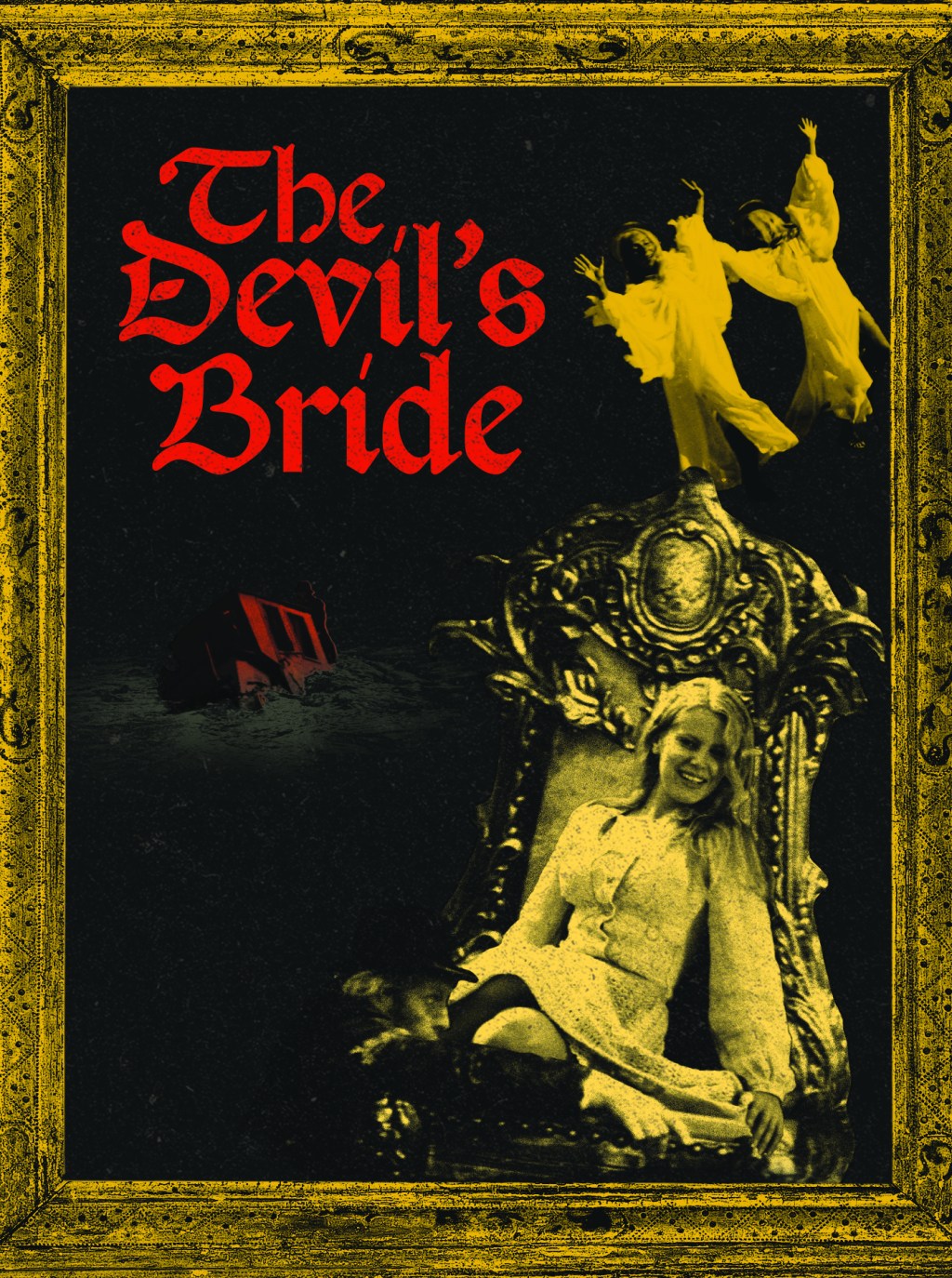
An overwhelmingly wonderful and completely wonderous film from Lithuanian director Arūnas Žebriūnas, 1974’s Velnio nuotaka (The Devil’s Bride) is an astonishing and incredibly special work of art. Part fairy-tale, part comedic folk-horror and all progressive-rock musical masterpiece, The Devil’s Bride is simply like nothing else out there. Never previously available on home video here in the States, Deaf Crocodile have now unleashed Žebriūnas’ audacious powerhouse as a special edition Blu-ray for all to experience.
Born in 1930 in the Lithuanian city Kaunas, Žebriūnas’ was initially interested in sports growing up before switching his youthful attention to architecture. In his mid-twenties, Žebriūnas’ switched his focus once again when he began working/studying at the Lithuanian Film Studio in Vilnius. After interning with Russian film director Mikhail Rome, Žebriūnas’ own impressive career began properly initially via a series of shorts and features that appeared throughout the sixties.
In the decade leading up to The Devil’s Bride, Žebriūnas directed a number of acclaimed films including The Girl and The Echo (1964), The Little Prince (1966) and The Beauty (1969). Like the film that immediately proceeded The Devil’s Bride, Nightbird (1974), all of Žebriūnas’ early films were centered around children making The Devil’s Bride a real left turn in his filmography. Inspired by a popular Lithuanian folk tale, The Devil’s Bride is one of the most alive, colorful and imaginative films I have encountered in some time.
A fantastical tale of fallen angels, a beautiful maiden and a rather mischievous devil, The Devil’s Bride literally explodes off the screen from its first astonishing musical number and it never lets up in its all too brief 78 minute run-time. In fact, my only complaint about The Devil’s Bride is its brevity as I could have watched HOURS of this very bewitching work.
While The Devil’s Bride feels completely and utterly unique, there are connections from Demy’s The Umbrellas of Cherbourg, the musical Jesus Christ Superstar, the flamboyant visions of Ken Russell and the darkly wickedly humor of Polanski. The influences barely seem worth mentioning though for a film as original as The Devil’s Bride and Žebriūnas easily transcends all of the master’s he soaked up throughout his youth.
With its complex choreography and all sung dialogue, The Devil’s Bride had to be an incredible challenge for Žebriūnas expansive cast but they all handle this challenging material with grace and good humor. This is especially true of the delightful Gediminas Girdvainis as the devil Pinčiukas, who is wickedly unforgettable. Even better is the luminous Vaiva Mainelytė, who absolutely glows for Žebriūnas, giving a poetic and star making performance. It’s hard to imagine anyone not walking away with a major cinematic crush on Mainelytė after watching her in The Devil’s Bride. I bet she is a legend back in Lithuania.
Along with the cast and direction, The Devil’s Bride’s biggest attributes are the exciting musical score and the breathtaking cinematography by Algimantas Mockus, which is absolutely spectacular. Mockus worked a number of times with Žebriūnas and he was a fellow director as well. His photography powers The Devil’s Bride, almost like he is inventing new colors never seen on the screen before.
Vyacheslav Ganelin, who supplies The Devil’s Bride with its exceptional score, had also worked previously with Žebriūnas as had much of the remaining crew. Born in Kraskov, Russia at the tail end of World War 2, Ganelin was an acclaimed and celebrated Jazz composer and musician. A graduate of the important Lithuanian Academy of Music and Theater, Ganelin might have seemed an odd choice for a score steeped in progressive rock and hippie culture but he DELIVERS majorly, giving The Devil’s Bride one of the most unforgettable soundtracks of the seventies. I’m really suprised the likes of Finders Keepers hasn’t put out a special vinyl edition out of this fantastical soundtrack.
Deaf Crocodile welcomes The Devil’s Bride to Blu-ray in the style it so deserves, offering up brilliantly restored picture and sound, plus hours of extras. The main two supplements are a pair of lengthy interviews, one focused on Žebriūnas’ life and career and the other on Lithuanian film. For the director’s chat we are treated to a long interview with Monika Edgar, Žebriūnas’ daughter, who recalls her father with a lot of charm, love and warmth. It is a great chat hosted by Deaf Crocodile’s Dennis Bartok via video-call. The same goes for the extended conversation with Lithuanian film critic Ieva Šukytė, who provides lots of valuable information about the film industry in her home country as well as The Devil’s Bride place. An excellent visual essay by Dr. Will Dodson and Ryan Verrill is also on hand as is an excellent commentary (not mentioned on the back cover) by my friend Michael Brooke, making for an absolutely splendid package for an extraordinary film.
Deaf Crocodile’s The Devil’s Bride is one of the best home video releases of 2025. I was so incredibly charmed by this remarkable work of gorgeous surrealism. The Devil’s Bride is one of the dreamiest and finest films I’ve seen in some time. Highly, HIGHLY, recommended.
-Jeremy Richey, October 2025-
The Devil’s Bride is available with a limited edition slipcover at Deaf Crocodile and the standard Blu-ray is available there and at MVD.

 Nostalgia Kinky
Leave a comment