
Radiance deliver another fine limited edition Blu-ray box-set with Wicked Games: Three Films by Robert Hossein. Featuring excellent all new audio commentary tracks for each film by legendary film historian Tim Lucas along with a terrific set of visual extras, these three Blu-rays offer splendid presentations of three key Hossein works. I personally found this set particularly thrilling as each of these films was completely new to me, with my only previous knowledge of Hossein being via his general reputation and his later Cemetery Without Crosses (1969). Now, after spending the past few days with this new box and all these supplements, I am now excited to explore all of Hossein’s filmography as I dearly loved all three of these titles. I offered up my thoughts on each film over at Letterboxd the past few days and have compiled those reviews below. Please pardon the rather scattershot nature of these, as each was written separately. Also, I have also added a gallery for each film, featuring clippings I discovered while researching. Attributes for each can be found in their individual file name. Enjoy.

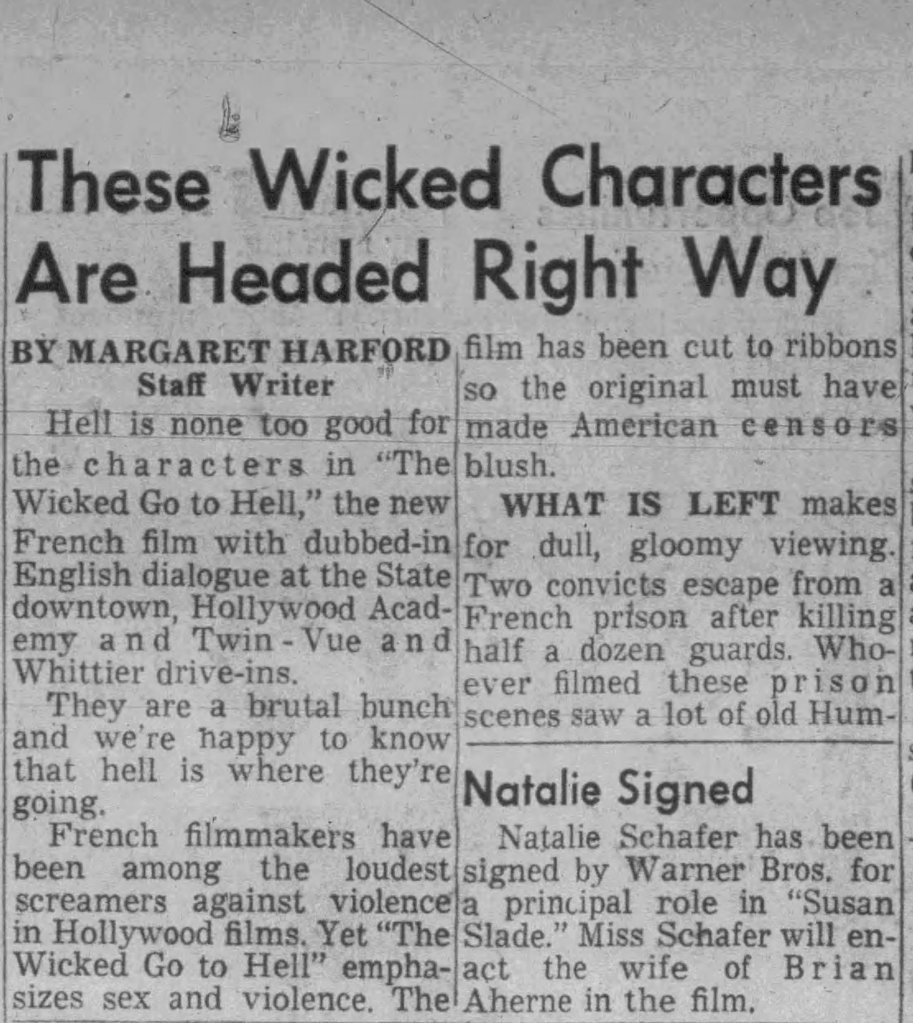
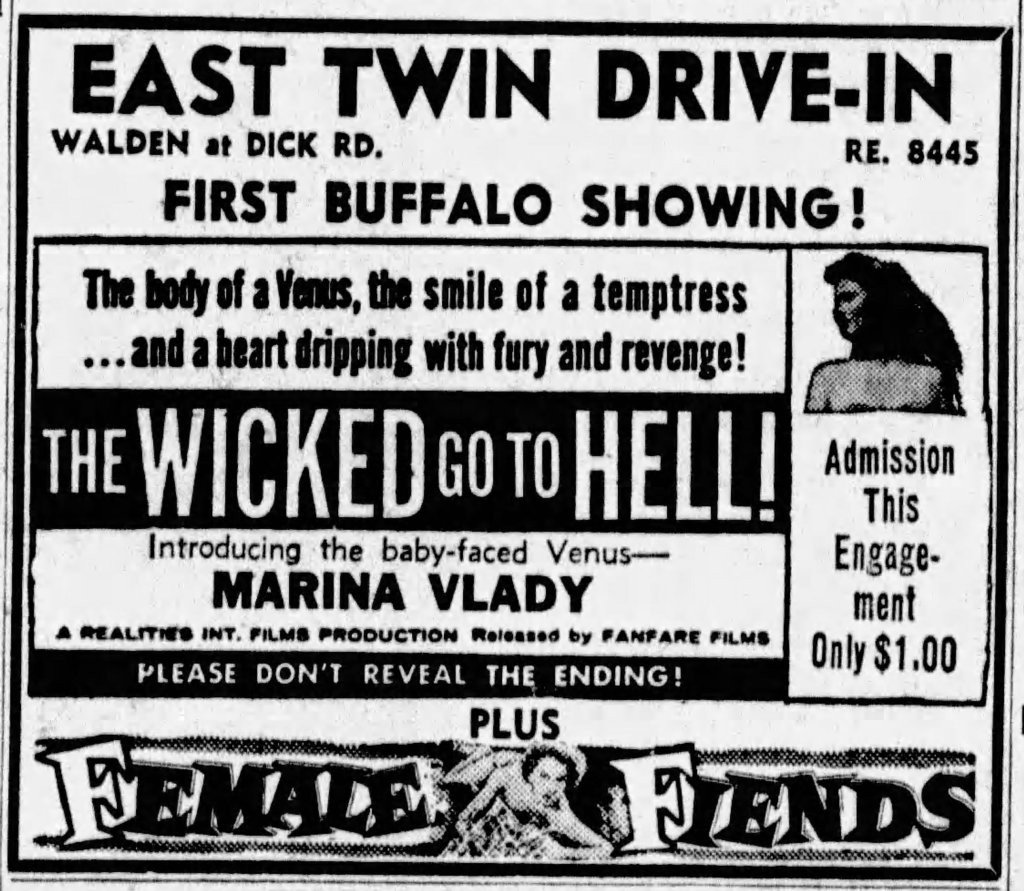
The sizzling directorial debut from French filmmaker Robert Hossein, 1955’s Les salauds vont en enfer (THE WICKED GO TO HELL) is a fine French noir now available in HD via the Radiance Blu-ray box Wicked Games: Three Films by Robert Hossein. Steeped in the Grand Giugnol while taking inspiration from both a book and a play, Hossein cowrote this white-hot debut with fellow director René Wheeler. Co-starring an unforgettable Marina Vlady, in a real star-making turn, THE WICKED GO TO HELL is a hugely entertaining and accomplished debut.
Running just over 90 minutes, THE WICKED GO TO HELL can be broken down into three mini-films as far as its narrative go. We start with a prison drama which morphs into an escape thriller before finally landing into the delicious finale featuring Vlady, who absolutely dominates the screen and her male costars. It’s all a lot of fun. Plot-point wise, THE WICKED GO TO HELL doesn’t bring much new to the table but Hossein’s direction and Vlady’s performance transcend the standard noirish plot into something unique.
Despite the fact that it was shot for Champs-Élysées Productions, THE WICKED GO TO HELL feels dramatically independent. Unlike many similar American B-movies from the time, THE WICKED GO TO HELL is an incredibly professional production though. From Michel Kelber vividly satisfying black and white photography to future Borowczyk editor Charles Bretoneiche’s cutting, THE WICKED GO TO HELL is a finely finessed work, especially for a debut. Still, aspects of it signal the dawning of the Punkish New Wave, despite the movement’s unfortunate disregard for Hossein.
Tim Lucas points out during his terrific commentary track on Radiance’s new Blu-ray that THE WICKED GO TO HELL predicts aspects of two of the films that would soon help revolutionize cinema, Roger Vadim’s AND GOD CREATED WOMAN (1956) and Jean-Luc Godard’s BREATHLESS (1960). It’s a shame that more at the time didn’t notice these connections. THE WICKED GO TO HELL did get an American release in the early sixties but not a significant one. Perhaps Houssein and his films might be better known to English-language audiences if the critical community had made more of an effort with obviously special films.
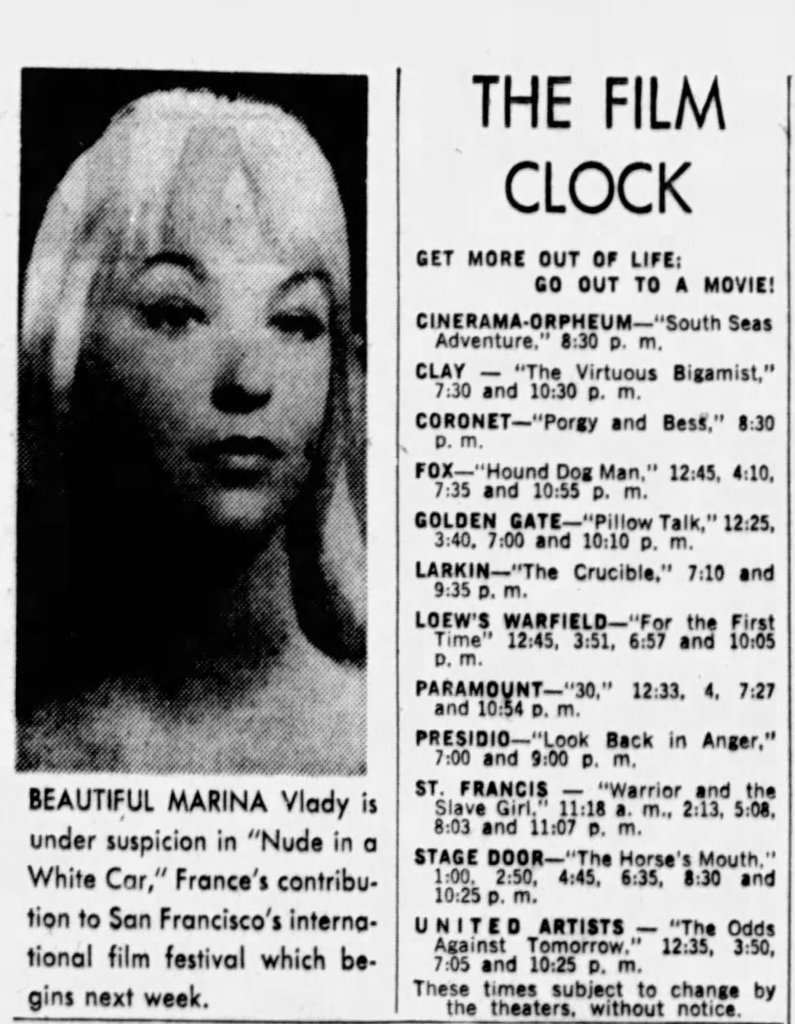
Like Vadim and Godard’s future classics, THE WICKED GO TO HELL ends up being very much driven by an actress. Now one of France’s most celebrated and prolific performers, Vlady was just 17 years old when she shot this although she’d been acting since childhood. THE WICKED GO TO HELL and its immediate follow-up she shot, André Michel’s THE BLONDE WITCH (1956), made Vlady a star and it is no mystery why. Despite her young age, she is already clearly a very great actress and has a remarkable screen presence. Unlike Hossein, whom she’d soon marry in real life, Vlady was eventually partially embraced by The French New Wave as she’d star in Godard’s magnificent 2 OR 3 THINGS I KNOW ABOUT HER (1967).
THE WICKED GO TO HELL is a terrifically evocative and unforgettable debut. Sadly, as Tim points out on his commentary, the film and its follow-ups were overshadowed by the real life romance between Houssein and Vlady. Pity, as THE WICKED GO TO HELL is quite a smashing debut and it looks beautiful via this new Radiance Blu-ray.
The extras Radiance have gathered are exceptional. Tim’s commentary is packed with great and incredibly well-researched information. Tim also kindly translates some material from Hosssein and Vlady’s books to give a real complete behind the scenes look at the film. This is a great track from the best.
Along with Tim’s commentary we have two lengthy video essays. French film historian Lucas Balbo offers up his valuable thoughts on the film and even shares brief footage of Jean Rollin praising Hossein. This is a fascinating essay as is Howard S. Berger’s near thirty minute guide to Hossein’s filmography. Howard narrates this informative and personal look at Houssein and it is quite moving. I especially liked Howard’s recollections of discovering Houssein as a a child with his mother (a major Robert Mitchum fan) as well as his thoughtful memory of meeting Houssein himself in the late nineties. These are both fine essays and essential accompaniments to the film.


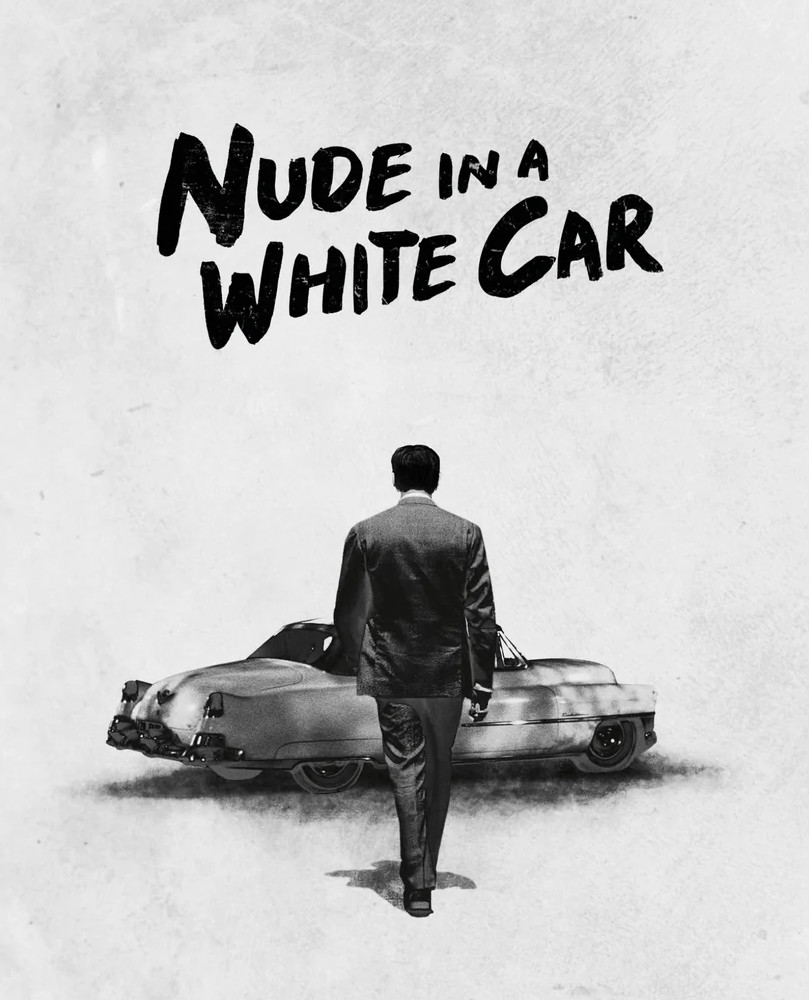
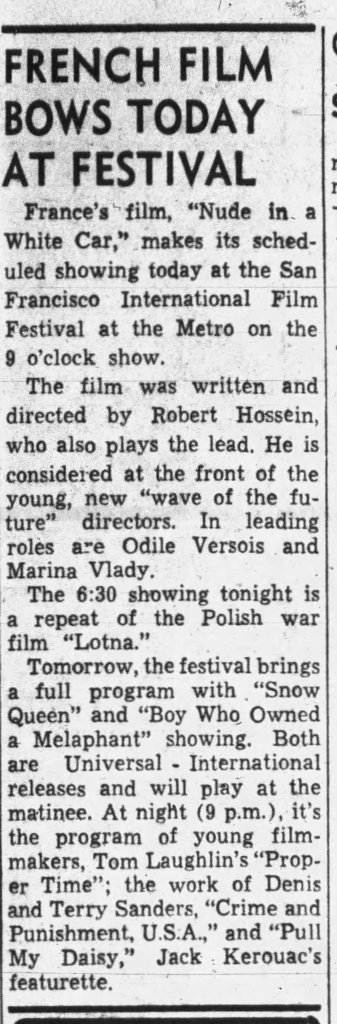
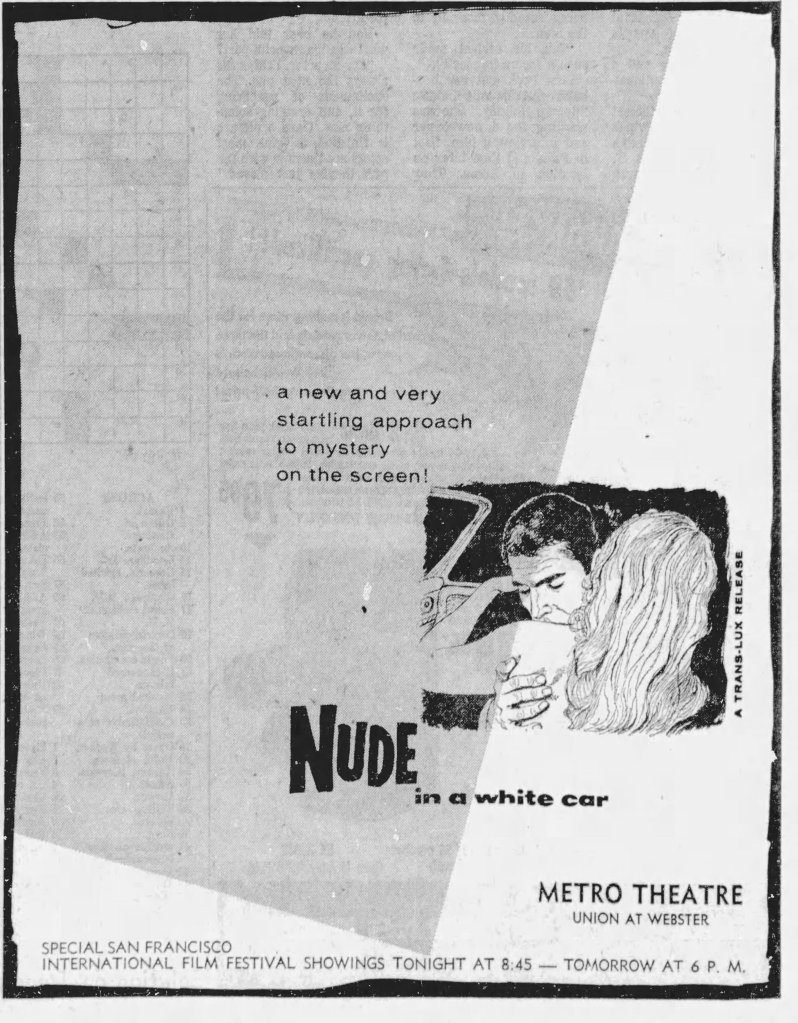
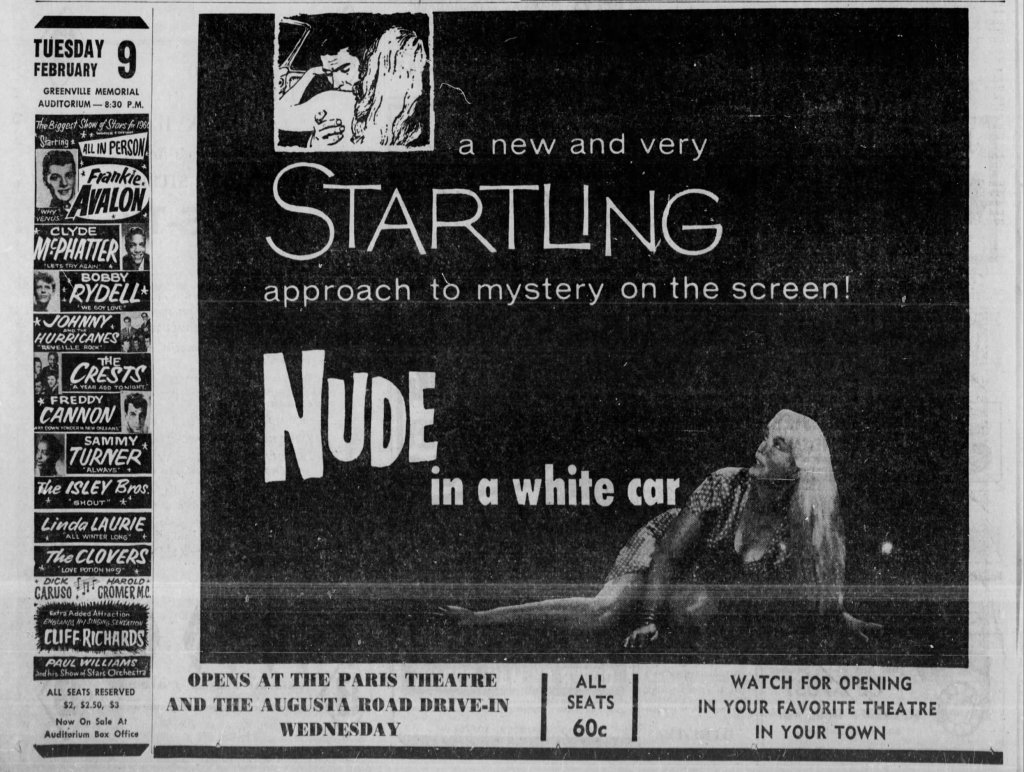
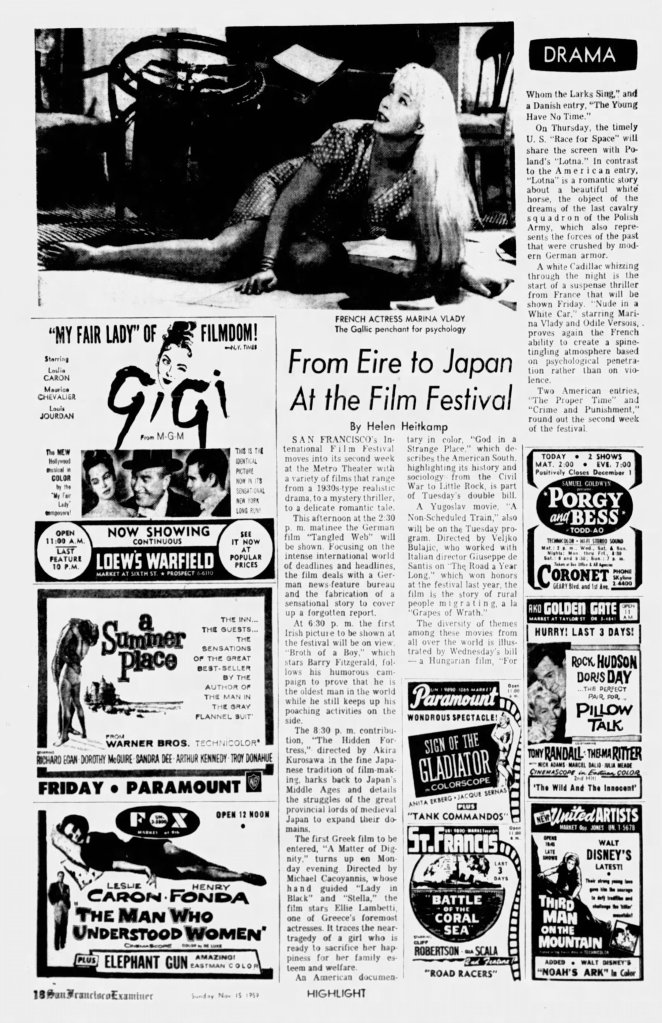
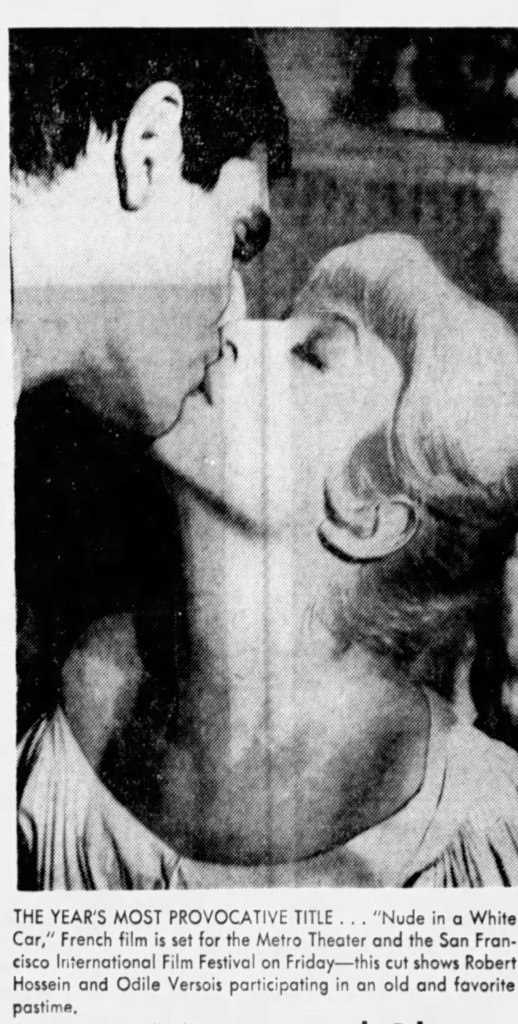
Foreshadowing the darkly humored thrillers of Roman Polanski and Brian De Palma, Robert Hossein’s third feature Toi… le venin (1959) is another powerhouse offering from the French great that feels a decade ahead of its time. Entitled NUDE IN A WHITE CAR on Radiance’s new Wicked Games: Three Films by Robert Hossein Blu-ray box-set, Hossein’s third feature is a remarkable work made by a talented and trailblazing filmmaker.
Working from a Frédéric Dard novel, Hossein translates Dard’s surprising and unpredictable work shockingly well for the screen. Tim Lucas points out in his fascinating commentary track that NUDE IN A WHITE CAR marked the first script Hossein had ever penned completely on his own for one of his films. His script turns out to be a major strength in a film of strengths, literate, nuanced and so well-designed.
NUDE IN A WHITE CAR opens with the beautifully seductive black and white photography of Robert Juillard and an unforgettably catchy André Hossein composed jazz theme, which reminded me of Krzysztof Komeda’s score for Polanski’s CUL-DE-SAC (1966). This is a mystery and very good one at that. Not at all violent, the film has a strong transgressive sexual undercurrent another thing that connects with the likes of De Palma more than a decade later.
Like the other two films in Radiance’s new box, the set-up for NUDE IN A WHITE CAR is fairly simple but it is what Hossein does with it that makes it so special. NUDE IN A WHITE CAR might have turned out super standard in another director’s hands, just another late-period Noir-inspired film but once again Hossein creates something extraordinary and extraordinarily unique. Nearing seven decades old, NUDE IN A WHITE CAR still feels as alive and electric as ever.
Similar to both THE WICKED GO TO HELL and THE TASTE OF VIOLENCE, NUDE IN A WHITE CAR is, despite some side-players, essentially a three-character piece. Once again we have Hossein and Marina Vlady now joined by Odile Versois (Vlady’s real-life older sister). Unlike THE WICKED GO TO HELL, which Vlady was the clear standout of, the performances given in NUDE IN A WHITE CAR are more balanced, with all three players turning in fine and believable work. NUDE IN A WHITE CAR feels more expansive and accomplished that THE WICKED GO TO HELL, a sure sign Hossein was continuing to grow as a filmmaker.
For this 2nd film in Wicked Games: Three Films by Robert Hossein, Radiance have gathered together 2 essential new supplements as well as a fascinating vintage addition. Tim’s commentary is another example as to why he is one of the greats. He mentions this was the film that helped him discover Hossein so I can imagine this was a special track for him to deliver. Like on his other tracks he offers up some previously unheard translations of some of the vintage material he uncovered. Going off a key plot point in the film, he even gives a well-researched rundown of the history of Polio in France and the lives the eventual vaccines saved.
The 2nd main supplement for NUDE IN A WHITE CAR comes courtesy of Samm Deighan’s excellent video essay concerning the history of the Femme Fatale, specifically in French cinema although Samm’s essay stretches outside of France as well. Like all of Samm’s work, this is great and incredibly well-researched stuff. A terrific watch. Finally, we have a vintage interview with Vlady from just over ten years ago discussing the film and her work with her then husband Hossein. It’s a very nice addition to an already great release.
Like the other titles Radiance have gathered together, NUDE IN A WHITE CAR looks and sounds absolutely lovely. Be warned, you won’t be able to get Hossein’s music out of your head after watching this but you won’t mind.






Robert Hossein’s 1961 Euro-western Le Goût de la violence (THE TASTE OF VIOLENCE) shook me to my core…like on a purely visceral cinematic level this is one of the best westerns I’ve ever seen. With its stunning cinematography by Jacques Robin along with one ingenious composition after another from Hossein, THE TASTE OF VIOLENCE feels at least a decade ahead of its time. Certainly more than a decade if we compare to this to the clunky American westerns that filled cinema seats throughout the sixties and seventies. Like Sergio Leone’s films this helped inspire, THE TASTE OF VIOLENCE transcends the Western genre, more specifically the Zapata Western genre, offering one cinematic surprise after another. Rarely seen in The United States, Hossein’s landmark film is now available as part of an essential new Hossein Blu-ray box-set from Radiance.
THE TASTE OF VIOLENCE was Hossein’s sixth feature film. Less than a decade before he was mainly known for his successful acting career and indeed Hossein is featured as one of the film’s main characters, costarring alongside Italian actress Giovanna Ralli and German novice Hans H. Neubert. While the key cast is small and the budget is low, Hossein’s film is ambitious as imaginable and it succeeds at its loftiest goals throughout.
Despite the fact that THE TASTE OF VIOLENCE featured several co-writers along with Hossein, the plot itself is fairly simple. Taking place at the turn of the last century in an unnamed Latin American country a group of freedom fighters kidnap the President’s daughter in order to have some of their imprisoned revolutionary brothers freed. It’s what Hossein does with what might have been a fairly standard Western that is so special. He creates an art film, and a powerful one at that.
In the booklet found in Radiance’s set, Hossein is quoted mentioning that THE TASTE OF VIOLENCE owed no small debt to Elia Kazan’s VIVA ZAPATA (1952), starring Marlon Brando. While that connection is indeed quite obvious, even more intriguing is THE TASTE OF VIOLENCE’S connection with Brando’s own ONE EYED JACKS, his mythic Western also released in 1961. While the two films tell dramatically different stories, both works are defiant art films made by nonconforming actors and both films failed to spark either the critics or public’s imaginations at the time.
Unlike Brando, who had a studio and large budget behind him, Hossein shot THE TASTE OF VIOLENCE on the kind of budget most of Hollywood might have scoffed at. He utilizes his relative lack of funds perfectly though, with every cent at his disposable clearly on the screen. THE TASTE OF VIOLENCE doesn’t in fact feel at all like a small-dollar film, but it does feel thankfully independent shorn of the studio interference that damn near killed Brando’s masterpiece.
While Hossein’s work in front of and especially behind the camera is stellar, the true star of THE TASTE OF VIOLENCE is cinematographer Jacques Robin. It has been ages since I have watched a film so brilliantly photographed and Robin’s work in the film is for the ages. Tim Lucas mentions on his excellent commentary track for Radiance how certain shots even look like photographs (highlighting Hossein’s wonderful use of stillness in the film) and indeed you could freeze pretty much any still of THE TASTE OF VIOLENCE to print and frame. Robin’s photography is the best part of a film that only has best parts. Robin’s own MONSIEUR SADE (1977) has now been added to the top of my personal watchlist.
Along with the photography and Hossein’s at times unnerving and incredibly lonely compositions, perhaps the most noteworthy aspect of THE TASTE OF VIOLENCE is the score (and how it is used) by André Hossein. For the most part, THE TASTE OF VIOLENCE plays out in silence with no music. In the place of a traditional score from the period, Hossein contributes half a dozen songs (all thankfully subtitled on the Blu-ray) and they become core to the film. The way both Hossein’s utilize the music of THE TASTE OF VIOLENCE is incredibly unique, even outside of 1961. It absolutely foreshadows a number of European westerns on the horizon as well as the later scores from Sam Peckinpah’s films but, again, the sound of THE TASTE OF VOLENCE is so wonderfully distinctive. I wasn’t surprised when I head Tim commending the sound team on his commentary track.
Running just 85 minutes, THE TASTE OF VIOLENCE is a brisk watch but it is also a meditative one. The amount of care Hossein puts in every shot is staggering as are some of the images, such as a particularly haunting sequence of a burning cornfield and another featuring lines of hanging corpses. Despite the brevity of its run-time, THE TASTE OF VIOLENCE is packed with one hard to shake moment after another.
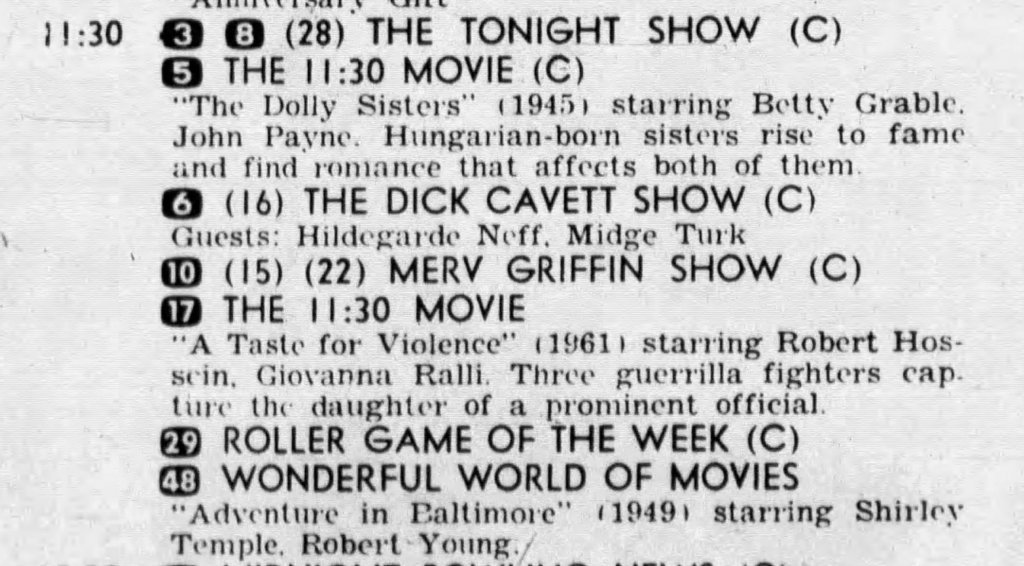
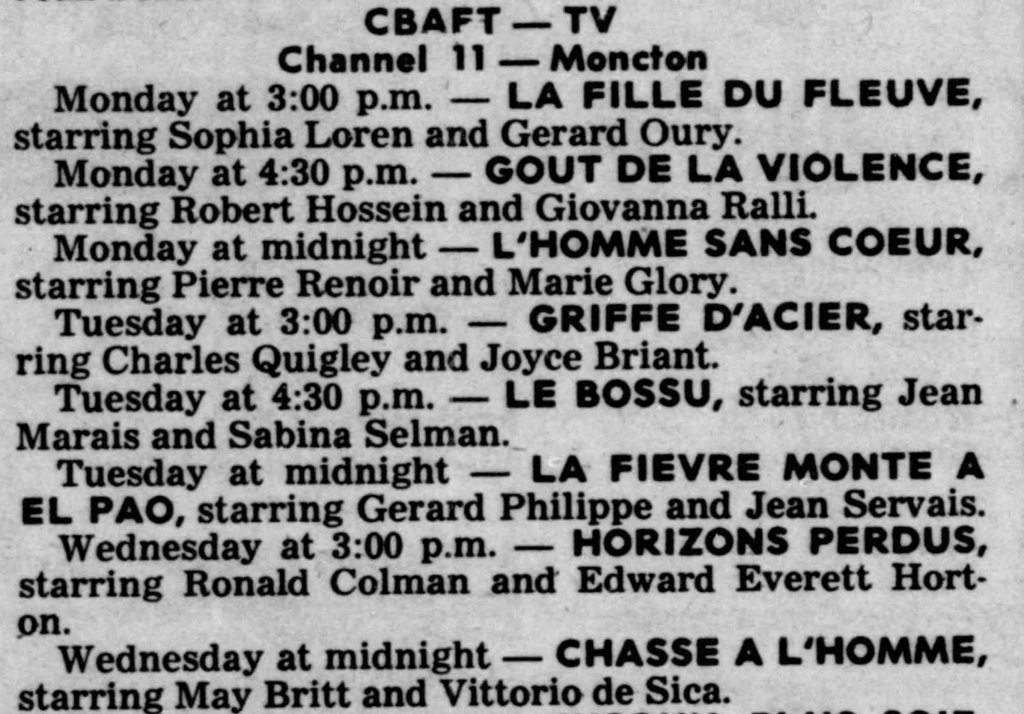
Tim mentions on his commentary that THE TASTE OF VIOLENCE wasn’t granted any sort of English language release in either The United States or the U.K. Perhaps Hollywood didn’t want American audiences to know what a visionary filmmaker with a low-budget outside of the studio system was capable of? It did land briefly in Canada in the mid sixties and finally some sporadic showings on American TV in the seventies (I’ll throw these clippings up at my website). To say that THE TASTE OF VIOLENCE deserved more attention at the time is a wild understatement and it breaks my heart how badly Hossein took the reception. He’d return with a vengeance to the Western genre later in the decade with his ferociously ambitious CEMETERY WITHOUT CROSSES (1969).
THE TASTE OF VIOLENCE looks and sounds incredible via Radiance’s Blu-ray. The best film, imho, from the excellent Wicked Games: Three Films by Robert Hossein box-set, THE TASTE OF VIOLENCE features Tim’s fine commentary track, which provides an excellent companion to the film and helped me learn a lot about it and Hossein. Two other quality extras are on hand, along with the booklet’s essays, in the shape of a great visual guide to Zapata Westerns by author C. Courtney Joyner. Running near half an hour, this is a great watch and very informative. The shortest extra, at just over five minutes, is still very special as it features one of my personal heroes Alex Cox talking about the film and Hossein. I always love hearing Alex speak and his thoughts are illuminating as always.
THE TASTE OF VIOLENCE is easily one of the best westerns of the sixties and was a rather shocking viewing experience for me. It caught me completely off-guard and reminded me that there are still so many treasures to discover. The hunt never ends.


The highly recommended Wicked Games: Three Films by Robert Hossein can be ordered directly from Radiance or on sale at MVD. Along with the extras I detailed above this box also includes:
“Reversible sleeves featuring original and newly commissioned artwork by Time Tomorrow
and” (an excellent) “Limited edition booklet featuring new writing by Walter Chaw and newly translated archival writing by Lucas Balbo”
-Jeremy Richey, November 2025-

 Nostalgia Kinky
Leave a comment