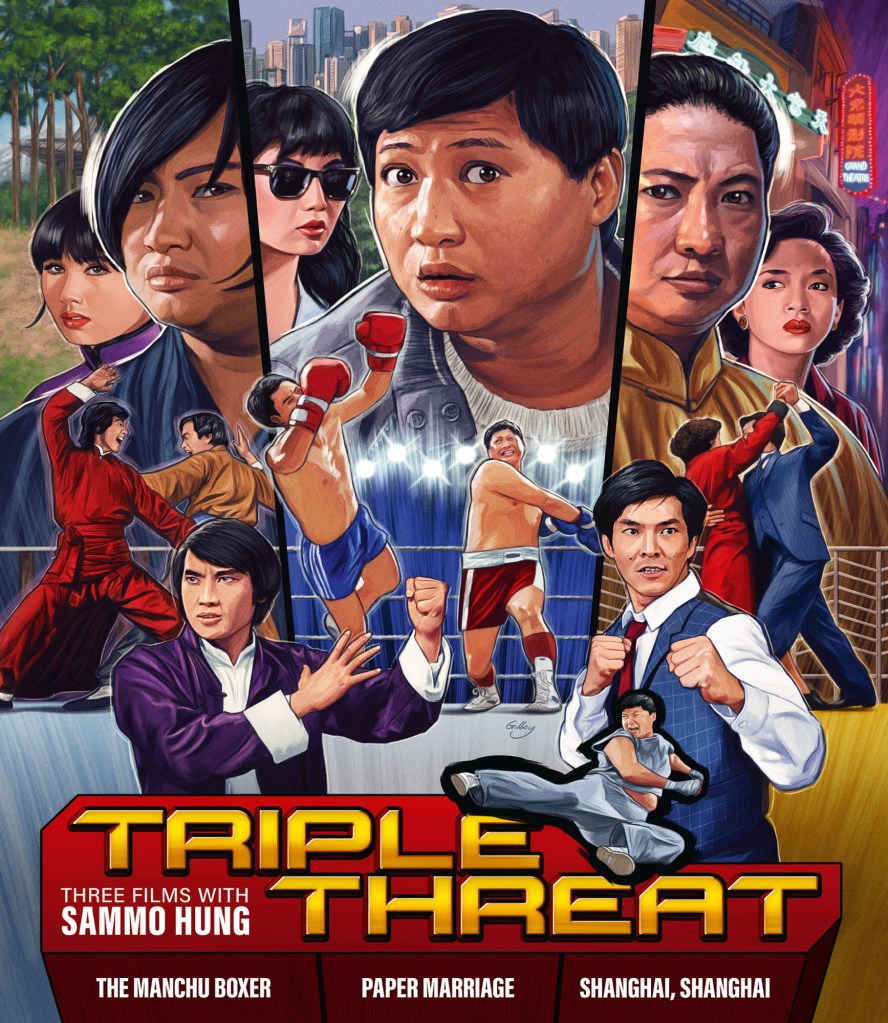
Eureka follow-up their earlier acclaimed Three Films With Sammo Hung with a new limited edition collection featuring three rare Sammo related titles. Limited to just 2000 copies, Triple Threat: Three Films With Sammo Hung gathers together films from the seventies, eighties and the nineties and is highly recommended. Featuring 2 cuts of The Manchu Boxer (1974), Paper Marriage (1988) and 2 cuts of Shanghai Shanghai (1990), along with a great collection of extras, Eureka’s new Blu-ray set will thrill Sammo fans as well as Hong Kong Cinema enthusiasts in general.
For my look at this set, I am compiling my Letterboxd reviews of each title so please forgive the fact that this was written over a few nights. Because of the rariety of these titles, I wasn’t able to find a lot of vintage material for this piece but I did find some swell clippings about Paper Marriage’s filming in Canada that I trust all will enjoy.
Triple Threat: Three Films With Sammo Hung can be ordered from Eureka or here in the States from MVD. While the film’s vary in quality, this box-set is an excellent and welcome set.
The Manchu Boxer (1974)
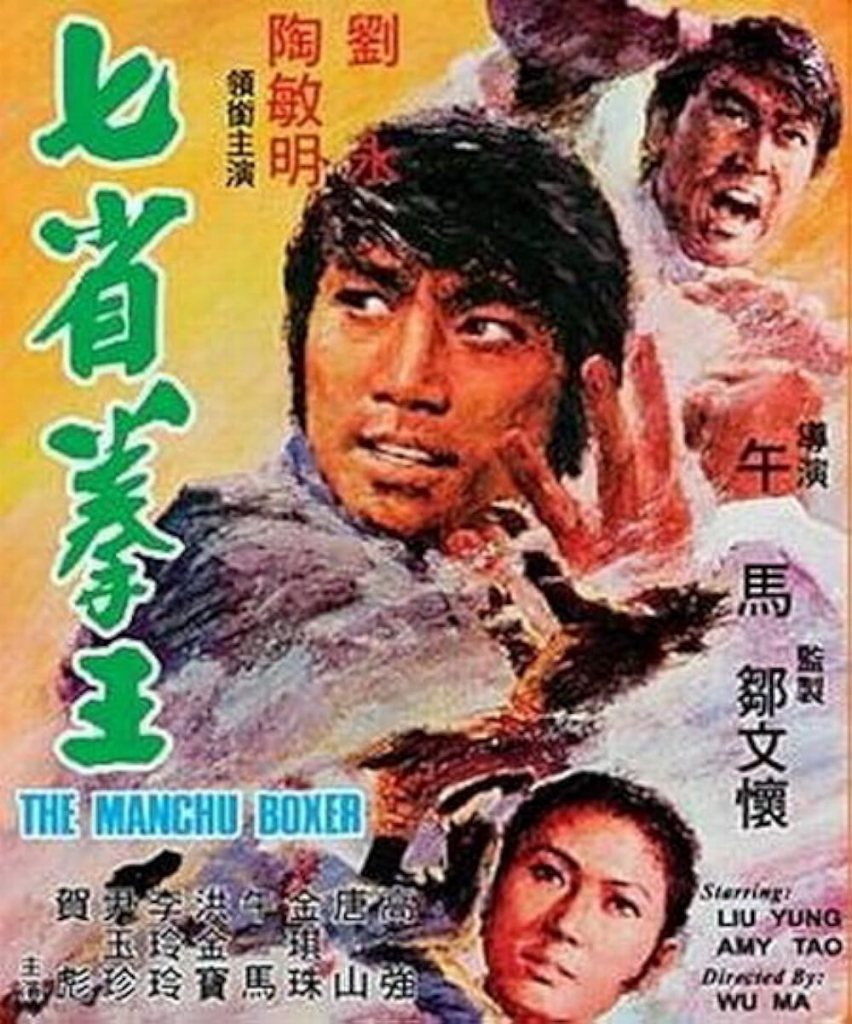
An entertaining Hong Kong film from director Wu Ma, THE MANCHU BOXER (1974) was an early attempt by Golden Harvest to turn star Tony Liu into a sort of new Bruce Lee. Film historian Frank Djeng notes on in his 2025 audio commentary for the film, that Liu had in fact been the only actor who’d appeared in all of Lee’s famed films so the connection was clearly there. Plus, Liu is a super charismatic, handsome and skilled actor so Golden Harvest certainly can’t be blamed for trying to recreate the magic of Lee, who’d passed away a year before THE MANCHU BOXER’S release but Bruce Lee was a once in a lifetime figure who was simply irreplaceable. Still, THE MANCHU BOXER is a lot of fun with its many great fight sequences and memorable locations.
THE MANCHU BOXER’S wintry South Korean filming location is indeed one of the film’s chief pleasures. This a literally very cold film but Wu Ma utilizes the snow covered setting to lighten up the film consistently. It works wonderfully well, particularly in the final outdoor competition surrounded by snow covered grounds and white peaks in the distance. With much of the film taking place outside, the cast look visibly cold throughout but it all works for the film and all the player’s are uniformly strong.
Hung appears in a supporting role but his main contribution to the film was as fight choreographer. While THE MANCHU BOXER’S fights are sometimes hampered by its obvious low-budget, Hung’s choreography is strong and his sequences are handled well and are consistently entertaining to watch.
At just around 85 minutes, THE MANCHU FIGHTER is nice and tight. Wu Ma has a really large cast at his disposal here but he manages to keep the story focused but still dynamic, such as the surprising way Ma utilizes some of his smaller female cast here, not to mention some of the progressive musical choices. Wu Ma is not particularly ambitious here but that works to this film’s favor as a purely entertaining genre picture.
Eureka’s new HD transfer from a recent 2K scan is strong, although it highlights the original film’s consistent minor focus issues, which is pointed out on the commentary track. These instances don’t detract from the film’s pleasures and kudos to Eureka for not attempting some sort of nightmarish AI ‘fix’. These brief out of focus touches actually became part of the film’s limited-funds charm as it progresses. Audio-wise, both the original Mandurian and English dub are included.
I really enjoyed the Eureka commentary track from Djeng and filmmaker Michael Worth. It’s packed with information about the film, its creators, cast and what filming in South Korea was like. It’s a great companion to the film. Critic James Oliver also delivers some interesting historical information about the film in his booklet that accompanies Eureka’s set as well. This Blu-ray set features the film’s extended cut as a bonus on the third disc also.
Tony Liu was never going to be the new Bruce Lee but that concept was unfair to both. Liu continues to have a great prolific career, now more than 100 films deep. He’d work steadily after THE MANCHU BOXER appearing in important works like SHAOLIN TEMPLE (1976) within just a couple of years from its release. THE MANCHU BOXER by and large delivers exactly what it sets out to do and is recommended.
Paper Marriage (1988)
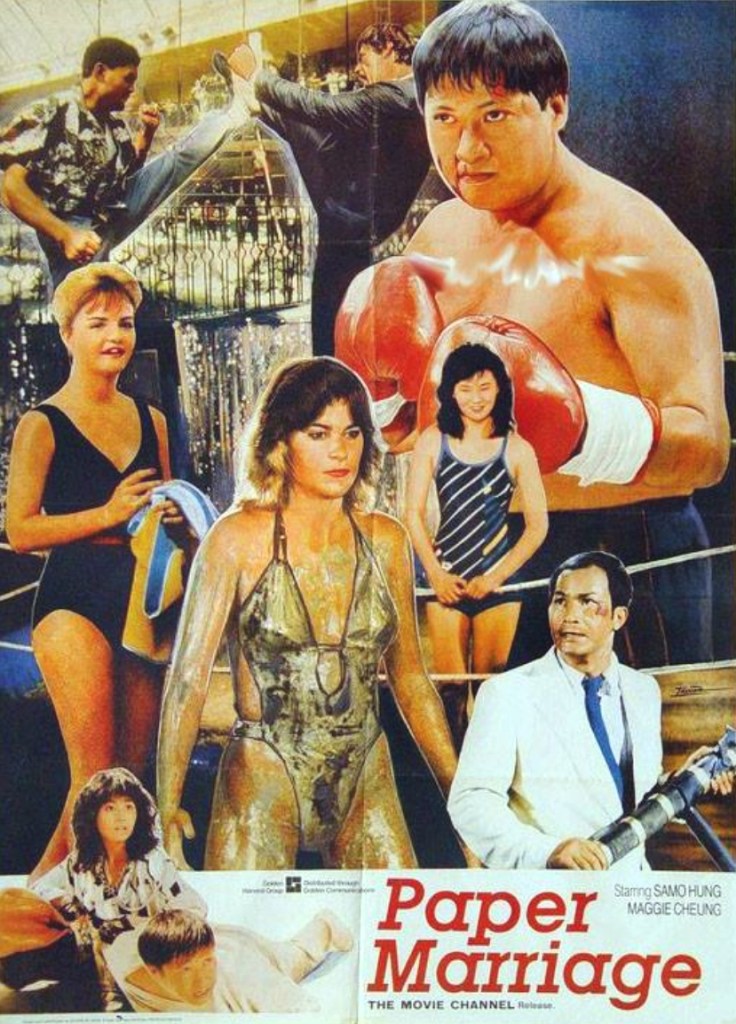
An energetic battle of the sexes action/comedy from director Alfred Cheung Kin-Ting, PAPER MARRIAGE (1988) combines the sizeable talents of Sammo Hung and Maggie Cheung in a fitfully funny and nicely shot production. Shot mostly in Alberto, Canada in 1987 for a spring, 1988 Hong Kong release, PAPER MARRIAGE mostly survives due to the combined charisma of its stars save for one truly fantastic late film sequence shot on location at the West Edmonton Mall.
Kin-Ting began his directorial career in the early part of the eighties. An actor who appears in front of the cameras in PAPER MARRIAGE as well as his spot in the director’s chair, Kin-Ting and Hung had worked together previously in TO ERR IS HUMAN (1987). That film marked an exciting chapter in Kin-Ting’s career, which culminated in the 1988 action thriller ON THE RUN before he briefly stepped away from directing. PAPER MARRIAGE is a nicely rendered work with Kin-Ting handling both the comedic and action scenes with finesse.
While the film’s cast and direction are both dynamic, PAPER MARRIAGE’S original script is not as distinguished. Suffering from some offensively dated humor, PAPER MARRIAGE also never fully escapes the many similar plotted films that came before it. That said, both Hung and Cheung’s work in the film mostly overcomes the familiarity of the script. Hell, even Peter Weir was working with a similar script just a couple of years after this in his GREEN CARD (1990) to much success.
PAPER MARRIAGE gets better and better as it progresses. The physicality of both Hung and Cheung is so impressive in the film’s many comedic action sequences, and Cheung is especially fearless throughout and quite hilarious. It is Hung though that has arguably the more difficult role, as he is tasked with getting both the audience and Cheung’s character to fall in love with him after a particularly unlikable early first quarter. He does well with the material given him and, like Cheung, is a wonderful comedian.
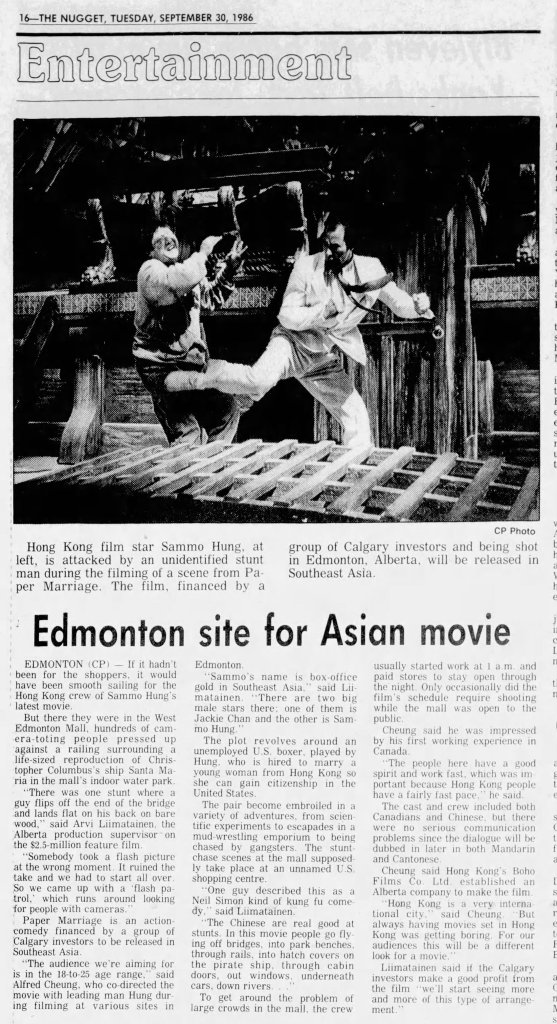
PAPER MARRIAGE really comes alive in its final half-hour, particularly in its absolutely fantastic mall sequence. Taking wonderful advantage of the mall’s multi-floors and large customer base as extras, Kin-Ting completely nails the film’s most ambitious and exciting section. I was excited to find some vintage print material about the local reaction to this incredible location:
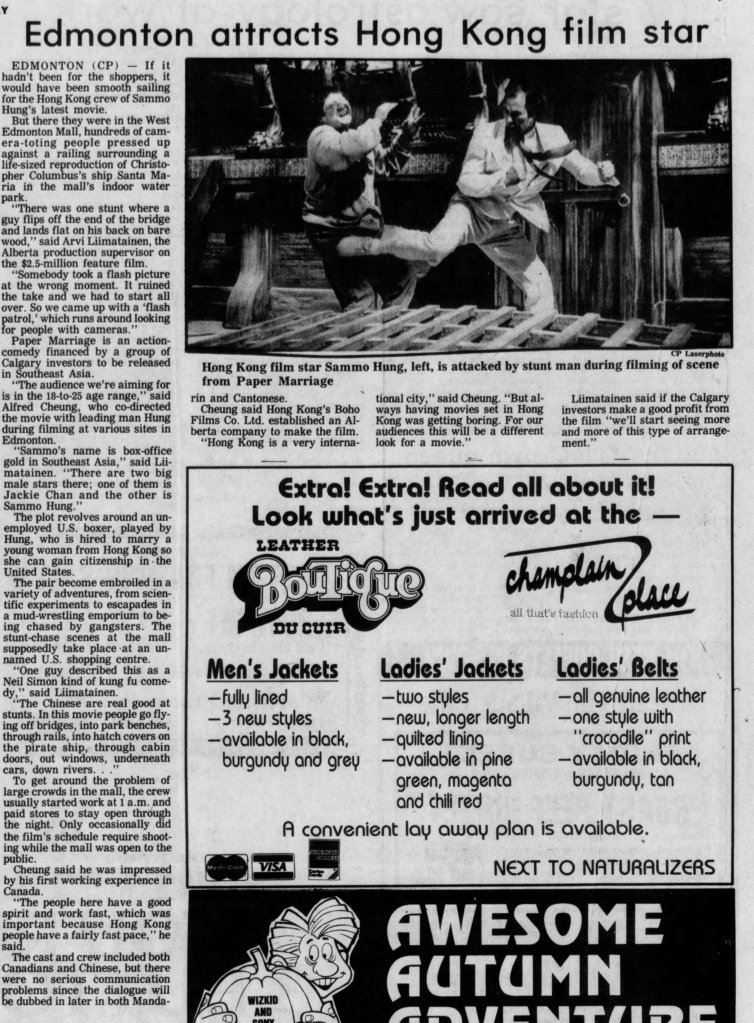
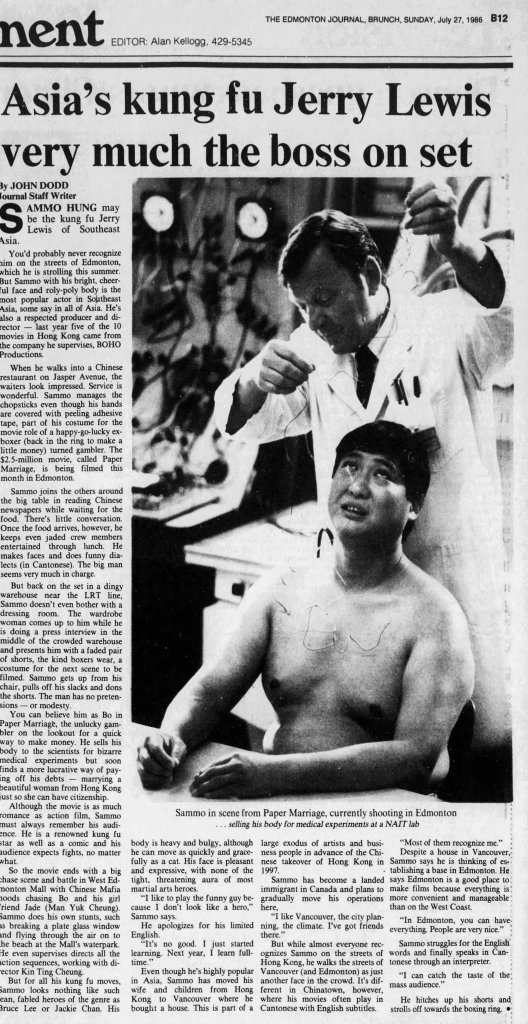
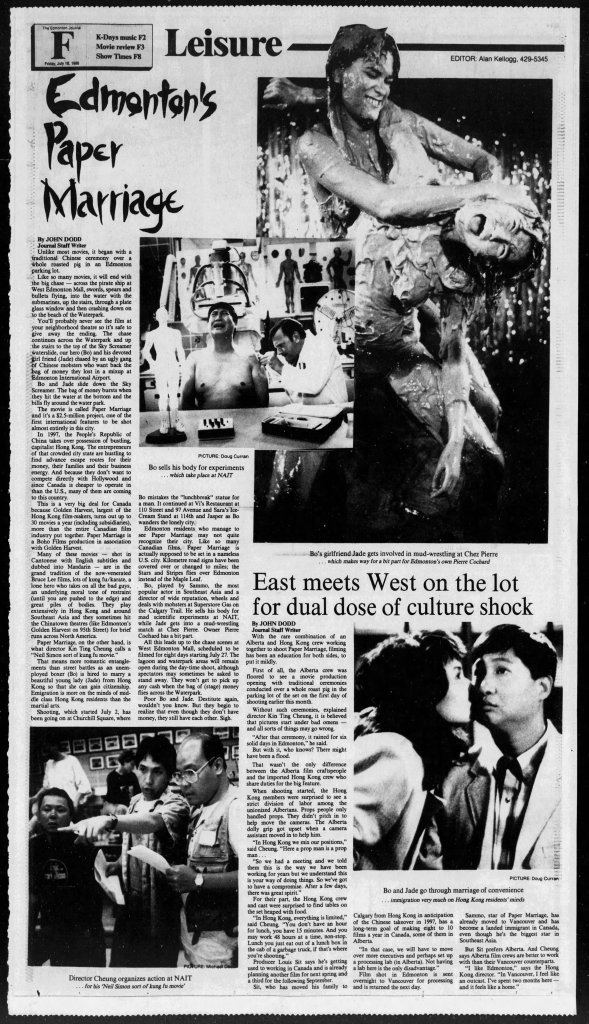
PAPER MARRIAGE is a great looking film, as shot by Jimmy Leung Chi-Ming and it looks fantastic on Eureka’s new set. It comes armed with a couple of terrific extras in the shape of a new interview with the director and a lively audio-commentary from film historians Arne Venema and Dominie Ting. Man, I loved this track. It’s super-informative, well-researched and, best of all, both Venema and Ting sound excited to be recording it. It’s a great listen.
PAPER MARRIAGE is not as memorable as the other two films on Eureka’s new box, but is still a mostly rewarding watch. It is especially cool getting to see the great Maggie Cheung, fairly early in her legendary career in a role so different than her later acclaimed works that brought her international fame.
Shanghai Shanghai (1990)
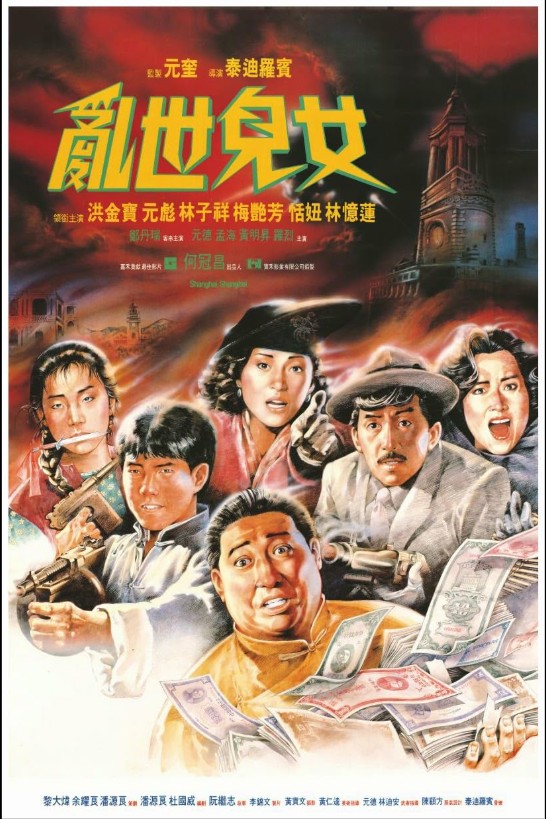
The most interesting film found on Eureka’s Triple Threat : Three Films With Sammo Hung Blu-ray set, SHANGHAI SHANGHAI (1990) is an incredibly ambitious and beautiful looking work from director Teddy Robin. Featuring an all-star cast, inventive action sequences, beautiful cinematography and strong direction, Robin’s historical epic offers much to admire and love. Eureka’s new Blu-ray offers up two beautiful restored versions of the film as well as a terrific audio commentary for fans to savor.
SHANGHAI SHANGHAI was just the third of half a dozen films Teddy Robin directed. More known as an actor and musician, Robin was still a talented filmmaker and this 1990 production is an impressive achievement. Packed with one memorable set piece after another, Robin directs SHANGHAI SHANGHAI with both confidence and vision.
Amongst the most impressive aspects of Robin’s direction is how well he handles this exceptionally large ensemble cast, featuring Sammo Hung is a strong supporting role. The film is packed with great turns from everyone from Sammo to veteran George Lam Tsz-Cheung as well as the great Anita Mui, who’d pass away tragically young just a decade after its release. Mui especially steals SHANGHAI SHANGHAI with a later film fight being perhaps the most memorable moment of an unforgettable film. Mui was a real force.
On a purely technical level, SHANGHAI SHANGHAI is a triumph. Utilizing left over sets from the celebrated Jackie Chan vehicle MIRACLES (1989), Robin creates a COTTON CLUB level entertainment that feels luxurious, even though the budget was just a fraction of something like Coppola’s work. SHANGHAI SHANGHAI is one amazing looking film, visually dynamic, inviting and engrossing.
Unfortunately, SHANGHAI SHANGHAI’s original script co-written by Raymond To is overwhelming complicated and confusing at times. Just as ambitious as To’s earlier acclaimed script for PEKING OPERA BLUES (1986), he doesn’t have the needed space here for such an epic. I haven’t even tried to recount the plot of SHANGHAI SHANGHAI because there is just too much going on for an 87 minute film. Had Robin been contracted for a lengthier film, SHANGHAI SHANGHAI might very well have turned into one of the great Hong Kong cinematic works.
Despite having a script too weighty for the production, SHANGHAI SHANGHAI is still an incredibly strong and powerful film. I really admired this film and Robin’s wonderful direction. There is a sense of wonder throughout SHANGHAI SHANGHAI and I couldn’t take my eyes off of it.
As the most visually sumptuous film in Eureka’s Sammo set, it is fitting that SHANGHAI SHANGHAI get the loveliest transfer. This is one of the best looking films of 1990 and it looks incredible via this Blu-ray. Of the two versions, the excellent audio commentary from Frank Djeng and producer/writer F.J. DeSanto is on the shorter more common cut. It’s a great listen and an ideal companion to the film. I especially enjoyed learning more about Robin’s career, as I was so impressed by his work behind the camera here. SHANGHAI SHANGHAI is quite a special film.
-Jeremy Richey, December 2025-

 Nostalgia Kinky
Leave a comment