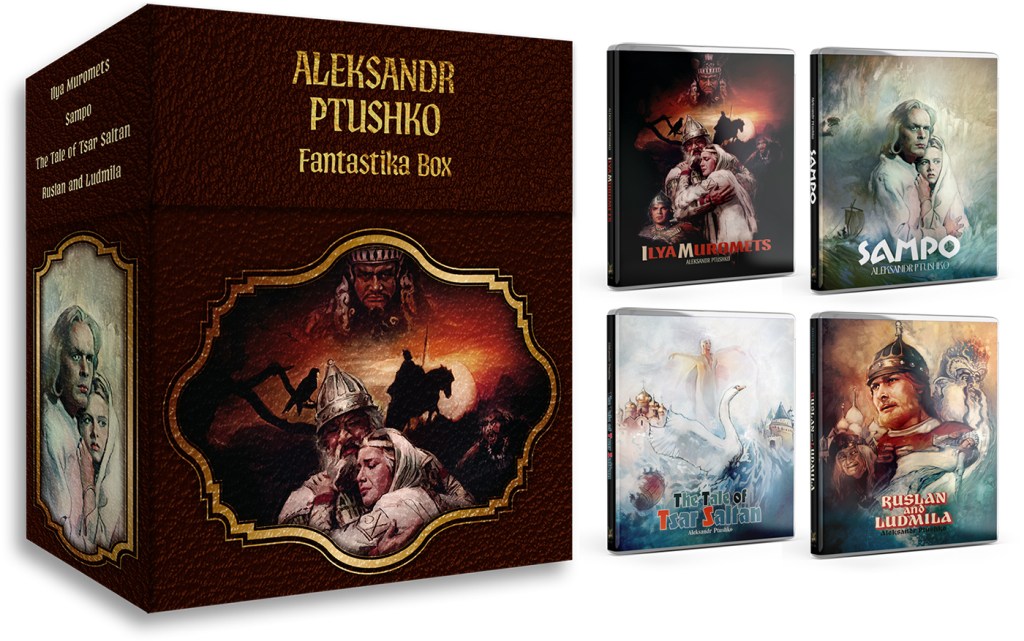
This past week I finally sat down and watched some films by Aleksandr Ptushko. I took the dive via Deaf Crocodile’s recent restorations of four essential titles, sold individually and as the Aleksandr Ptushko Fantastika Blu-ray box-set. Here are my reviews from my Letterboxd page for each film, along with some vintage clippings I found documenting the retitled stateside releases. These are beautiful releases from Deaf Crocodile, and I’m so happy to finally see these films that my young self read about so many years ago, as I note below.
These highly recommended discs can be ordered directly from Deaf Crocodile and MVD.
Ilya Muromets (1956)
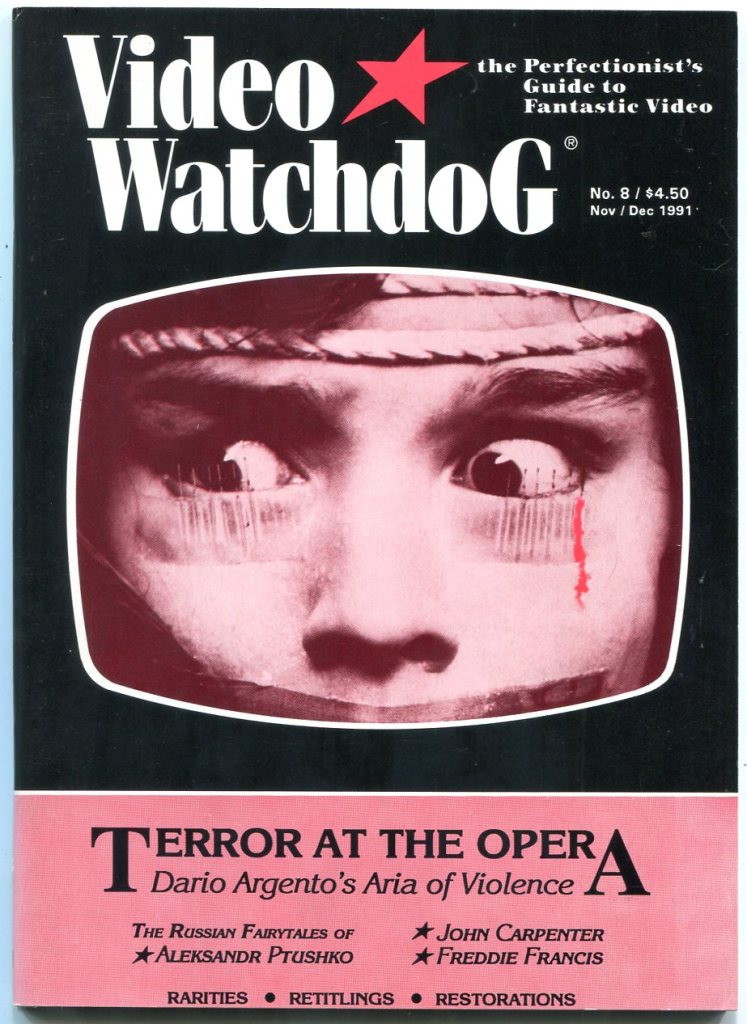
I have a very clear memory of reading about Aleksandr Ptushko’s films for the first time when I was in my early twenties. It was via Alan Upchurch’s articles in the pages of my beloved Video Watchdog. While I thought the films sounded incredibly cool, I was far too into tracking down whatever Italian genre film I could find at the time to seek out any of Ptushko’s films. Since Deaf Crocodile released four of these fantastical films a couple of years back on Blu-ray, I’ve been promising myself I’d finally check them out. This is the week. It only took me thirty-odd years. Honestly, though, it is hard to imagine a better introduction than these gorgeous 4K restorations from MosFilm that Deaf Crocodile put out.
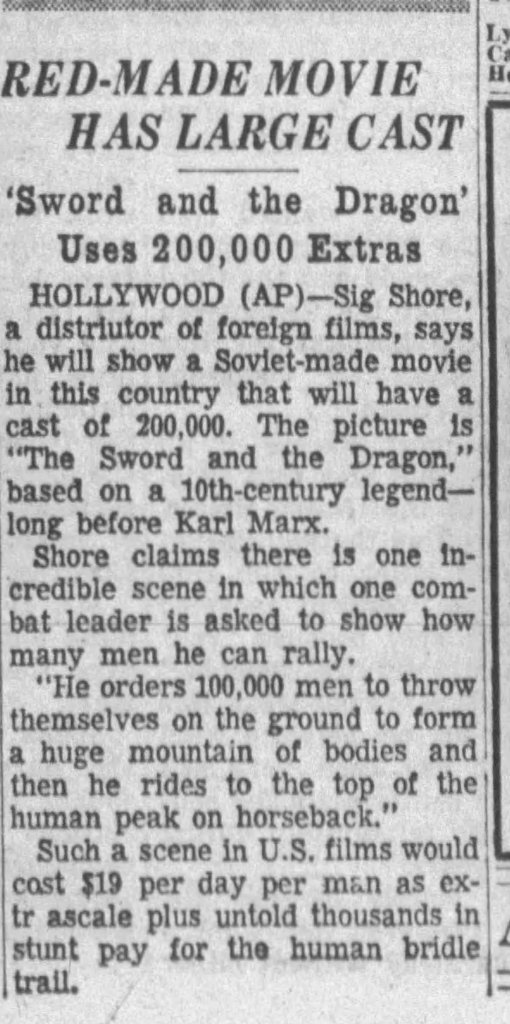
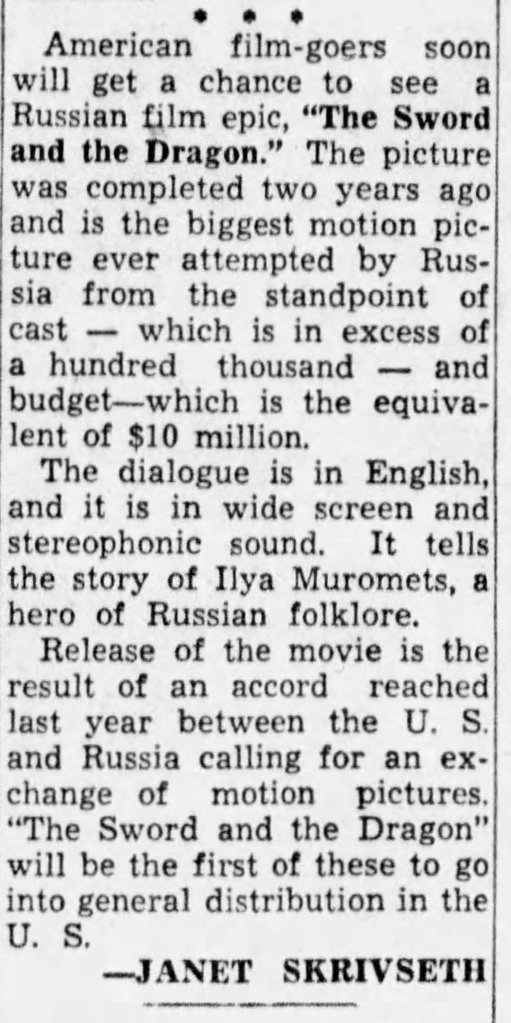
Ilya Muromets (1956) is quite an astonishing introduction to the works of Ptushko. Absolutely breathtaking, with some of the most ahead-of-its-time visual effects of the period, Ilya Muromets is stunning. Based on a popular Russian folklore tale, Ilya Muromets is a thrilling and charming fairy tale that feels positively epic despite its slim 90-minute run-time.
Nearly fifty when he made this 1956 classic, Ptushko had been working in Russian cinema since the thirties. He made about half a dozen films before this one. His direction is daring and sublime. The script has overly melodramatic moments and occasionally operates as propaganda, but it doesn’t matter. Ptushko has created such an extraordinarily engrossing visual experience that any small narrative quibbles seem silly.
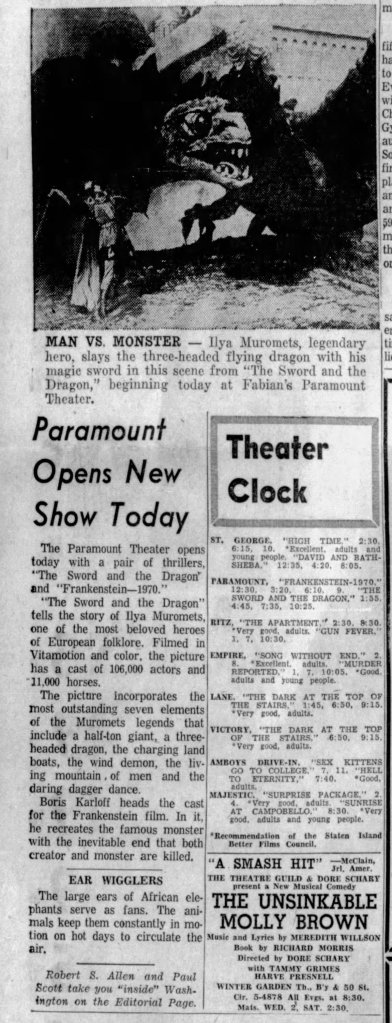
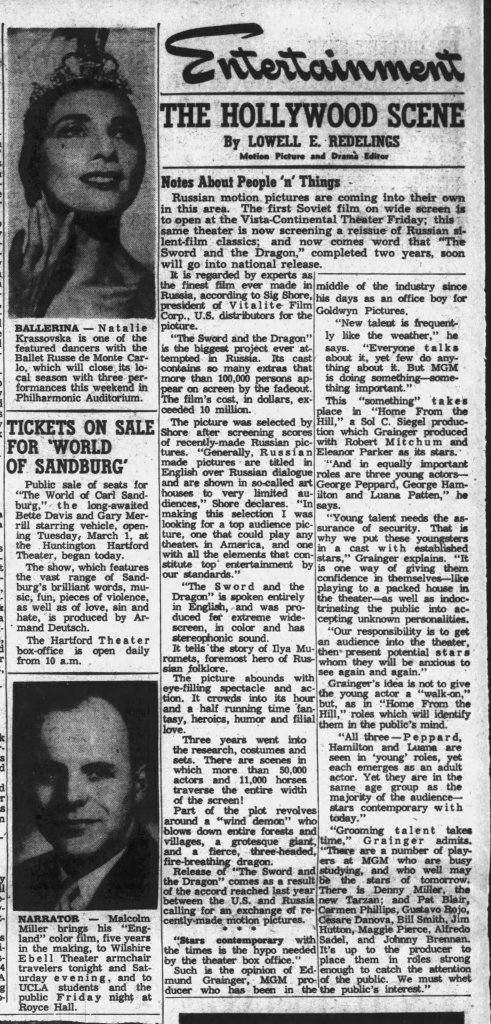
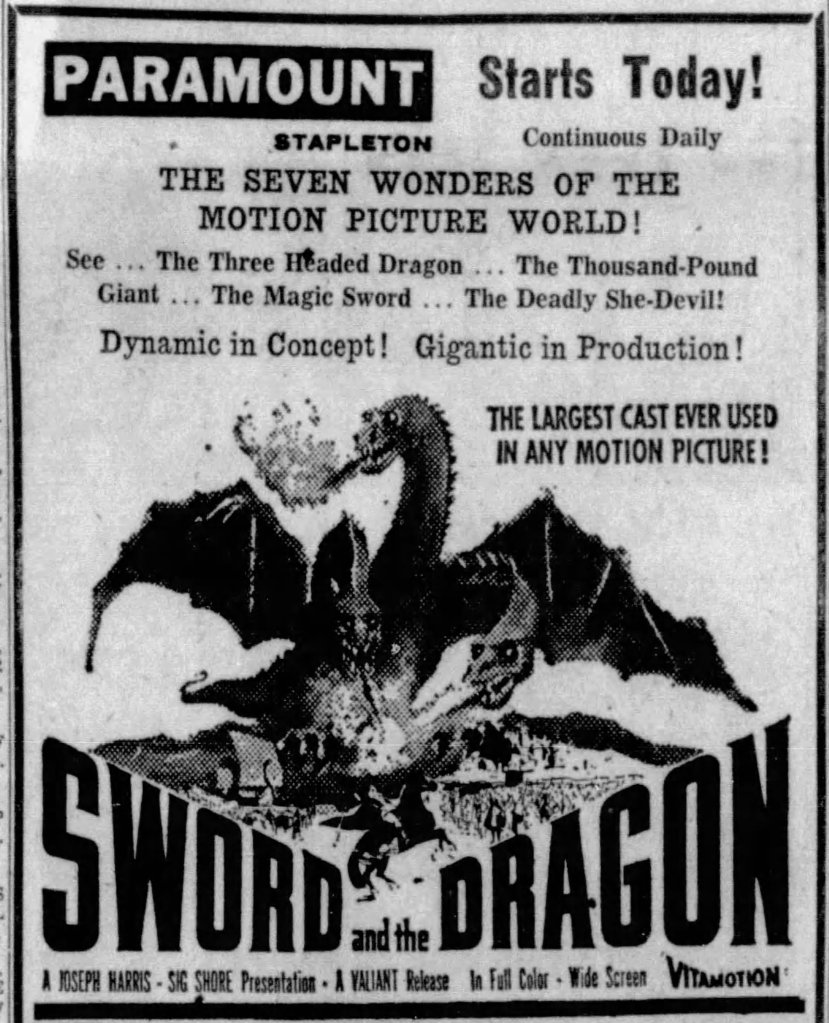
Packed with a cast of thousands upon thousands, filled with expansive widescreen battle scenes, romance, musical numbers, and a badass three-headed fire-breathing dragon, Ilya Muromets is an incredible achievement. I so miss fantasy cinema before CGI and AI. Watching the effects in this is more satisfying than any modern Hollywood blockbuster. Speaking of Hollywood, they did a cut-and-dub job on this, bringing this to the States as The Sword and The Dragon. I’m glad I didn’t see it initially via that version.
Sampo (1959)
I didn’t connect as much with the second film in Deaf Crocodile’s Aleksandr Ptushko’s Blu-ray set as I did Ilya Muromets (1956), but 1959’s Sampo is still a jaw-dropping visual treat. An obvious influence on Peter Jackson’s Tolkien films, Sampo is spilling over with sumptuous imagery. Like, this is a seriously beautiful-looking film with effects far advanced for 1959. Ptushko use of color is particularly dazzling here, predating the kaleidoscopic chills of Maria Bava’s color works by a few years.
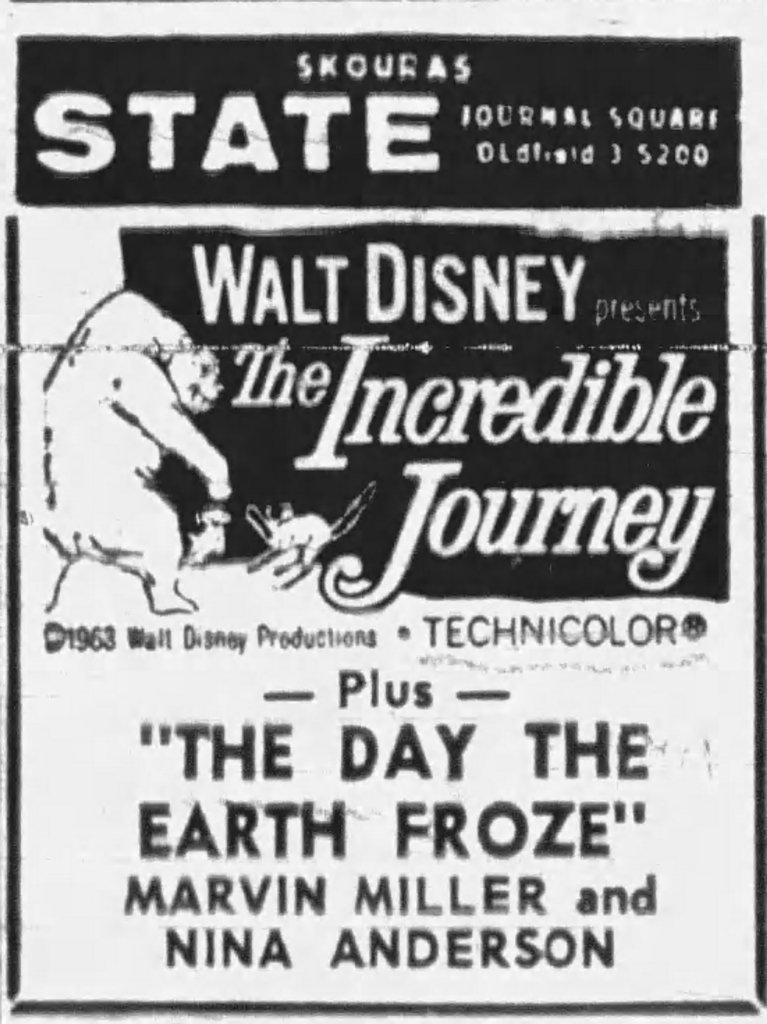
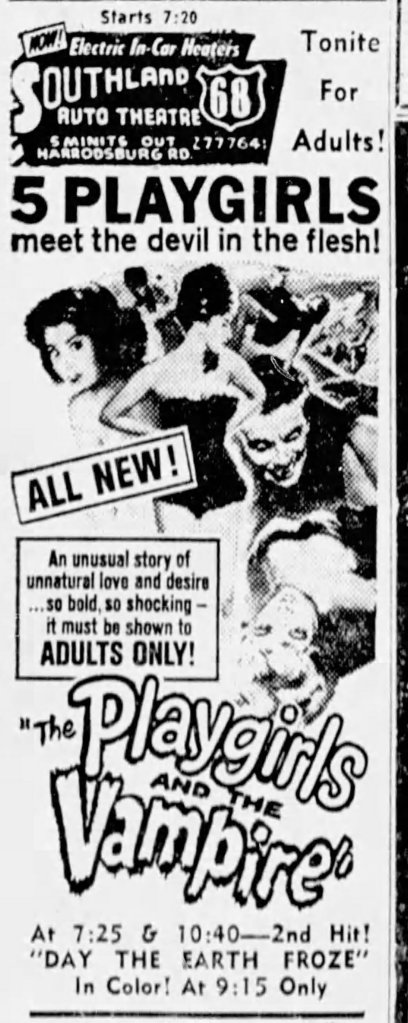
I felt like my relative lack of interest in classic mythology kept me from fully connecting with Sampo. Still, I was never less than completely engrossed. There is something visually interesting happening in every scene. I quickly just sat back, enjoying the film’s many stylistic choices and fun musical numbers. Sampo gets better and better as it goes along. The snow-covered finale is haunting and makes me wonder if Thomas Vinterberg had this in mind when he made It’s All About Love (2003).
The Tale of Tsar Saltan (1967)
Considering how much I admired the other films in Deaf Crocodile’s Aleksandr Ptushko Blu-ray box, I’m surprised by how little I enjoyed The Tale of Tsar Saltan (1967). Released nearly a decade after the first film in the set, this feels much less trendsetting and more just of its time. Brief at just 85 minutes, The Tale of Tsar Saltan is a clunky film hampered by overly hammy performances and disappointing special effects. The film is saved by isolated magical moments that bring it to life, at least visually. Gavriil Popov’s score is effective, as are aspects of the film’s lyrical and rhyming dialogue. Compared to the average mid-to-late sixties fantasy film, this actually plays quite nicely, but compared to Ptushko’s other works, this was lacking, at least for me.
Ruslan and Ludmila (1972)
Aleksandr Ptushko’s Ruslan and Ludmila (1972) is one of the greatest fantasy films I’ve ever seen. Hell, I might even go so far as to say that Ruslan and Ludmila is one of the best films I’ve ever seen, period. A magnificent and wondrous two and a half hour epic, Ruslan and Ludmila had me muttering ‘Wow’ to myself over and over again from beginning to end. Featuring colorful and stunningly gorgeous cinematography by Igor Gelein and Valentin Zakharov, Ruslan and Ludmila is a crushingly beautiful film. Romantic and surreal, Ptushko’s final work is a great masterpiece and a very special production.
The hands-down champ of Deaf Crocodile’s Ptushko Blu-ray box set, Ruslan and Ludmila looks beautiful thanks to its 2K scan from a couple of years back. I’m grateful I got to experience this extraordinary film via this restoration. I’m grateful to have seen it at all. I was so taken by this film, which sees Ptushko creating a hauntingly strange place that seems both of the past and future. Most of all, it all feels otherworldly, like Ptushko found an altered reality to film in.
Based on a beloved Alexander Pushkin poem from 1820, Ruslan and Ludmila was shot in 1971 via Mosfilm in and around Moscow. Featuring incredible expansive sets and thousands of extras, Ruslan and Ludmila feels like the BIG film it is. Most astonishing of all are the film’s jaw-dropping special effects. Unlike the other Ptushko films in Deaf Crocodile’s set, Ruslan and Ludmila never received any real distribution outside the then U.S.S.R. The conspiratorial side of me thinks it was due to how insanely great the visual work is. Nothing we were doing in the early seventies holds a candle to this. Hell, not much we do today holds a candle to this. Ruslan and Ludmila looks like the future cinema we might have had were it not for CGI and now AI. It’s tragic.
I fell in love with Ruslan and Ludmila. This is one of the most charming, inviting, and enchanting films I’ve ever had the pleasure of encountering. As a credit to how great this is, this isn’t even my genre! Regardless, I’m completely bewitched by Ruslan and Ludmila.
It messed me up.
Aleksandr Ptushko died about a year after the release of Ruslan and Ludmila, making it one of the great final statements in film history. As Stephen Bissette notes in his fine commentary track, this Deaf Crocodile release marks the first time most audiences outside of Russia have gotten to see the film, an unbelievable fact for an unforgettable film. Don’t miss the opportunity to see such a monumental work of cinema.
Deaf Crocodile has included some intriguing extras for each one of their Ptushko releases. Fittingly, Deaf Crocodile’s set contains a reprint of Upchurch’s influential V.W. article, along with a tribute to the much-missed film historian. This is spread over a few separate booklets. We also get wonderful commentary tracks for each film with another VW veteran, the great Stephen R. Bissette. All are very fine tracks, super-well researched and entertaining. We also get a new interview with visual effects artist and film historian Robert Skotak, talking about these films’ influence. Along with promotional material, Deaf Crocodile also offers additional essays, including a video tribute film by critic Walter Chaw and an article from film historian and professor Peter Rollberg.
All fine material for very captivating films.
Additionally, all the new restored scans look quite remarkable, with only The Tale of Tsar Saltan showing very minor source blemishes.
All in all, lovely presentations for a lovely set of films.
-Jeremy Richey, March 2026-
 Nostalgia Kinky
Leave a comment