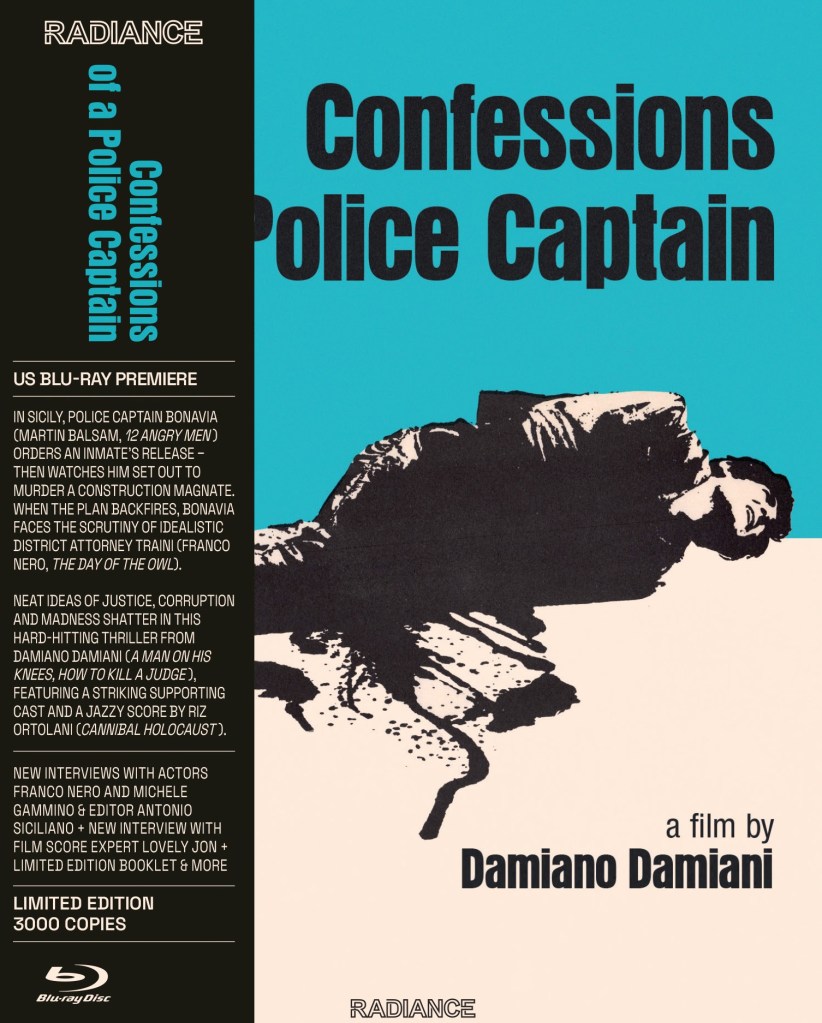
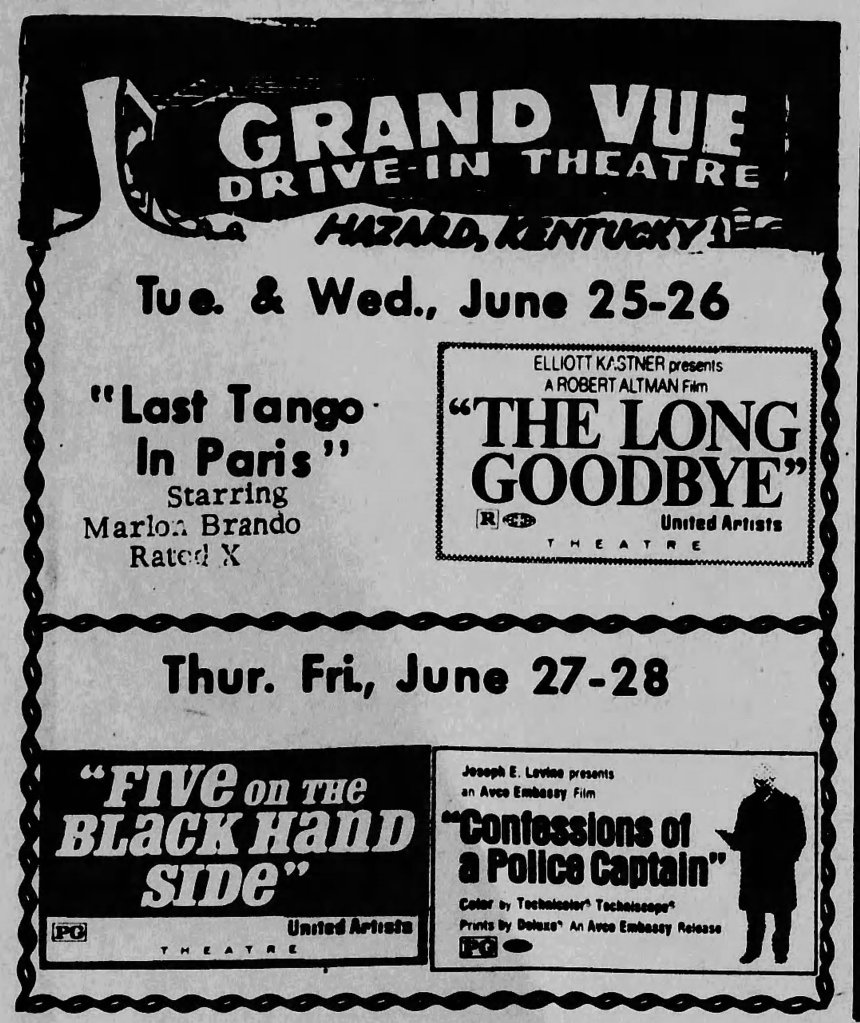
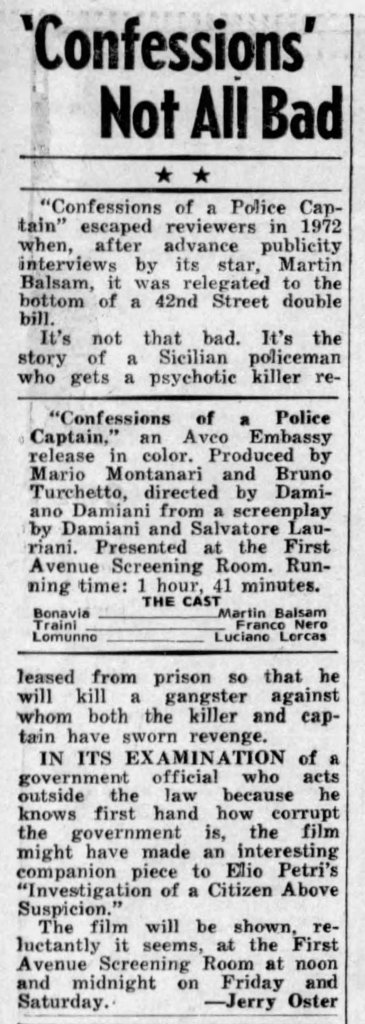
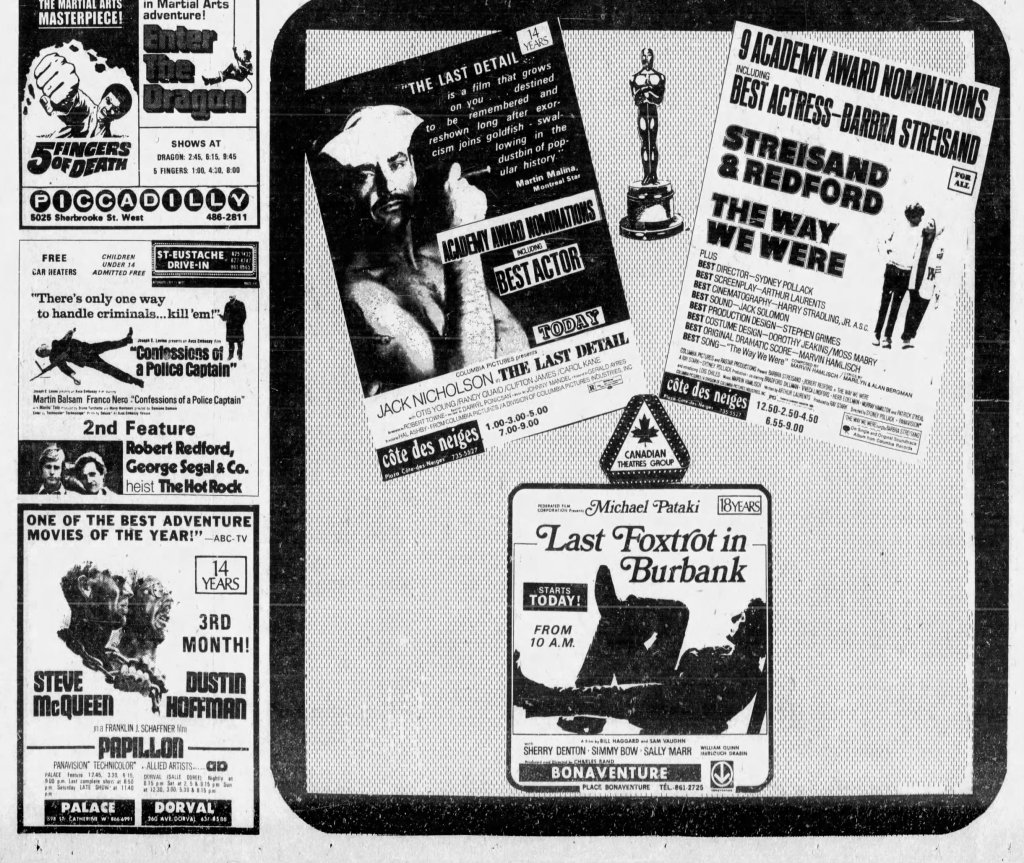
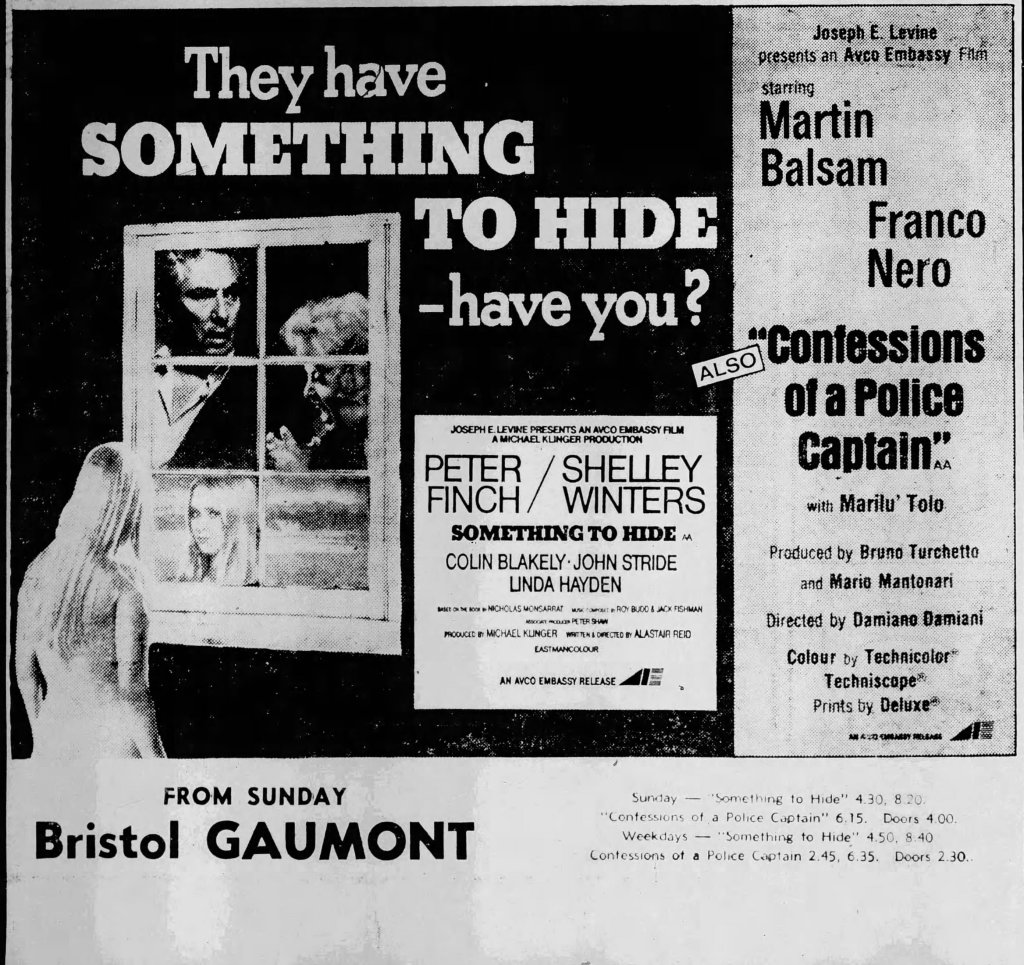
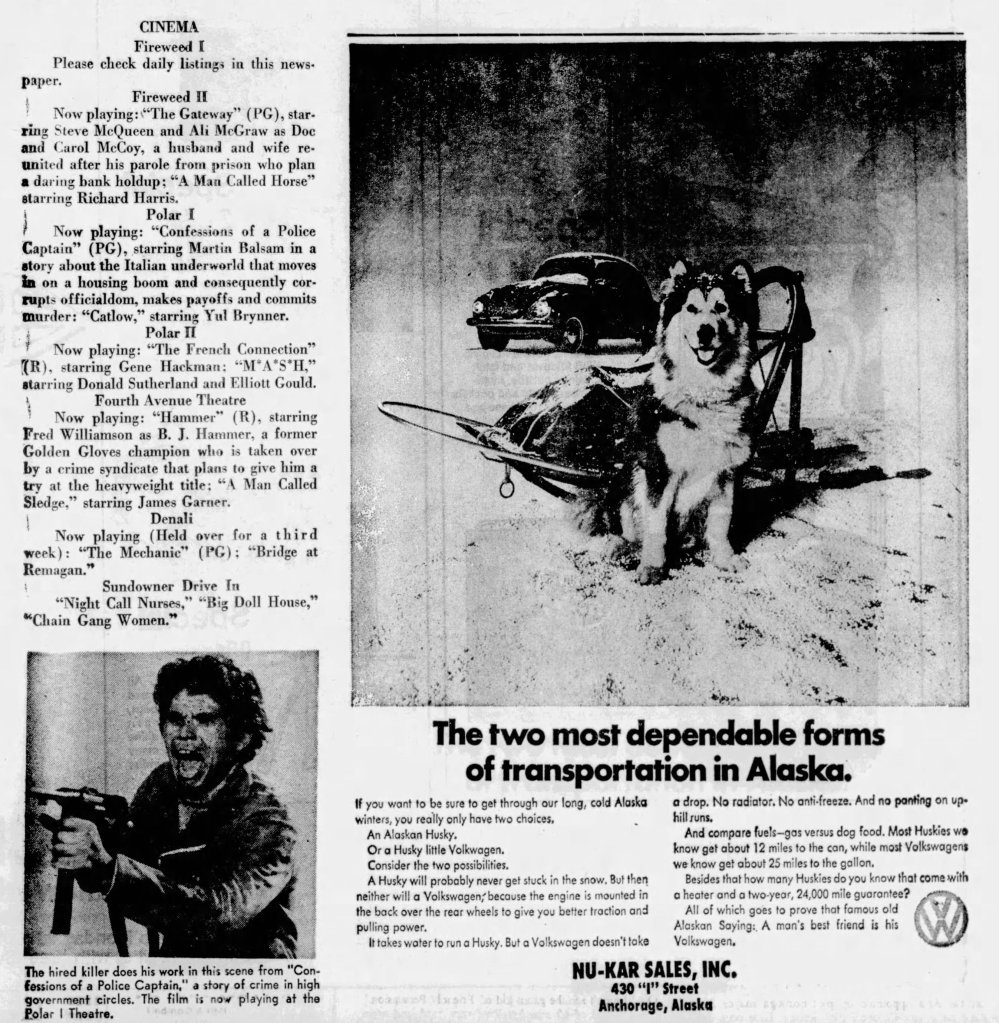
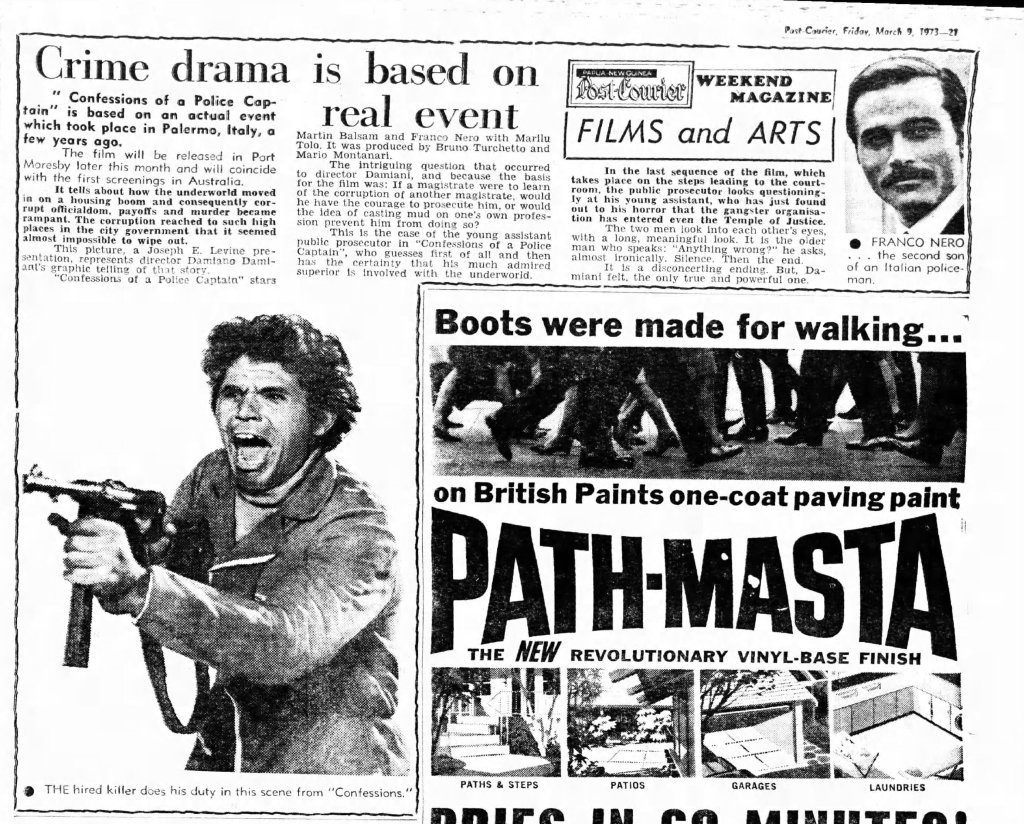
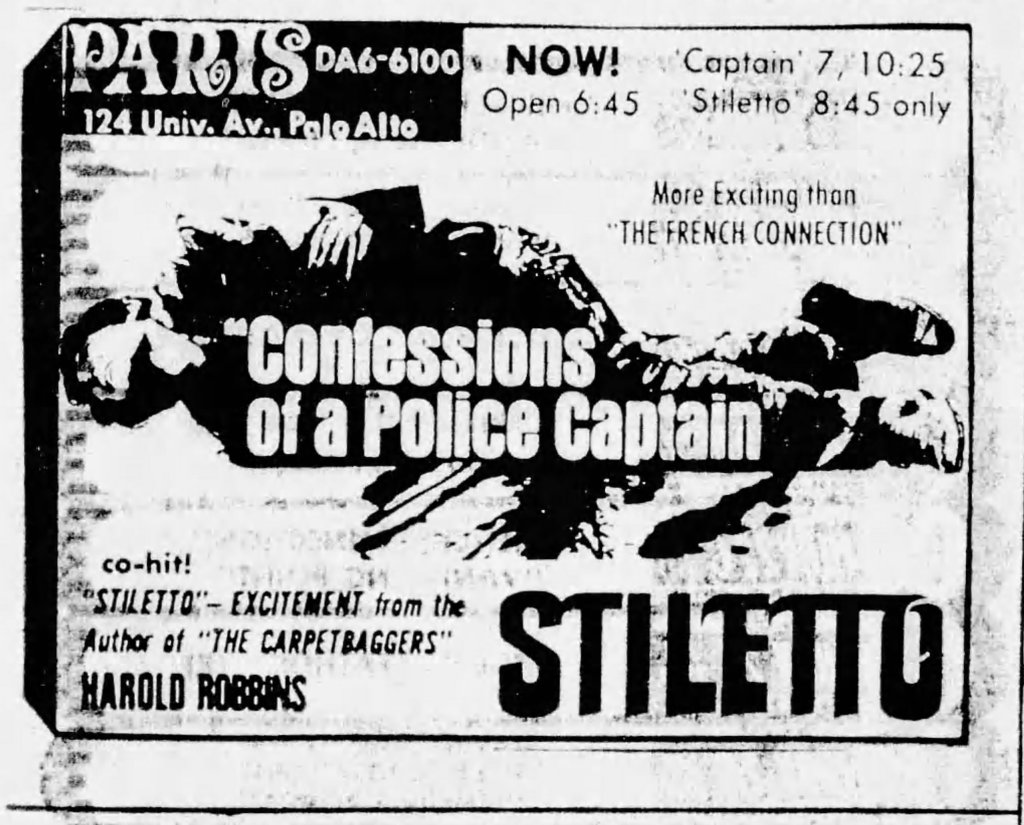
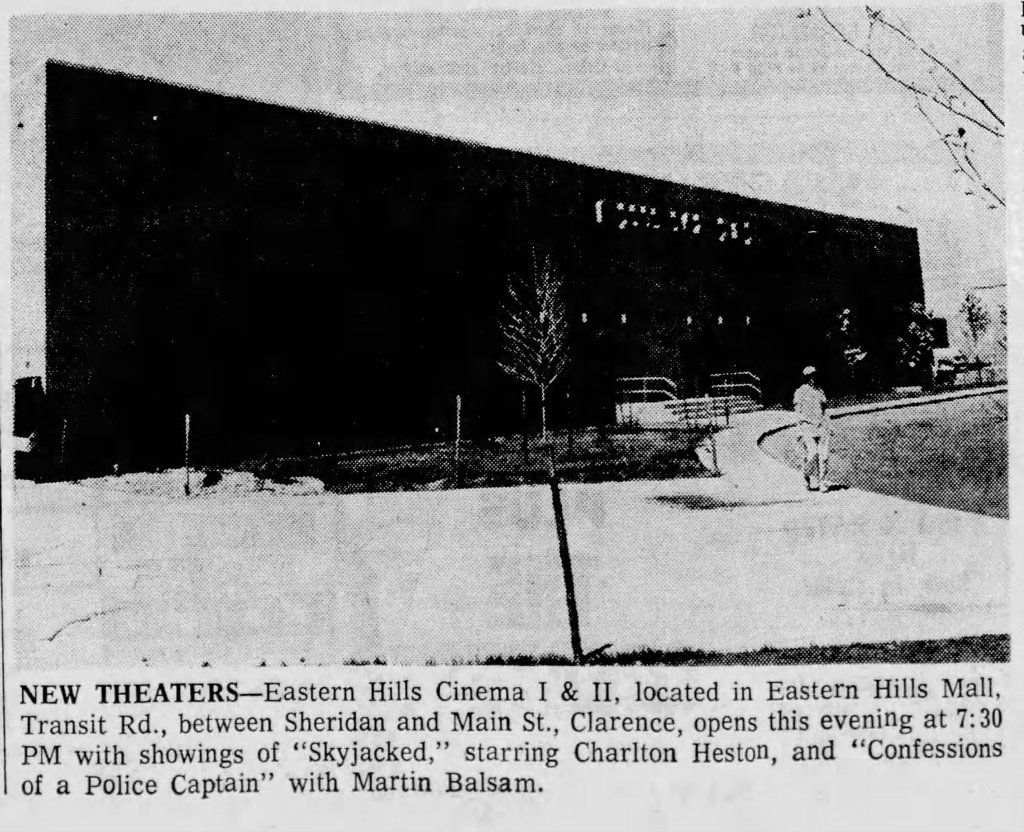
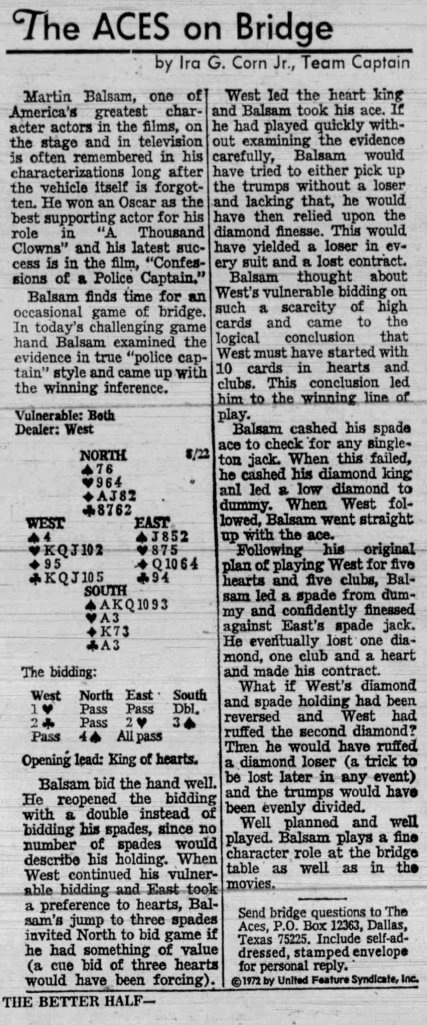
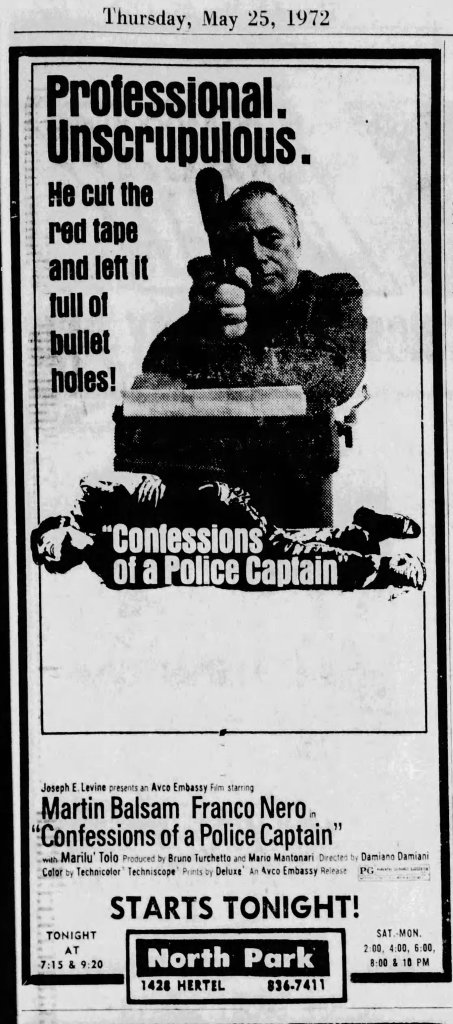
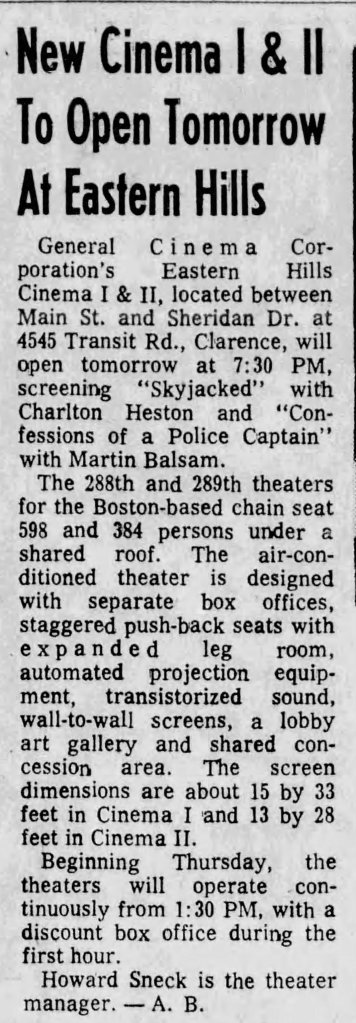
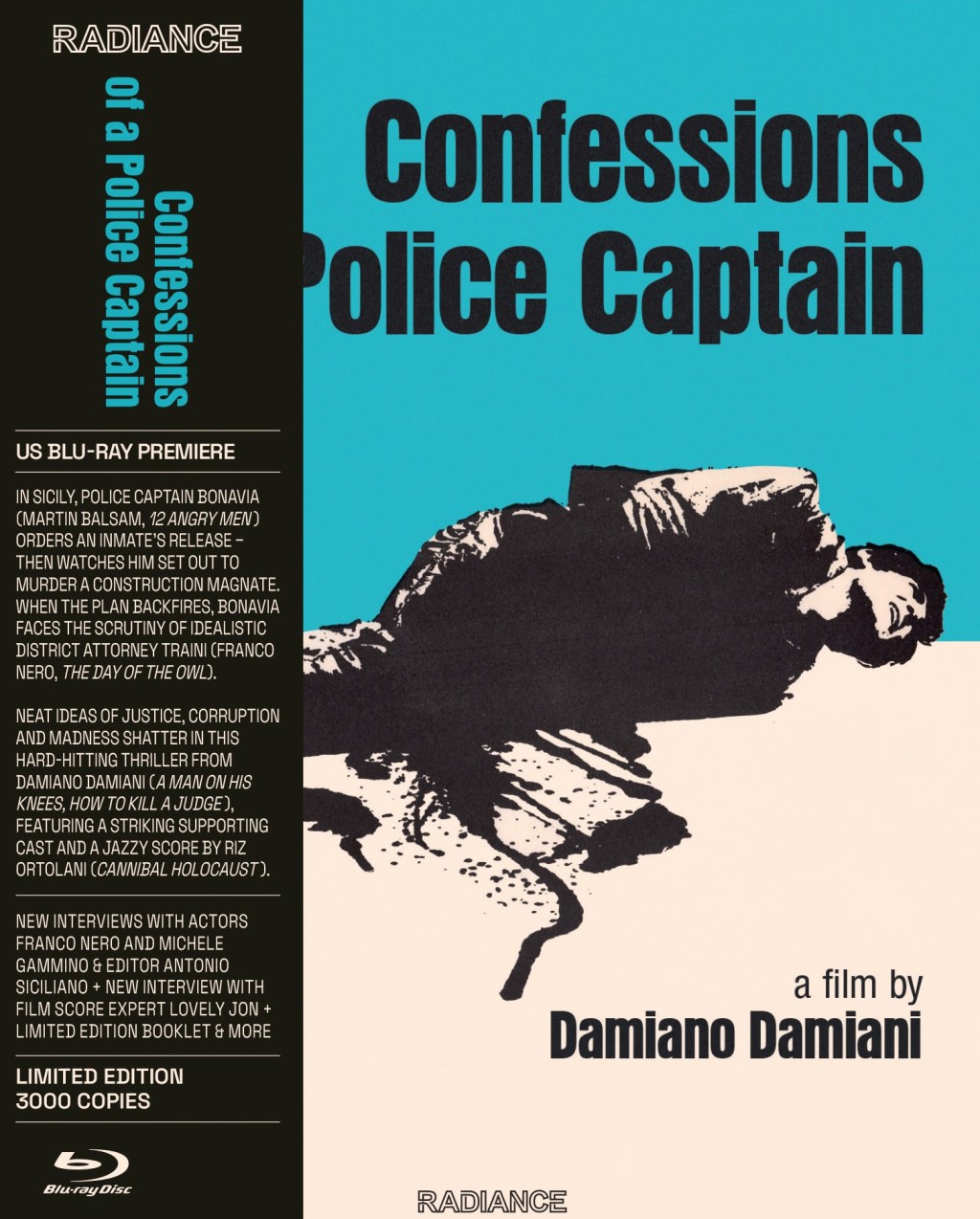
A timely and highly topical film from celebrated Italian filmmaker Damiano Damiani, Confessions of a Police Captain (1971) is a chilling Poliziotteschi. Co-written by Damiani from his own original idea, Confessions of a Police Captain is a cynical work focused on the corrosiveness of political systems that only protect the powerful. Damiani’s incredible film is soon out for the first time on Blu-ray in the UK and US from Radiance as a special edition featuring a brand-new 2K restoration. This limited edition can be ordered directly from Radiance or in the states from MVD. For this piece, I located some vintage clippings concerning the film’s release, which can be seen throughout this piece and mostly via the gallery at the conclusion.
Enjoy and don’t miss this amazing film.
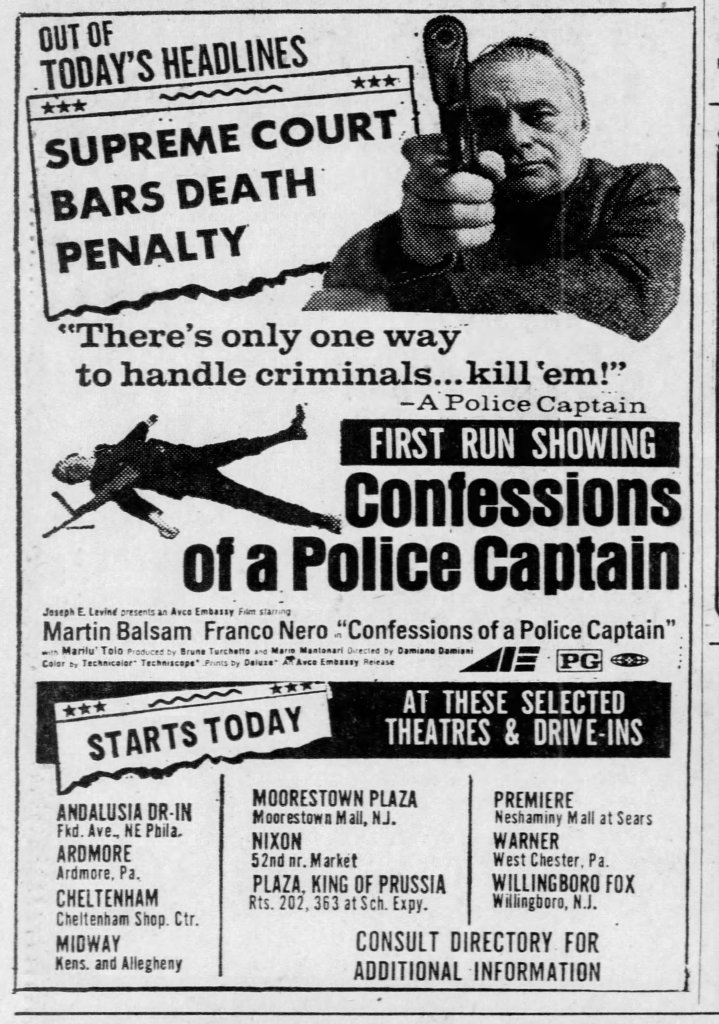
The very talented Damiano Damiani always deserved a larger audience. Even amongst reasonably dedicated Italian film fans, his work still isn’t as well-known as he should be. A glance at his filmography shows a remarkably intelligent filmmaker who excelled in whatever genre that called on him. He’d already directed more than a dozen films before Confessions of a Police Captain, averaging about a film a year since his debut at the dawn of the sixties. His seasoned status serves him well here, as Confessions of a Police Captain is an expertly directed work that matches its dark tone well.
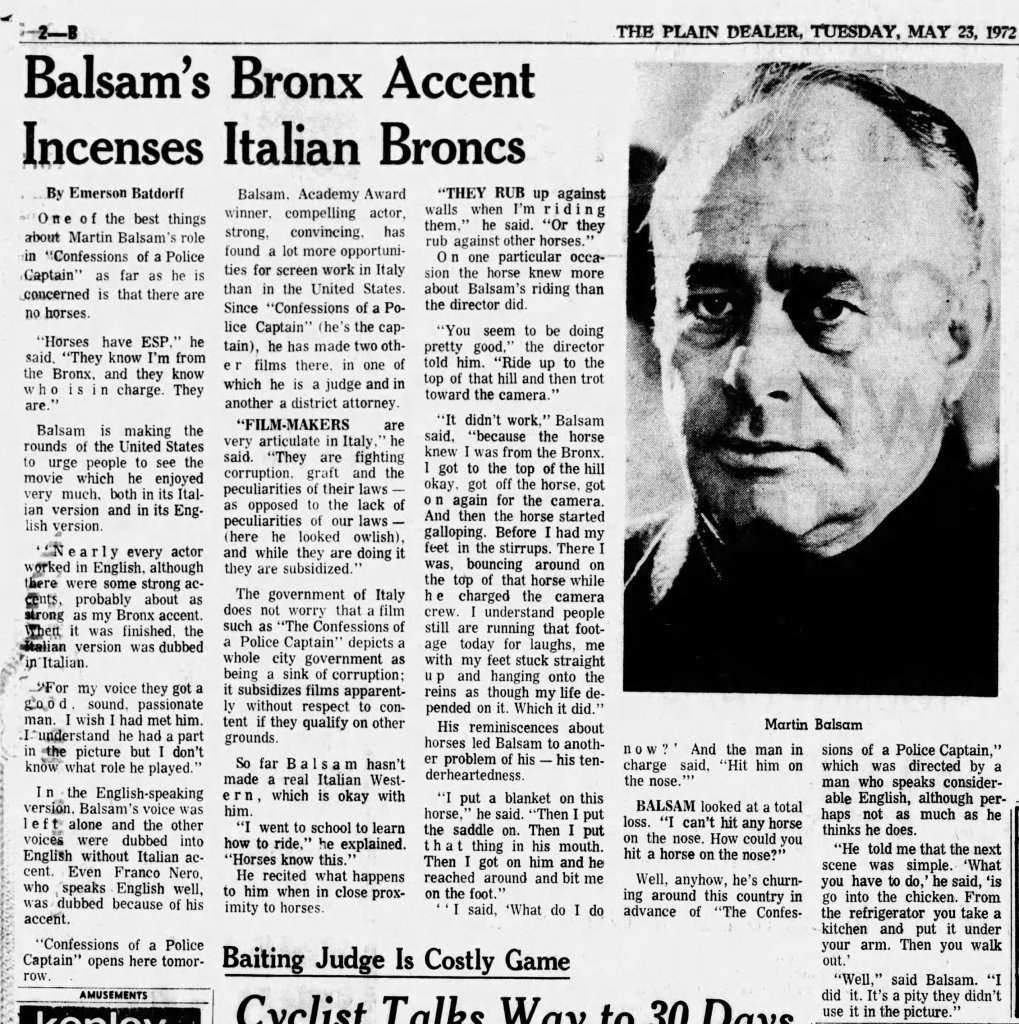
Starring an absolutely terrific Martin Balsam, Damiani favorite Franco Nero and the undervalued Marilù Tolo, Confessions of a Police Captain is an exceedingly well-cast film. American-born Hollywood veteran Balsam controls the picture with a rather shattering turn as a detective trying desperately to take down a local mafia-connected businessman no matter the cost. Often at odds with a new local DA, played by Nero, who doesn’t yet understand how corrupt the system is, Balsam plays a dead man walking exceedingly well here.
Marilù Tolo also started her career as the sixties dawned. She quickly became one of the most prolific young actresses in all of Italy, appearing in nearly 40 films in the sixties alone. Damiani captures her here, not long before she briefly dated Dario Argento before briefly relocating to Hollywood. On top of being a great actress, Tolo might also be the only person who had Serge Gainsbourg write an entire song about her and guest-starred on Charlie’s Angels. She’s incredibly effective here via her dramatic turn as the doomed girlfriend of the mob-connected businessman in Balsam’s sights.
Featuring no-nonsense gritty photography by DP Claudio Ragona and thoughtful editing by Giallo-favorite Antonio Siciliano, Confessions of a Police Captain is technically strong but not showy. Damiani wisely doesn’t let the film’s technical qualities distract from his narrative, directing the film in a non-flashy, level-headed style.
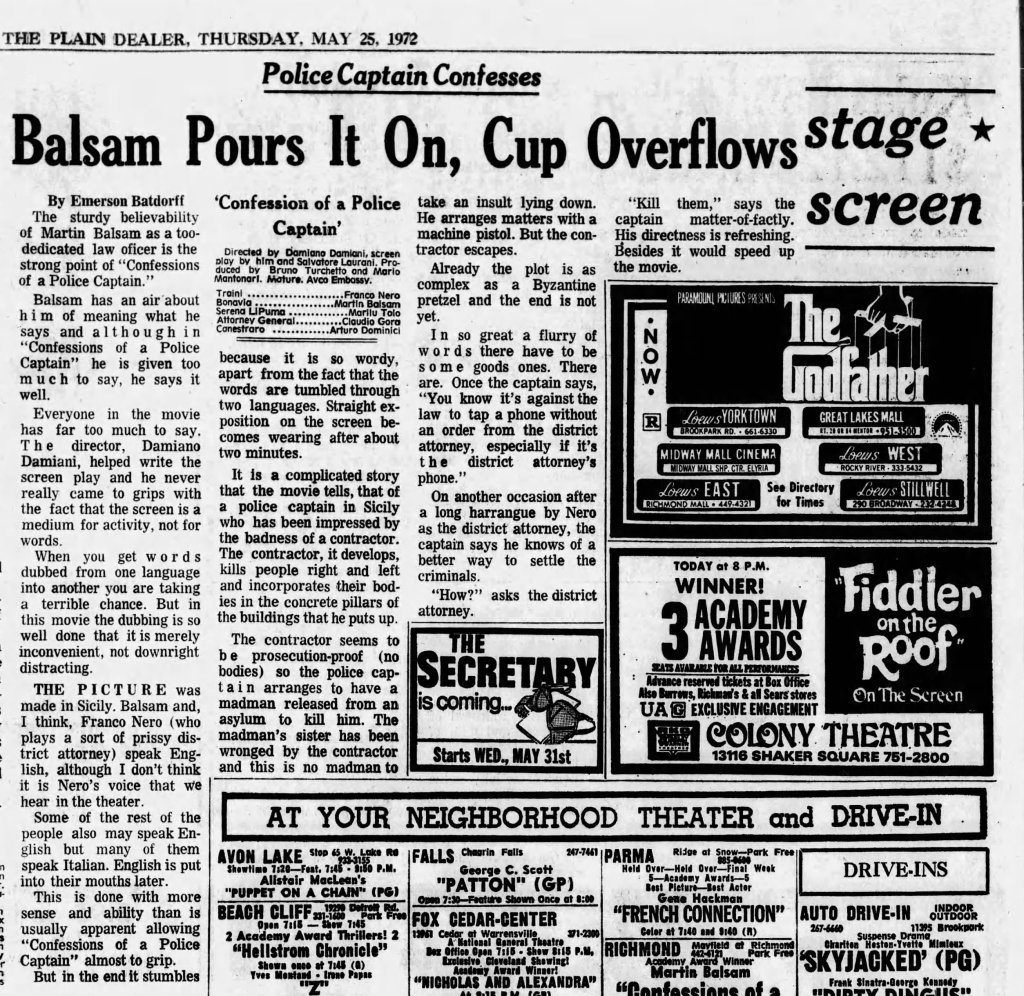
Confessions of a Police Captain isn’t amongst the more violent or shocking examples of Poliziotteschi, but its look at a sold-out judiciary and a failed system that only serves the rich is incredibly timely in 2026. Like the best of the Italian anti-fascist filmmakers, Damiani sees the future we’ve arrived at without the necessary changes to the power dynamic needed. Confessions of a Police Captain might not be as bloody as some Poliziotteschi, but it is a frightening warning nonetheless. A celebrated one as well as the film won both the Golden Prize at the 7th Moscow International Film Festival in 1971 and at the Étoile de Cristal Awards in 1972.
As timely as it still is today, Confessions of a Police Captain struck a chord upon its release for English-language audiences as it managed a lengthy international run that took it all over from its release up through the mid-seventies. Its successful run here in the States was thanks to film distributor Joseph E. Levine, who bought the rights in the fall of 1971.
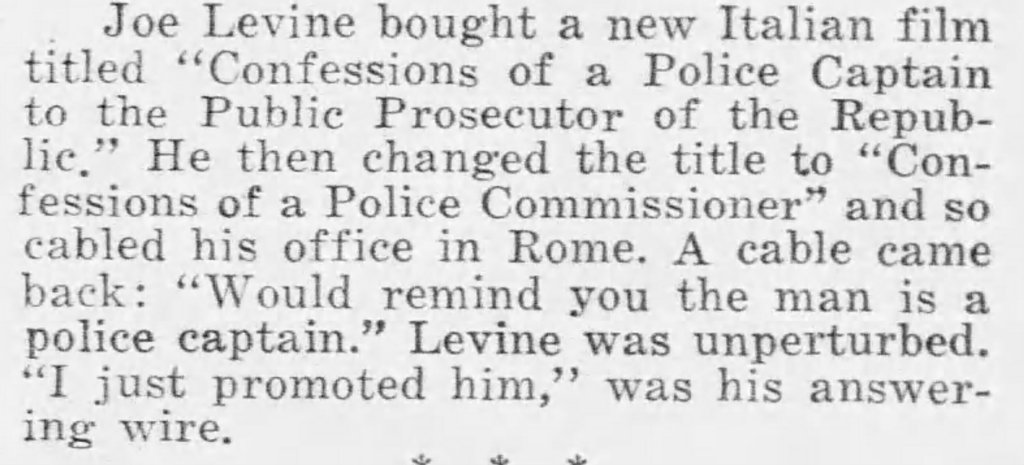
Confessions of a Police Captain was a good purchase for Levine, who made a wise call bringing the film here. It fit in exceedingly well with the paranoid neo-noir American films of the period. In the era of Watergate, audiences were in the mood to see idealistic men attempting to take down the powerful, making Confessions of a Police Captain an ideal film to be playing throughout ’72 and ’73.
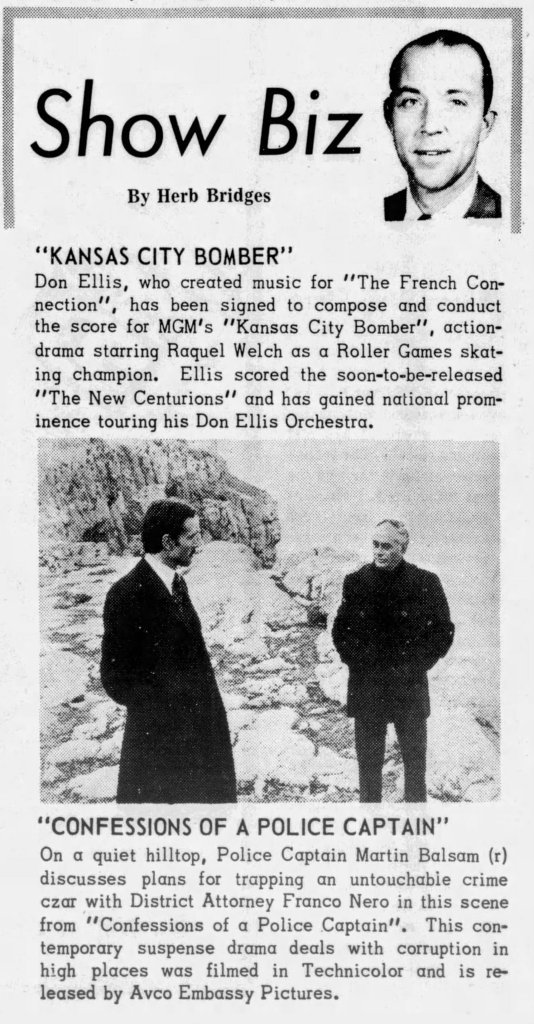
Back in Italy, the film was a big hit, finishing just outside the top-ten box-office hits from 1971. Controversy arose after a real-life murder of an Italian prosecutor occurred, with some blaming the film. That aside, Confessions of a Police Captain was a huge success for Damini, both creatively and professionally.
Radiance continues releasing some of the greatest under-the-radar international cinema via fabulous deluxe-limited editions, and I’m happy to see the splendid Confessions of a Police Captain added to their collection. No commentary for this Blu-ray, but we get more than two hours of valuable new interviews. Actors Franco Nero and Michele Gammino appear in new, lengthy interviews about their work with Damiani and this film. Editor Antonio Siciliano is also on hand, discussing his vital behind-the-scenes work on the movie. Just as interesting is the new interview with the very knowledgeable film score expert, Lovely Jon, talking about Riz Ortolani’s career and score. It’s a great chat, focused on one of Ortolani’s best soundtracks. Rounding things out in this limited edition is a great booklet featuring two newly translated vintage interviews with Damiani, along with Radiance’s great OBI info strip and reversible sleeve.
Confessions of a Police Captain is a hell of a great film. Its arrival on Blu-ray looking and sounding this great is cause for celebration. Radiance continues its streak of phenomenally diverse and important home video releases.
-Jeremy Richey, April 2026-
Here are the rest of the clippings I found. As always, I’ve added the newspaper attributes to each image for downloading.
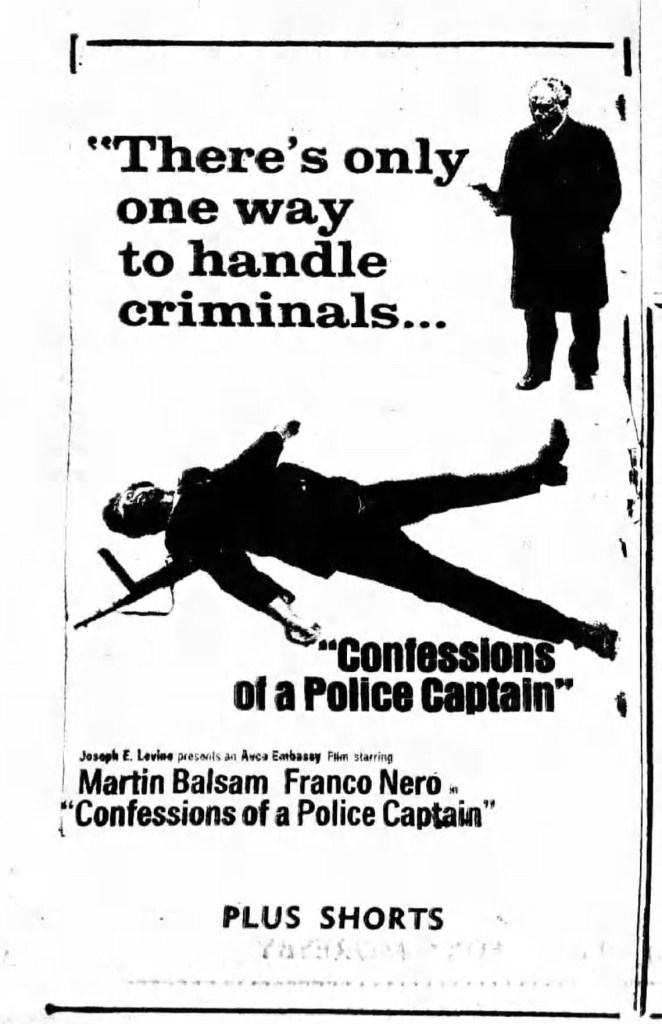
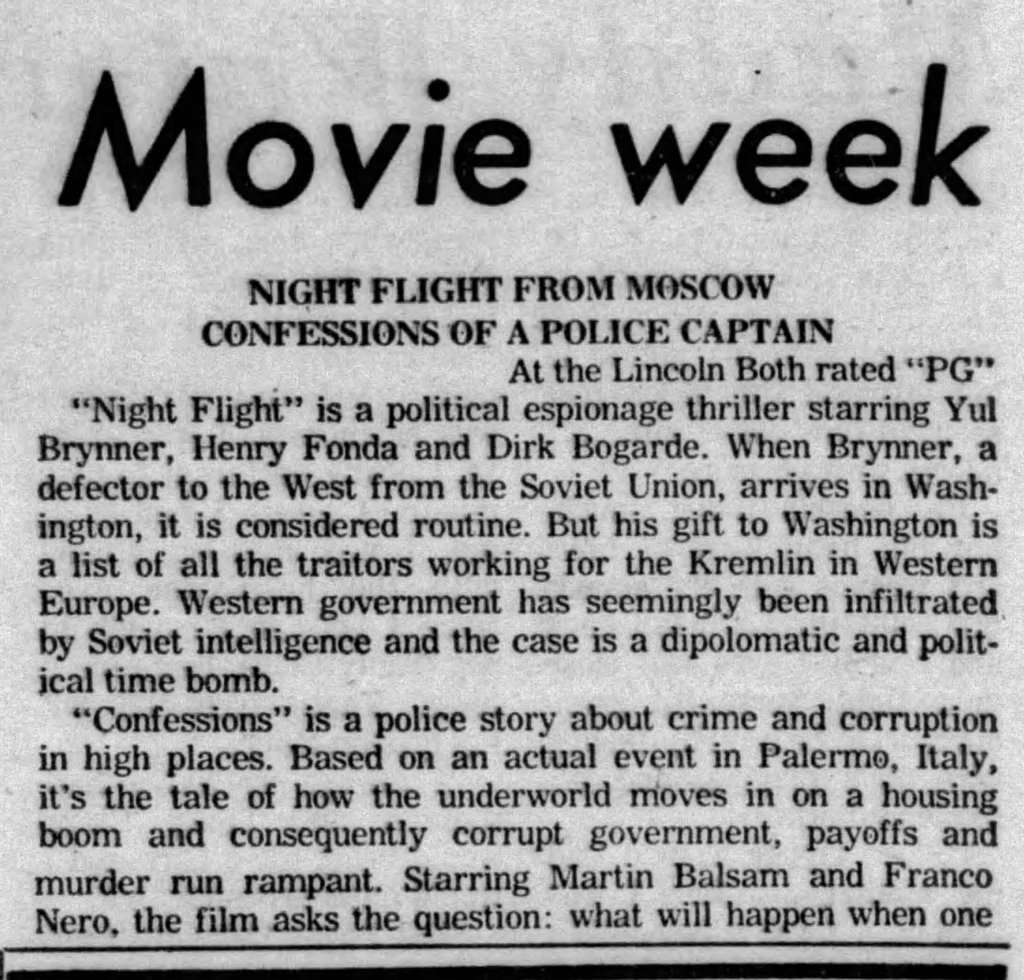

 Nostalgia Kinky
Leave a comment