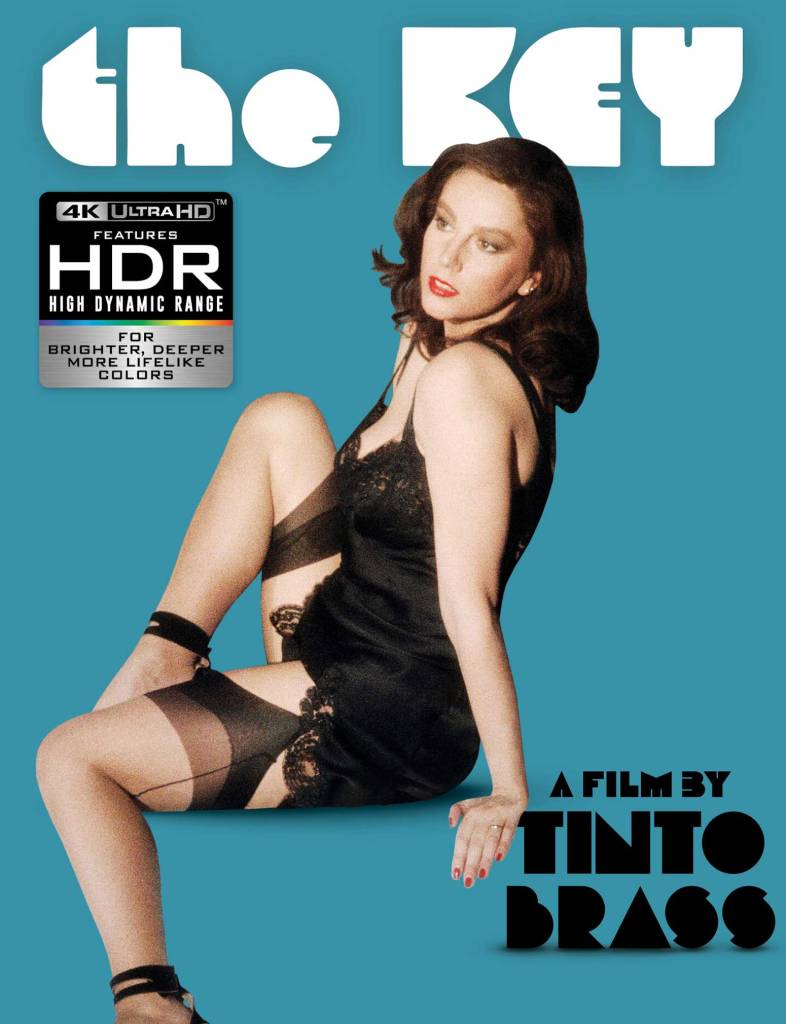
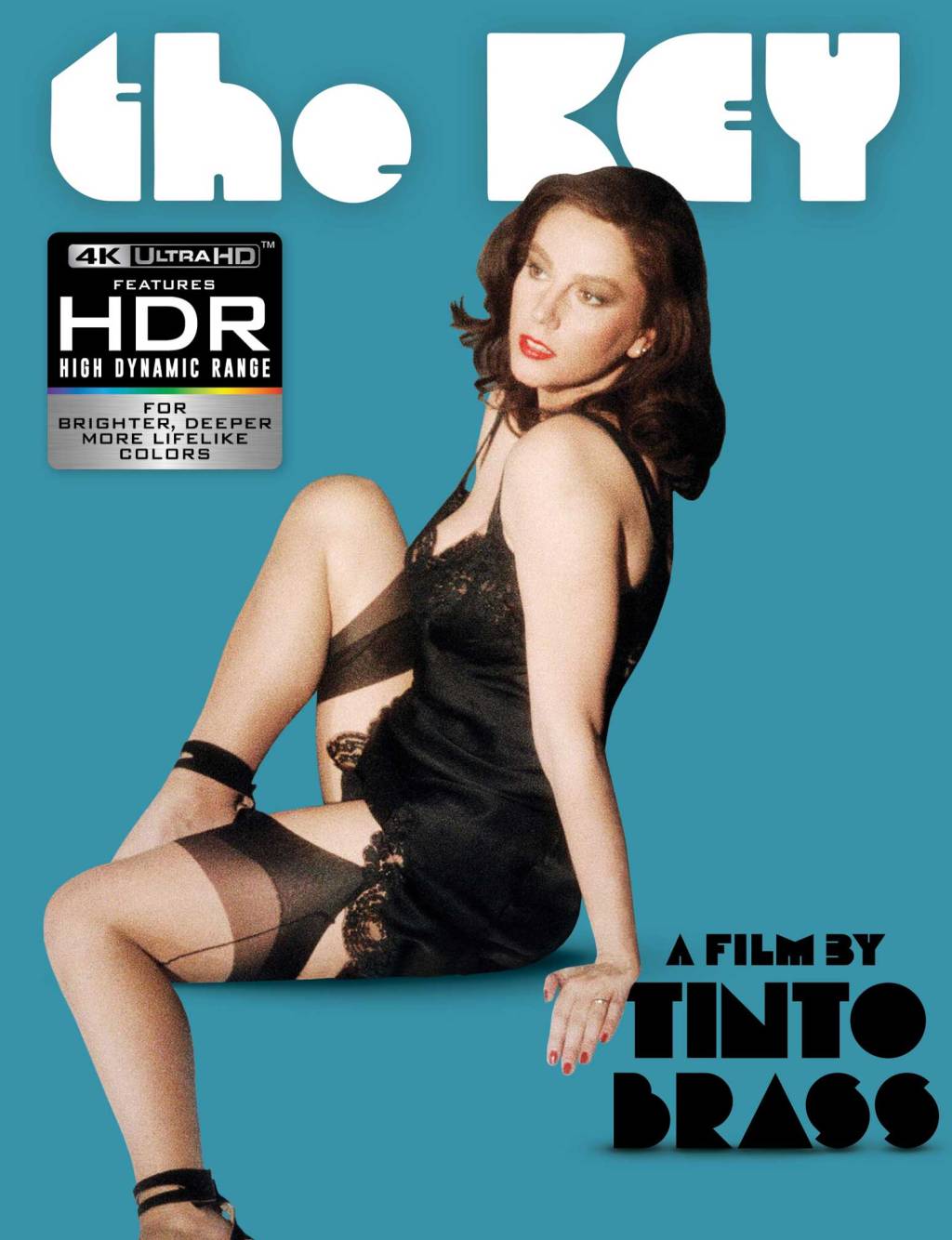
Cult Epics has released the definitive edition of one of my personal favorite films from the early eighties, Tinto Brass’ incredibly influential The Key (1983), as a lovely 4K/Blu-ray special edition. Loaded with hours of new and archival extras, a terrific booklet, and a sparkling new straight from the negative 4K restoration, this is the version of The Key many of us have hoped for.
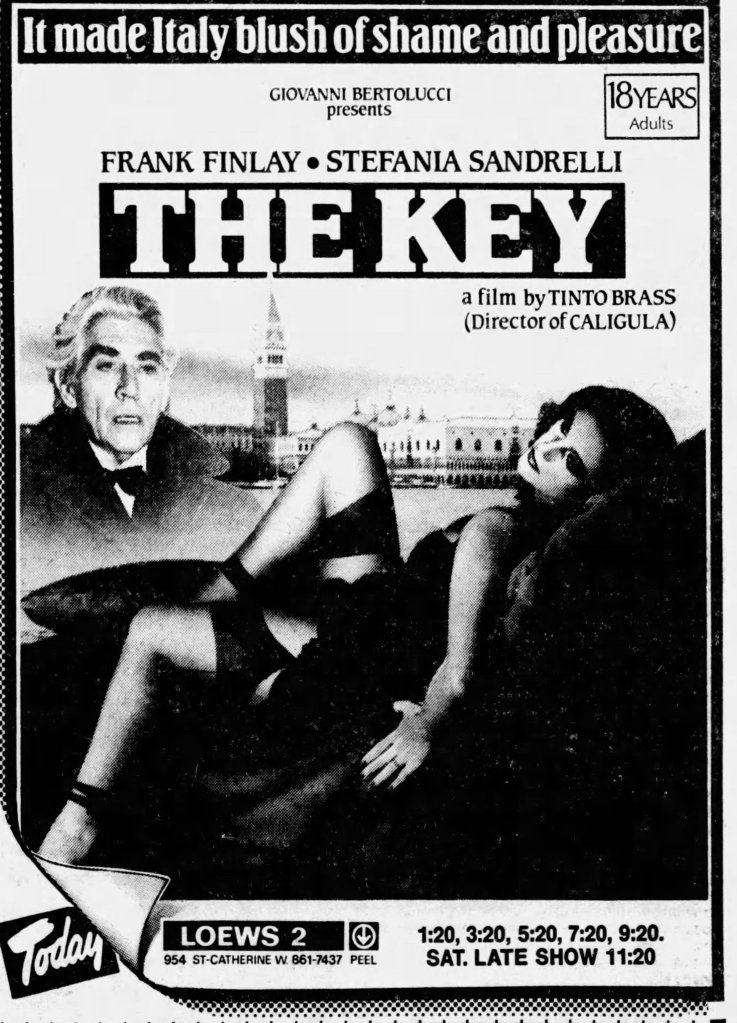
As the eighties dawned, it appeared that one of the greatest and most daring Italian filmmakers of the sixties and seventies was all but finished. Even though it had been less than five years since Brass’ biggest hit, Salon Kitty (1976) was playing all over the world, the debacle of Caligula (1979) wrecked him critically. He attempted to escape the shadow with one of his boldest and most confrontational films, Action (1980), but, frustratingly, the film failed critically and financially, leaving Brass seemingly at an end-point cinematically speaking before he even turned fifty.
Another great icon of the sixties was also having a harder and harder time receiving the kind of quality roles she so deserved. Stefania Sandrelli will forever have a spot amongst the great screen actresses. Throughout the sixties and early seventies, the luminous Sandrelli gave some of the most memorable performances of the era, far outshining most of her very talented peers. By the time the eighties hit, Sandrelli was still working frequently, but the parts were getting smaller, and the films were far away from her classic arthouse work with the likes of Bertolucci and Germi.
According to Cult Epics’ The Films of Tinto Brass, the maestro had been yearning to make an adaptation of Junichirō Tanizaki’s celebrated Japanese novel The Key since the mid-sixties. Despite securing the rights and talking with the author shortly before his passing the project never came to be, but it never left Tinto’s mind.
After Action failed to spark, something quite strange happened as the now-notorious and overwhelmingly critically maligned Caligula began making money and lots of it. Suddenly, Brass had various producers clamoring for him to make another ‘erotic’ film, even though he’d never considered his violent epic that. Sensing he could finally film his “dream project”, Tinto joined forces with Bernardo’s cousin, producer Giovanni Bertolucci, to make The Key.
Despite his love for the original Japanese novel, centered on a couple who discover their renewed sexual passion via shared diary entries, Brass knew a few adjustments were necessary, mainly regarding location and time. While the novel was set in conservative 1950’s Japan, Brass relocated his film to Italy, in the early forties at the dawn of Fascism. Known today primarily as an erotic filmmaker, Brass was for the first half of his career a very political one. The Key marks the clear dividing line, although Brass’ choice to set the film in the time of Mussolini indeed still makes the film political. Unlike his earlier, clearer left-leaning work, The Key takes a more subtle approach, remaining essentially neutral while clearly nostalgic. Stepping away from the absurdist anarchy of earlier films, Brass finds his political voice in this new erotic phase through sex itself.
For The Key, Bertolucci and Brass secured a tremendous team of behind-the-scenes players, assuring this was to be amongst the most stylish of the period. Frequent Brass collaborators like lighting expert Sergio Spila, cameraman Enrico Sasso, and cinematographer Silvano Ippoliti are all here delivering their usual unforgettable work. Ippoliti is especially vital, supplying the film’s breathtaking Venetian photography, packed with haunting dark shades and eye-popping swabs of color. Also, essential to the film’s success is Production designer and art director Paolo Biagetti. The Key also marks the first time Brass worked with the legendary composer Ennio Morricone, whose soundtrack can be listened to via this new Cult Epics release.
Brass understood that no matter how great his team was, The Key’s success absolutely DEPENDED on the film’s leading lady. After being rejected by the likes of Sophia Loren, who, thankfully, had zero interest in the film or the part of the frustrated and lonely wife, Teresa, Brass looked elsewhere. The role required a truly great actress who also had to be a major star, as well as a bravely uninhibited one. While Italy was certainly filled with many younger actresses who had no issue with frequent nudity, finding an established one around the age of Teresa’s 40 was challenging. Thankfully at some point during the process, someone came up with the name that made The Key the classic it is today, Stefania Sandrelli.
Al Pacino once described Laura Antonelli as the most poetic actress of his generation, but it was Stefania Sandrelli that Francis Ford Coppola had originally wanted for Michael Corleone’s Sicilian bride in The Godfather. While the never panned out, Sandrelli had, by the time she completed work on Bernardo Bertolucci’s 5-hour-plus 1900 (1976), a legacy already golden. The flurry of films she made after 1900 all suggested that she’d go the way of many of her peers nearing middle age, appearing in occasional supporting roles mostly in comedies and uber-commercial cinema. But to paraphrase Dave Davies, Stefania Sandrelli wasn’t like everybody else, and she wasn’t about to exit the expected door.
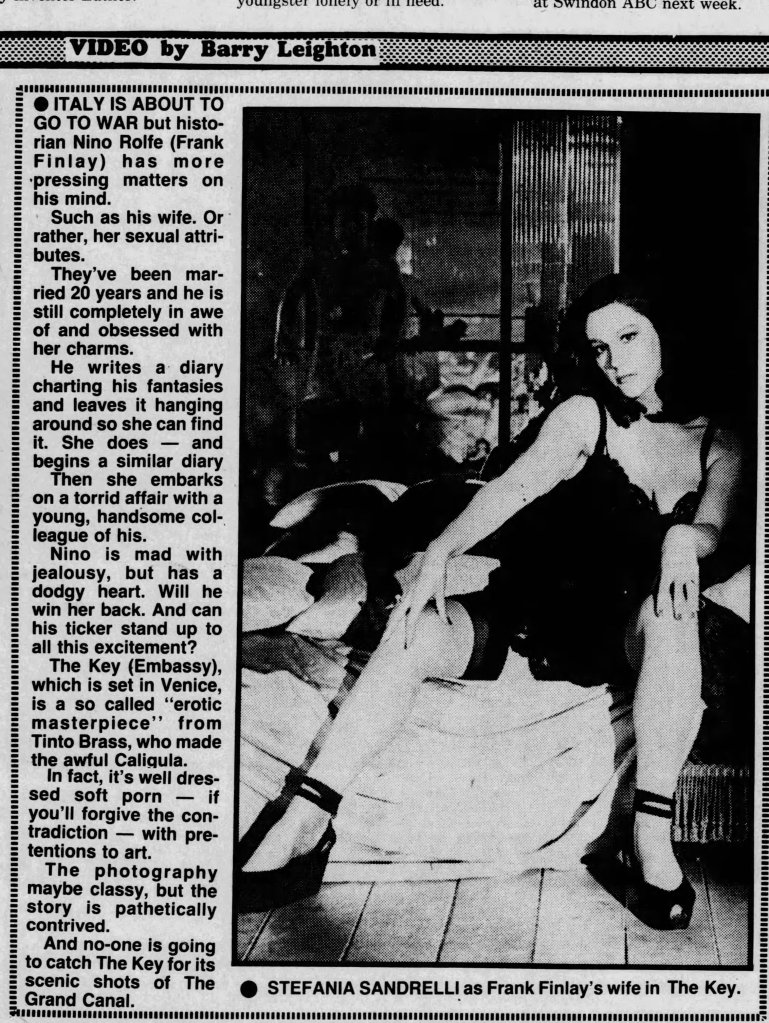
The thing that is most shocking about Stefania Sandrelli’s jaw-dropping, literally revolutionary, performance in The Key is just how badly she wanted it. Great Italian film historian Eugenio Ercolani writes in his new, beautiful Cult Epics essay on Sandrelli just how dedicated she was to both the role and Brass. I love how clear it is to Sandrelli just how daring the role is, and how bold she plans to be. For an internationally recognized, award-winning actress and star to accept a role with such graphic nudity and sexuality is unheard of. The Key remains groundbreaking in its depiction of sex on the screen, barely hanging on to the softcore ledge with some of the most liberating and freeing displays of unapologetic male and female nudity in arthouse cinema. The Key remains a dazzlingly liberating experience and much of it is down to Sandrelli, who delivers one of my all-time favorite performances here. I admire her so much and was so thrilled to see Ercolini note that she still remains defiantly proud of the film and not ashamed at all. And why should she be, or anyone else, involved in such a great art-piece as The Key? Sandrelli’s turn here predates the likes of wonderful Emma Stone in Poor Things and dazzling Demi Moore in The Substance, but seeing major mainstream actresses willing to explore this kind of sexuality on screen is a rare, rare thing. It should be applauded and celebrated for as long as people enjoy film.
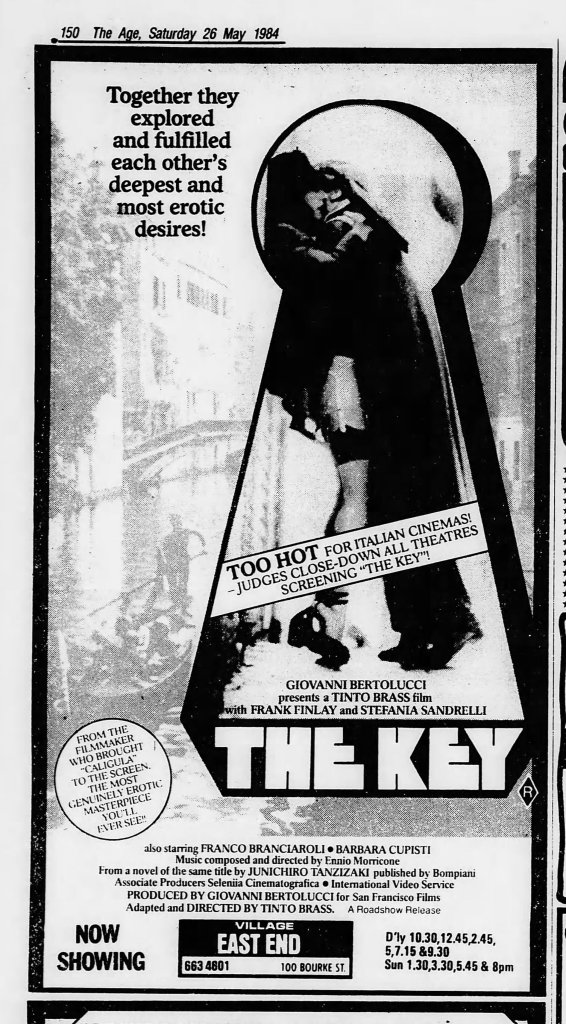
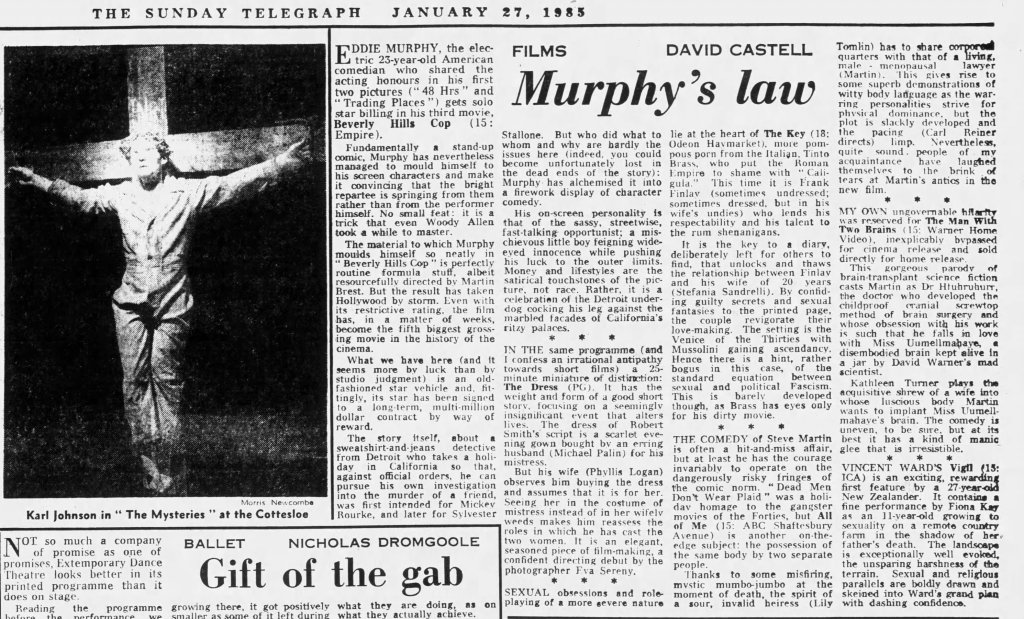
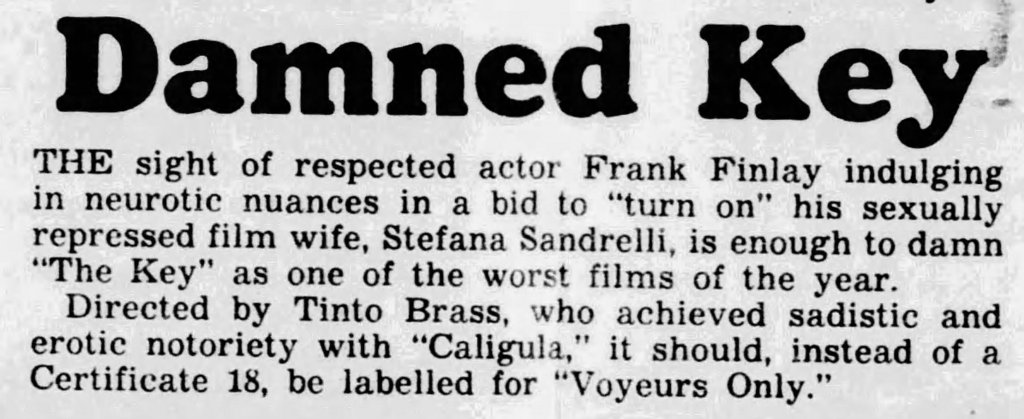
The Key is, in fact, one of the great European Art-House films of the eighties. The critics at the time, mostly English and male, couldn’t get past the sight of Sandrelli’s body to notice that The Key is a startlingly great work. Brass creates an alternate place here, a place beyond the past. The Key is set during a specific time, but it finally exists in its own dream-space. Compared to Brass’s earlier chaotic works, The Key is elegant and classically composed, with only one dinner sequence, where Brass delights in playing with the ridiculous 360-degree rule, recalling the furious films of his youth.
The Key saved the careers of both Tinto Brass and Stefania Sandrelli. While the film was entirely too explicit for many international markets, it was a monster touchstone hit in Italy, making both Brass and Sandrelli controversial sensations. Sandrelli made a few more erotic films before transitioning into one of the most respected and prolific actresses in all of Europe. She continues, thankfully, thriving on screen to this day.
Tinto Brass wasn’t about to fuck around after the success of The Key. He’d found his niche, and by God, he was going to make it his own. In the wake of The Key, Brass directed a flurry of some of the finest erotic films ever made, only occasionally returning to his earlier cinematic madness with works like the great Snack Bar Budapest (1988). The Key might not be the greatest Tinto Brass film, but it’s the most important, and it has found its definitive home via this new Cult Epics release.
Working from the film’s original negative, Cult Epics new 4K restoration looks absolutely incredible. The Key has never looked so vibrant and compositionally well-framed. Cult Epics has done a marvelous job with this, and it is a huge upgrade from their past DVD and Blu-ray releases. Along with the amazing restoration, we get hours of extras starting with a terrifically informative commentary from Eugenio Ercolani & Marcus Stiglegger. This is a great talk. I especially appreciated Ercolani’s discussion regarding Italy’s conflicted views on its past Fascism and how it relates to the film’s nostalgia for the period, and not the horrors that went along with it. We’re also treated to well over an hour of new interviews, a Morricone tribute, the soundtrack, location-featurette and slew of archival material like a vintage interview with Tinto and outtakes from the film’s locations. Photo galleries, a slipcase, a reversible sleeve, and Ercolani’s gorgeous booklet are all on hand as well. This is a tremendous addition to Cult Epics 4K and Tinto Brass collections. Anyone with even a passing interest in post-war European Cinema should grab this as quickly as possible.
The Key is a masterpiece directed by and starring two of cinema’s most daring and trailblazing figures.
Viva Tinto Brass, Stefania Sandrelli, and honest depictions of sexuality onscreen!
-Jeremy Richey, April 2026-
The Key can be ordered from Cult Epics.
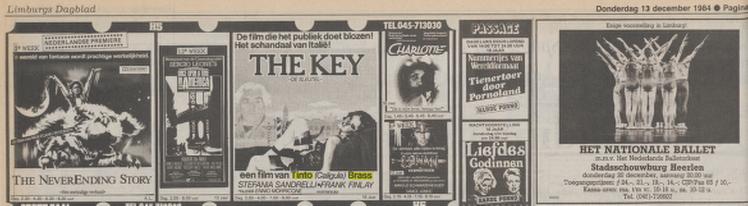
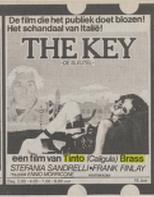
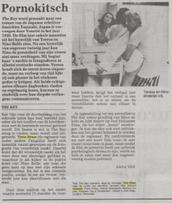
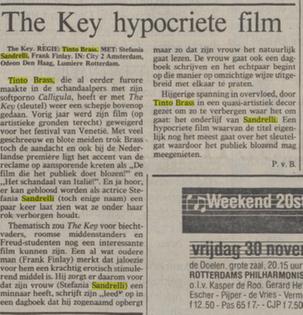
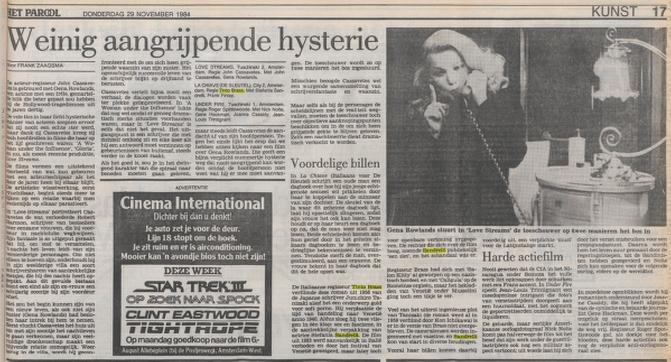
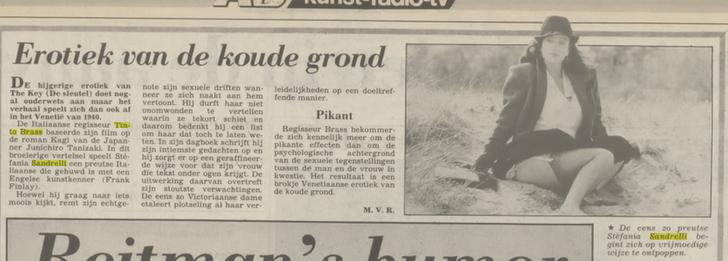
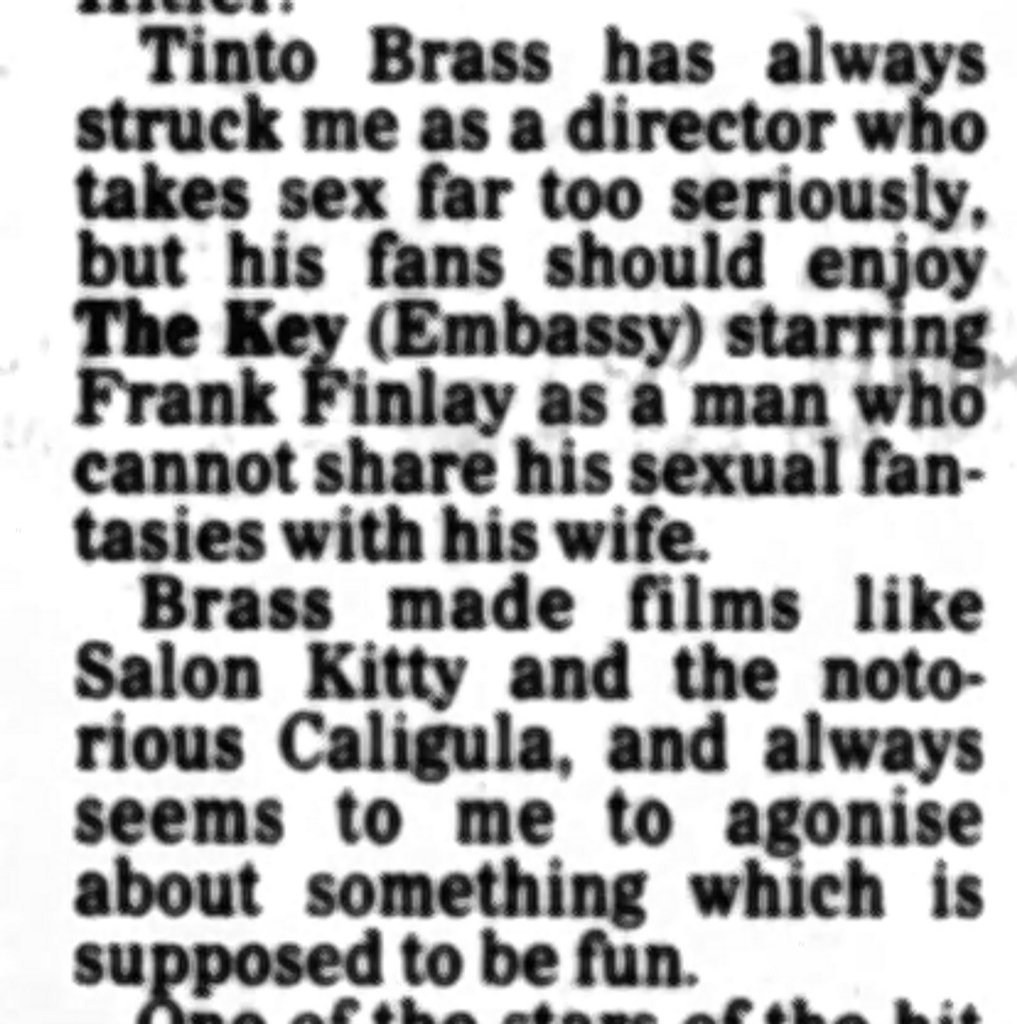
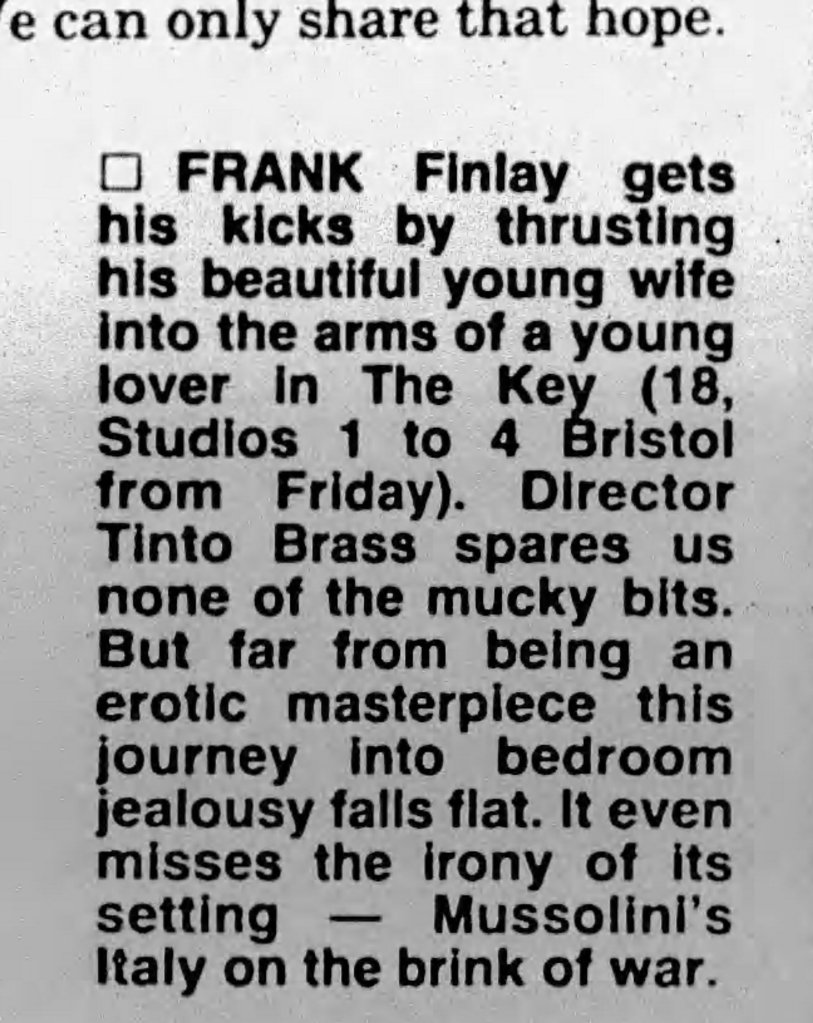
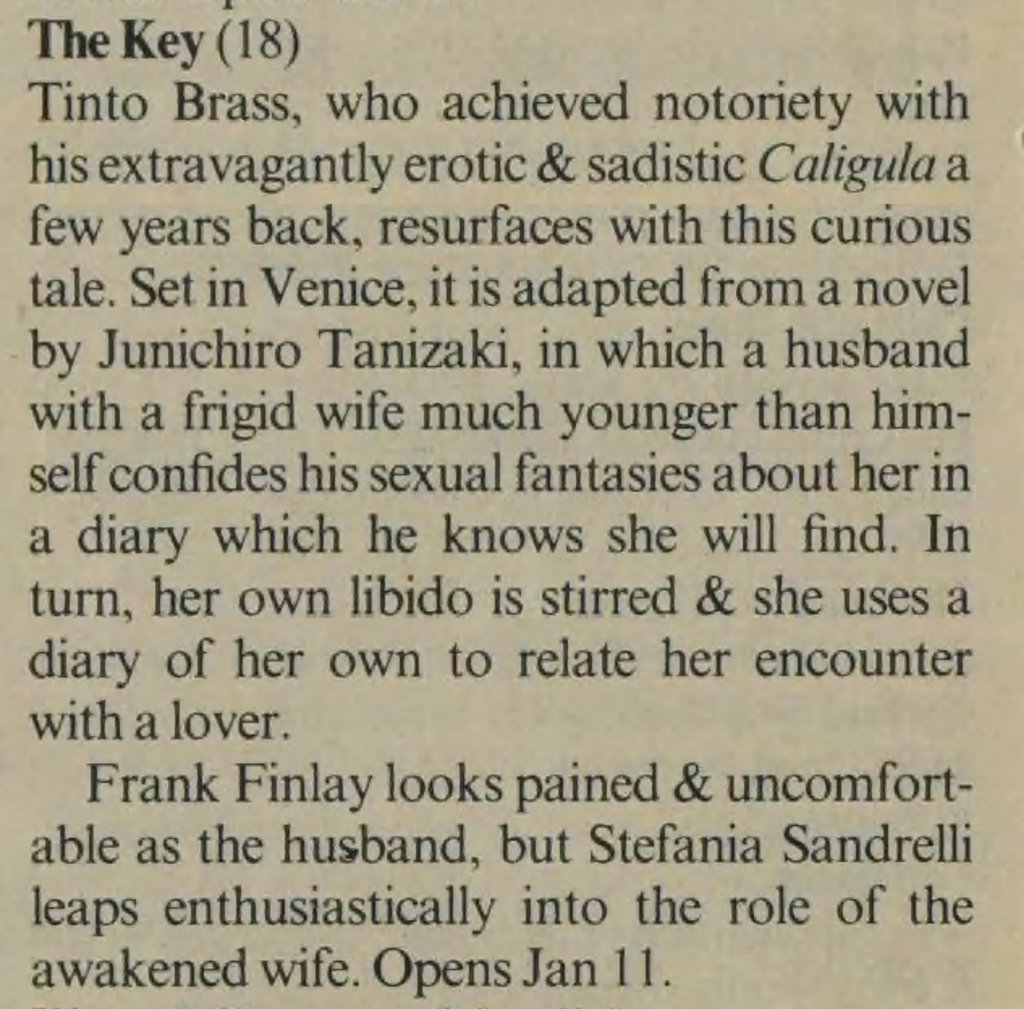
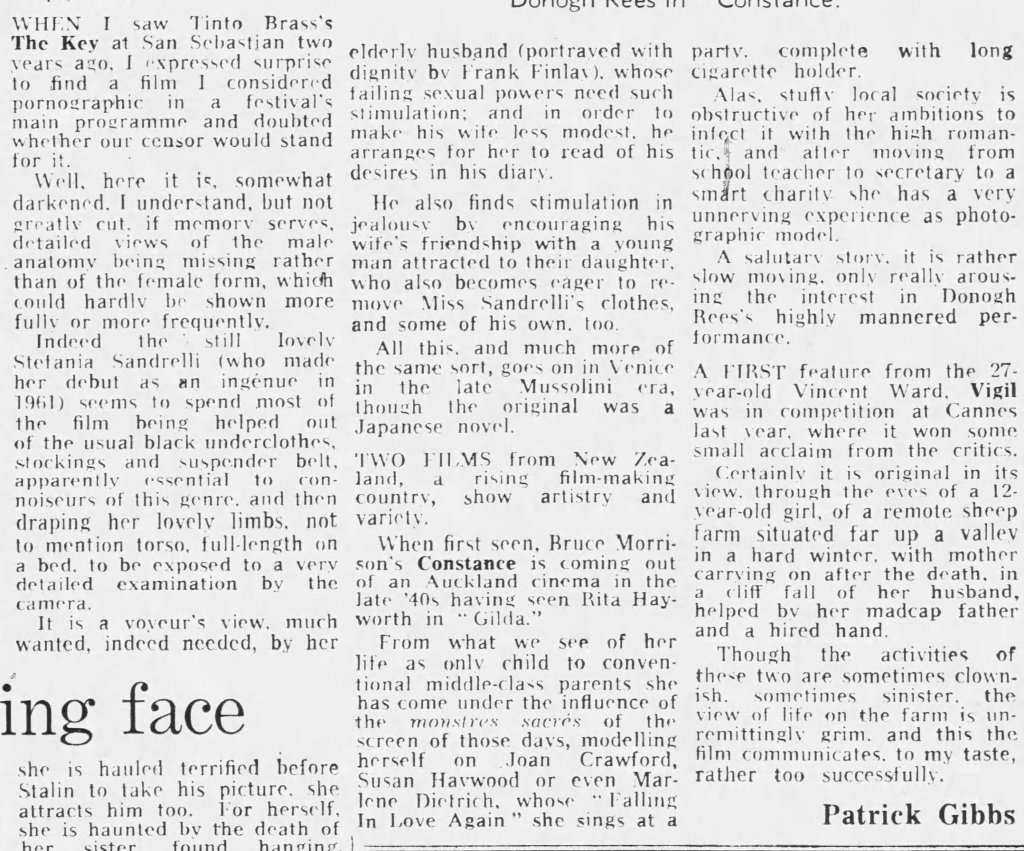
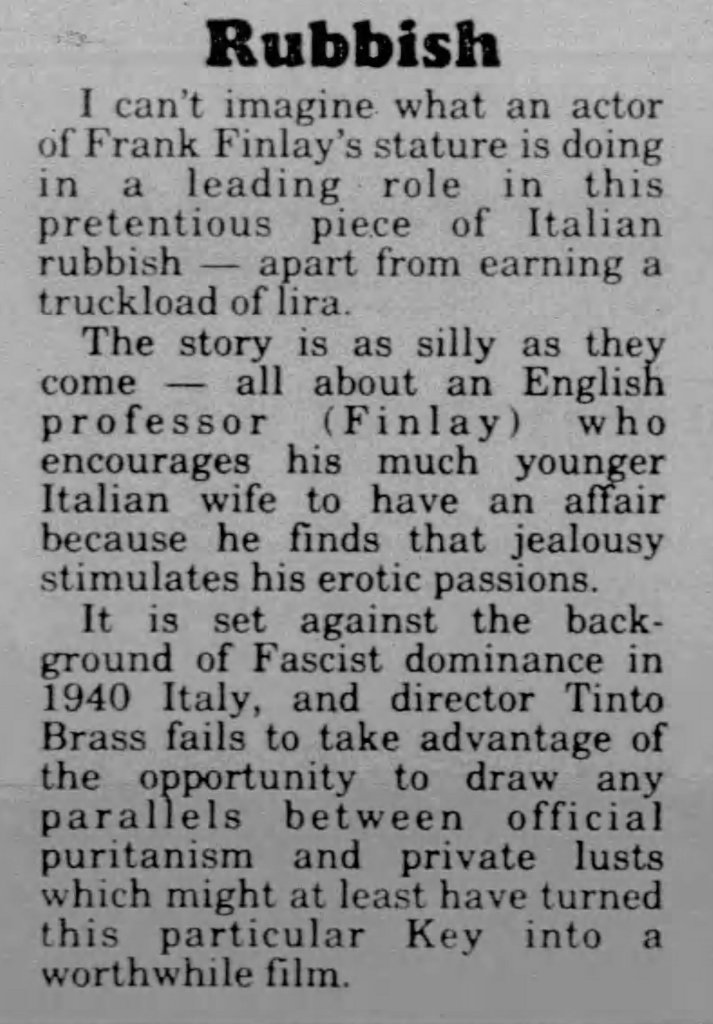
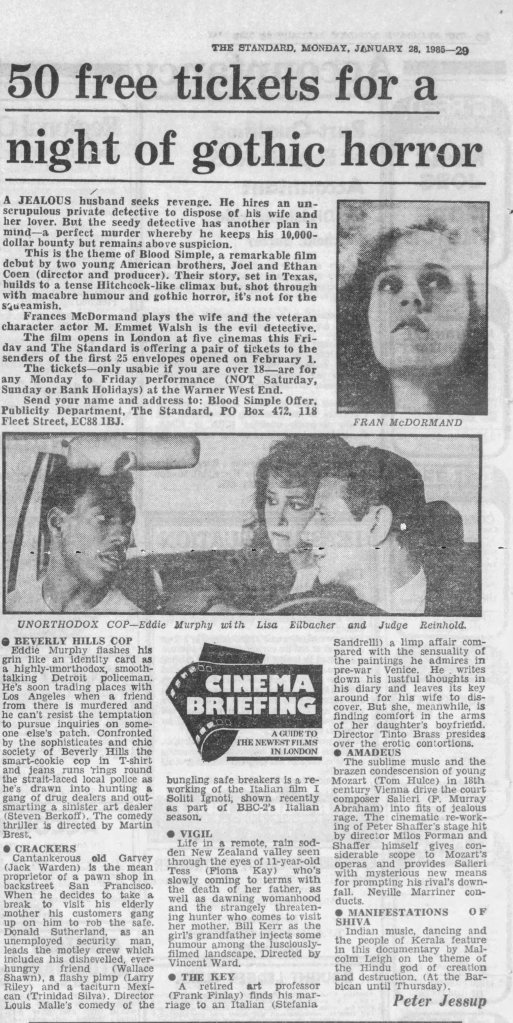
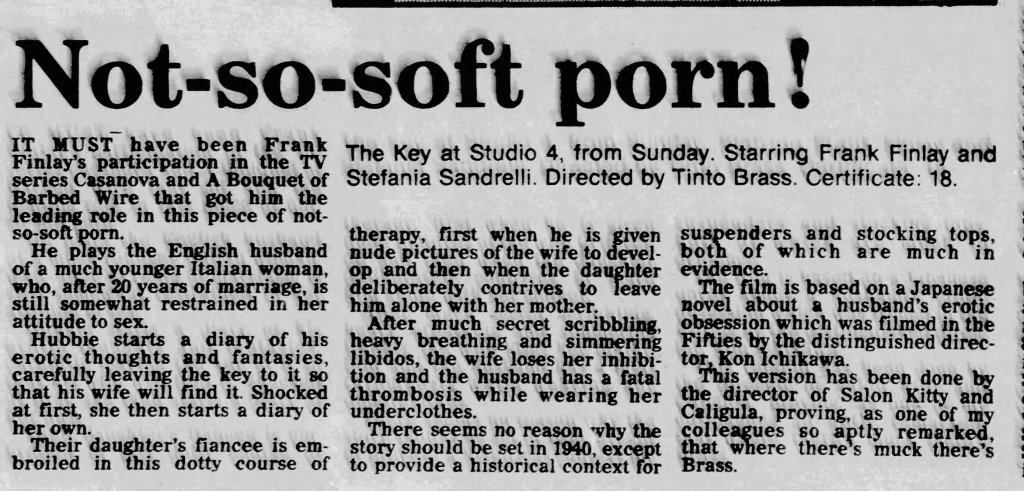
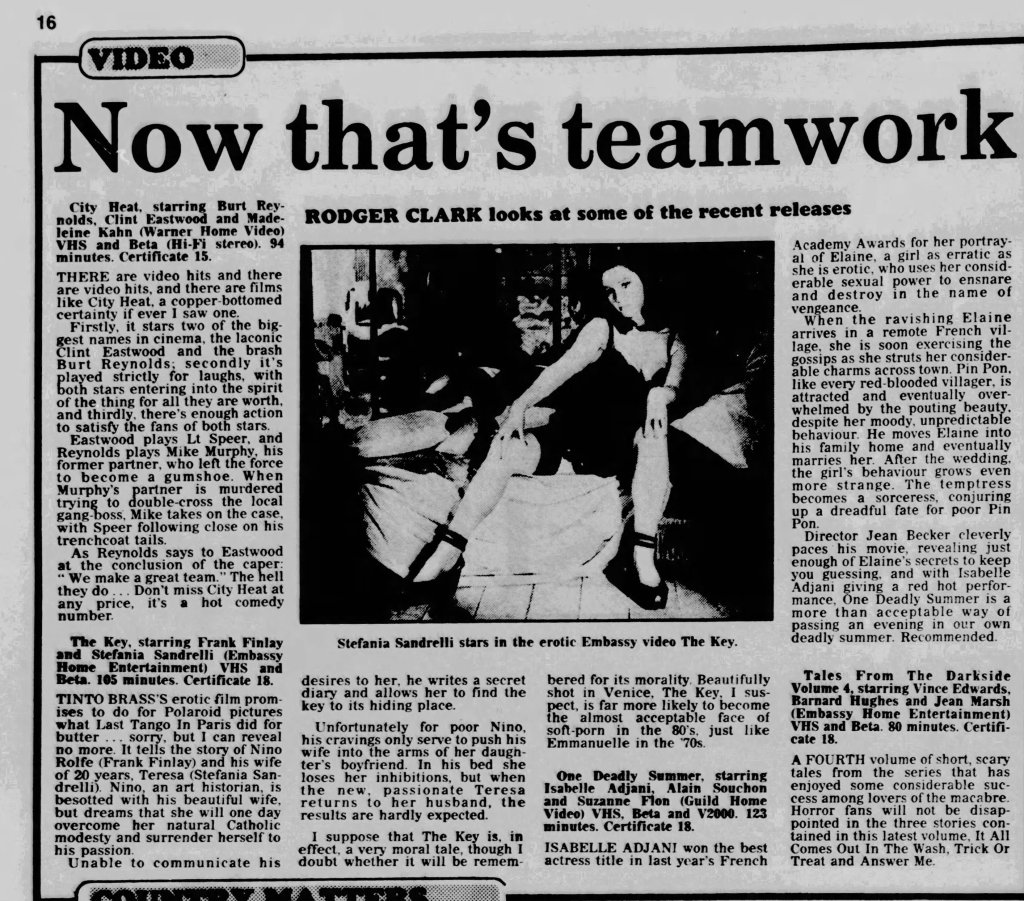
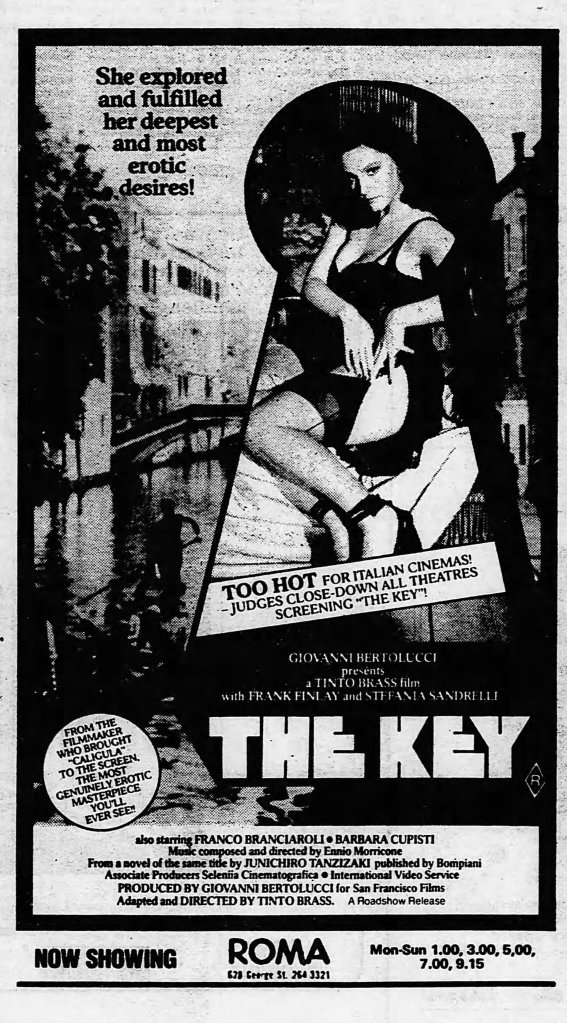
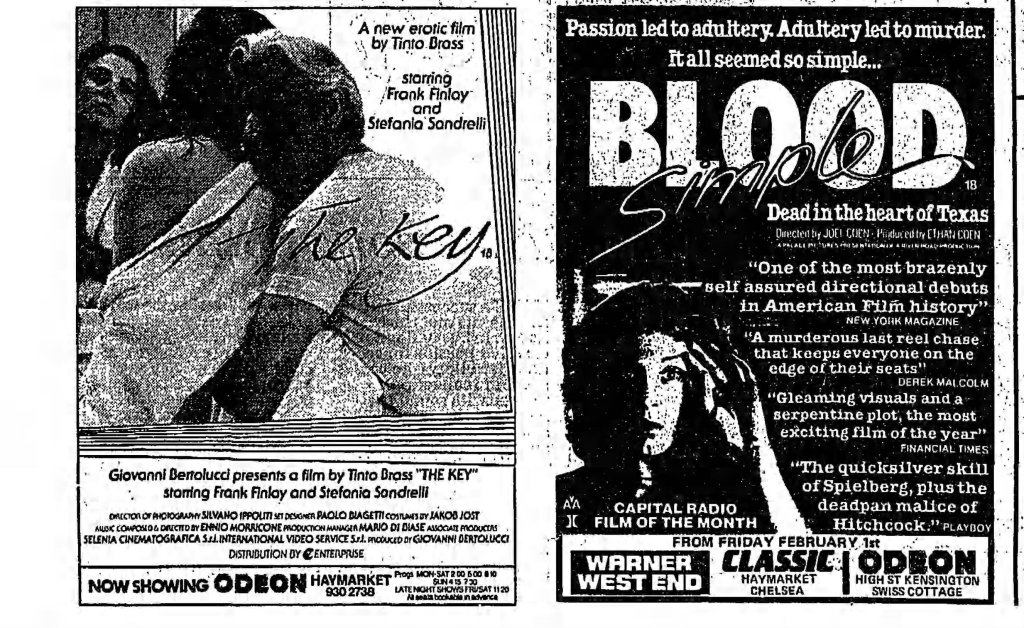
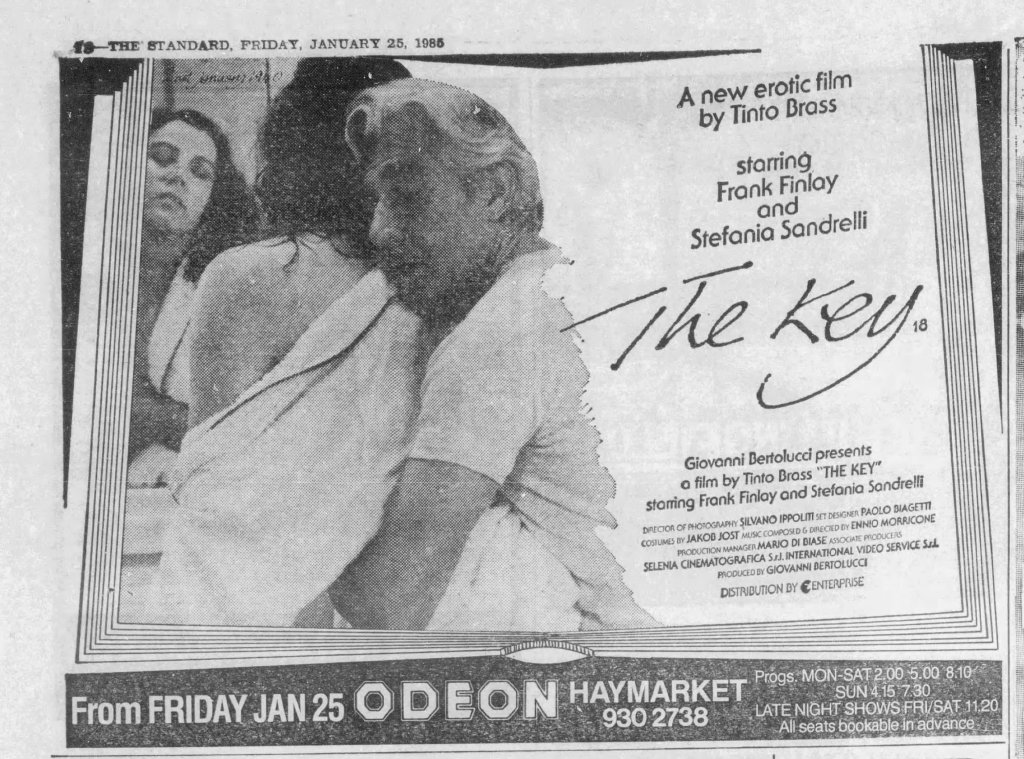
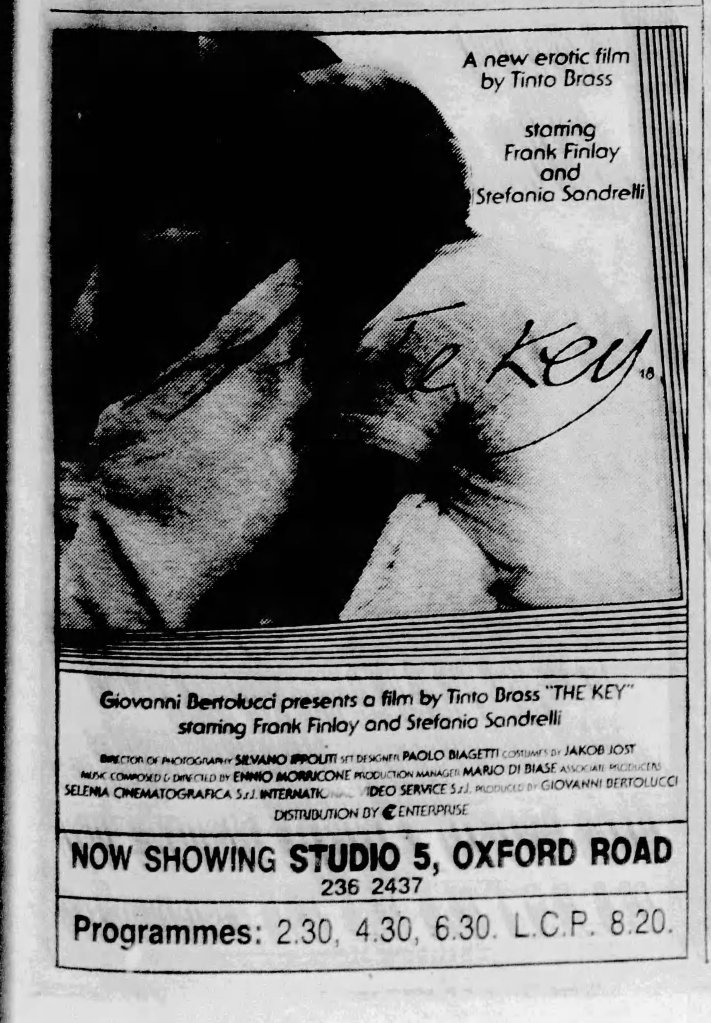
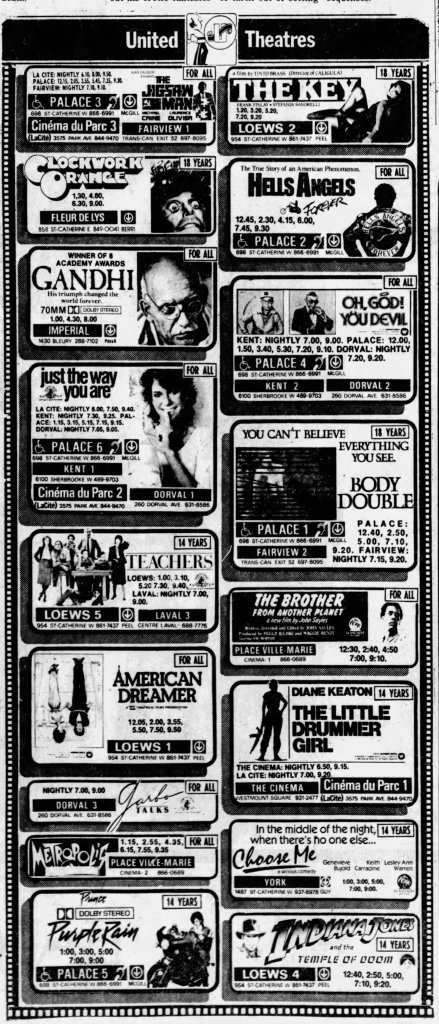
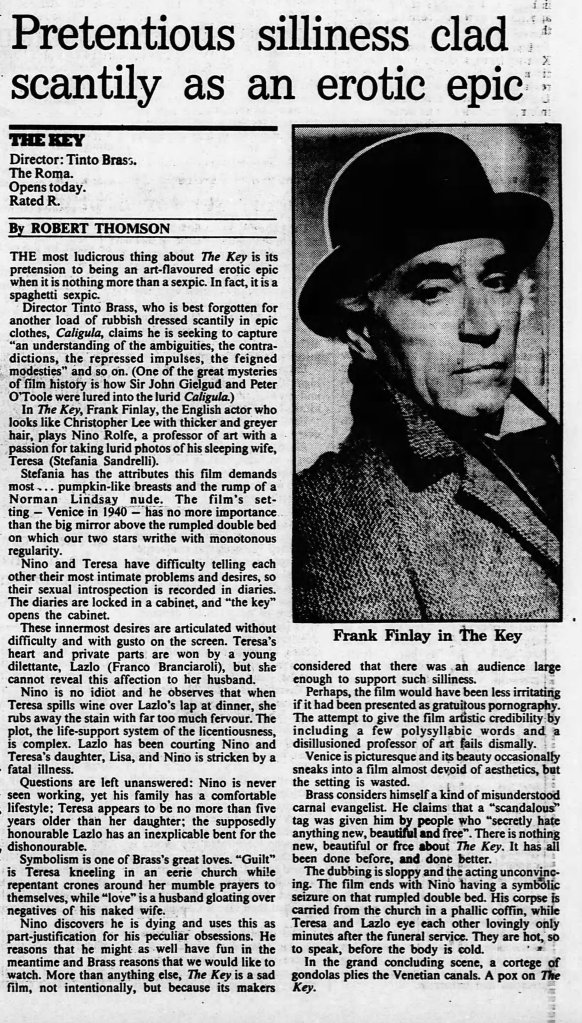
Enjoy these further clippings I discovered while researching this piece:


Leave a comment